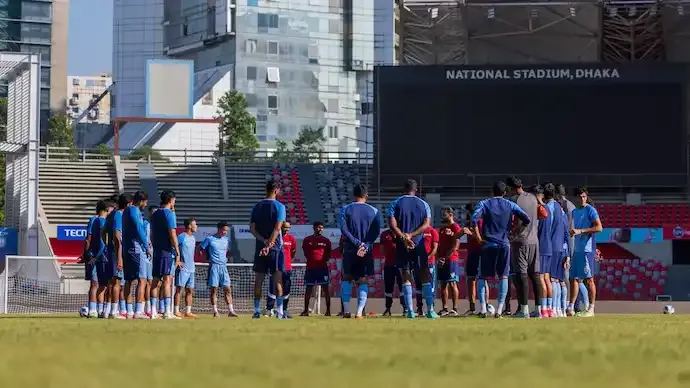
For a decade, Indian football has attempted to move forward on a single shining promise — that the Indian Super League (ISL) would be the engine driving the sport’s transformation. Glossy marketing campaigns, packed stadiums, foreign signings and celebrity-backed teams projected an image of upward momentum. But football cannot run on image alone, and the cracks that once appeared cosmetic have now widened into structural failures.
The instability surrounding the ISL is no longer a boardroom concern. It is spilling directly onto the pitch — and the national team is beginning to bear the consequences.
The Tender With No Bidders: A Warning Signal
The ISL’s inability to attract even a single bidder for its latest tender has raised serious questions about the league’s credibility and future. What was once projected as the backbone of India’s football revolution now finds itself shrouded in uncertainty. The silence around its next steps is growing louder, and the lack of clarity is unsettling stakeholders across the ecosystem.
India’s Loss to Bangladesh Reflects Deeper Systemic Issues
India’s 0–1 defeat to Bangladesh in the Asian Cup Qualifier was more than a disappointing result — it mirrored months of disrupted preparation. The national team looked fatigued, short of ideas and disconnected in rhythm. Players accustomed to consistent competitive football now appear drained due to irregular training cycles and a broken domestic calendar.
This wasn’t a tactical misfire over ninety minutes; it was the cumulative outcome of instability within Indian football’s core structure.
Soon after, India dropped to 142nd in the FIFA rankings, their lowest standing since 2016. The ranking only validates what has been increasingly clear on the field — the national team is operating inside a fractured system.
From Club Conflicts to Club Collapse: A Damaging Full Circle
There was a time when ISL clubs hesitated to release players for national duty because of overloaded schedules. It was a contentious issue, but at least it pointed to a functioning ecosystem with regular competitions and active rosters.
Today, the issue is far more alarming.
The worry is not about clubs restricting their players.
The worry is whether those clubs — and the stability they represent — will remain intact at all.
Indian football has come full circle, but the return point is darker and more fragile than before.
A Broken League Inevitably Breaks the National Team
A domestic league and a national team are two halves of a single system. When the league collapses, the national team inevitably absorbs the shock. Unsettled seasons disrupt scouting, halt youth development, derail academies and create confusion among coaches and emerging players, who no longer know what future they are preparing for.
For professionals, a stable league means income, rhythm, structure and purpose. Without it, even the most disciplined athletes shift into survival mode — a mindset incompatible with elite performance.
Indian Football Needs Stability, Not Cosmetic Makeovers
New logos, rebranding campaigns or foreign consultants cannot fix what is fundamentally a structural crisis. The sport requires transparent administration, long-term planning and a system that values steady growth over quick commercial wins.
The question looming over Indian football is no longer about coaching changes, new signings or the next league season.
It is far more uncomfortable:
Does Indian football truly understand how close it is to collapse?
Prev Article
Pat Cummins Targets Return for Brisbane Ashes Test; Australia Await Hazlewood Update
Next Article
Arsenal Lead Premier League as Man City Lose to Newcastle and Liverpool Fall 3–0 to Forest