
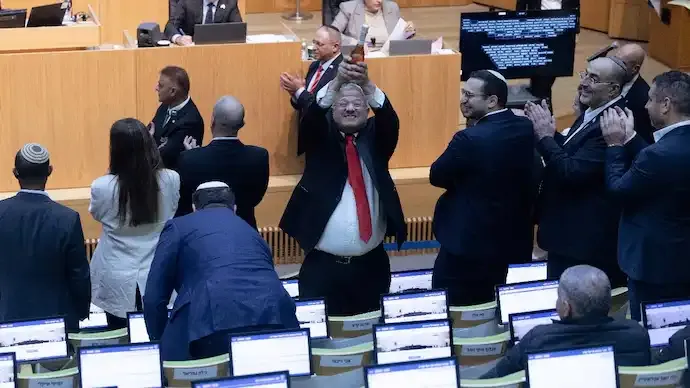
The United Nations has strongly criticised Israel’s newly passed death penalty law, urging authorities to repeal the legislation over serious human rights concerns. The law introduces capital punishment as the default sentence for Palestinians convicted in military courts of carrying out deadly attacks.
According to the UN, the provisions of the law raise significant questions about fairness, equality, and compliance with international humanitarian standards.
UN Human Rights Chief Calls Law ‘Deeply Discriminatory’
Volker Türk, the UN High Commissioner for Human Rights, described the law as “deeply discriminatory” and warned that it could violate fundamental legal principles.
He highlighted concerns regarding due process, stating that the law limits judicial discretion and undermines the rights of the accused. The UN has called for the immediate rollback of the legislation to ensure adherence to international legal frameworks.
Key Provisions of the Law Raise Alarms
The new law mandates the death penalty as the default punishment in certain cases, with limited scope for exceptions. It also reportedly removes the possibility of clemency and requires executions to be carried out within a fixed timeframe.
These provisions, according to the UN, could compromise fair trial guarantees and reduce opportunities for judicial review, increasing the risk of irreversible outcomes.
Political Backing and Passage of the Law
The law was passed by the Israeli parliament with strong backing from right-wing leadership. Itamar Ben-Gvir, Israel’s National Security Minister, has been a vocal supporter of stricter security measures and welcomed the passage of the legislation.
The move reflects ongoing political tensions and security concerns within the region, which continue to influence policy decisions.
International Law and Human Rights Concerns
The UN has emphasised that the law may conflict with international humanitarian law and global human rights standards. Experts warn that applying such measures selectively could lead to further tensions and criticism on the international stage.
There are also concerns that the law could set a precedent that challenges established norms around justice, equality, and proportional punishment.
Global Reaction and Ongoing Debate
The development has sparked debate internationally, with human rights organisations and legal experts raising concerns about its implications. The focus remains on whether the law aligns with global standards of justice and fairness.
As discussions continue, the UN’s call for repeal highlights the broader issue of balancing security measures with human rights obligations.




Conversation
Be kind and stay on topic. Comments are moderated; abuse, spam and personal attacks are removed. Report a problem