

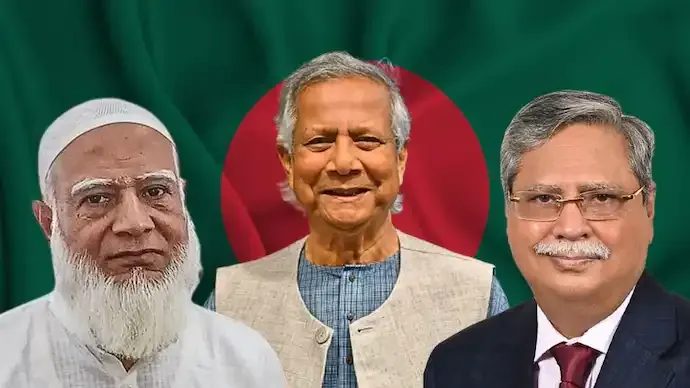

Political tensions in Bangladesh have intensified after the chief of Bangladesh Jamaat-e-Islami publicly criticised President Mohammed Shahabuddin, days after the President made serious allegations against the interim government led by Muhammad Yunus.
The controversy erupted following an interview in which President Shahabuddin described several actions of the Yunus-led interim administration as unconstitutional. He alleged that after the ouster of former Prime Minister Sheikh Hasina in August 2024, he was placed under virtual house arrest and faced repeated attempts to remove him from office. He also claimed he was prevented from travelling abroad for medical treatment and was not informed about certain state-level agreements.
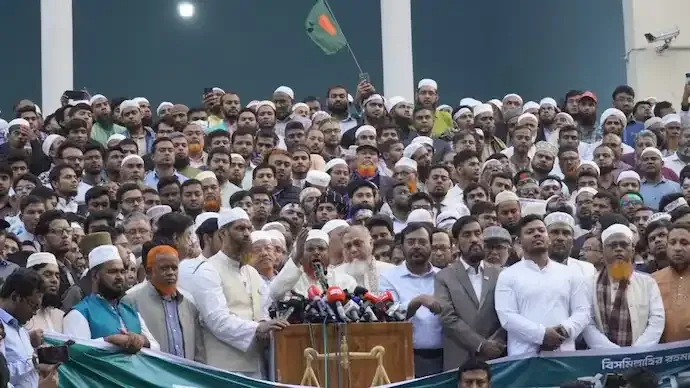
Soon after these remarks, Jamaat-e-Islami Ameer Shafiqur Rahman launched a sharp attack on the President. In a public post, Rahman questioned why Shahabuddin had allegedly withheld crucial details about the events of August 5, 2024 — the day Sheikh Hasina left the country amid massive protests that ultimately led to the fall of the Awami League government.

Rahman specifically referred to the controversy surrounding Hasina’s resignation letter. On August 5, the President had stated in a televised address that he had received her resignation. However, months later, he reportedly said there was no physical evidence of such a letter, sparking political confusion and protests demanding clarity.
While President Shahabuddin has now openly criticised the Yunus administration, Jamaat’s strong response has drawn attention. Observers note that the President did not directly name Jamaat or Islamist groups in his interview. Yet Rahman’s reaction has triggered renewed debate about the alleged proximity between the Yunus-led interim regime and Islamist political forces.
Following Sheikh Hasina’s exit, the Yunus government took several controversial steps, including lifting the ban on Jamaat-e-Islami that had been imposed by the Awami League administration. Additionally, multiple Islamist leaders were reportedly released from prison during the interim period. These developments were seen by critics as signs of shifting political alignments.
Political analysts have also pointed to the role of Islamist groups in the anti-quota protests that began as a student movement but later escalated into nationwide unrest. Some student leaders later entered formal politics and reportedly aligned with Islamist factions during the 2026 elections.
President Shahabuddin has claimed that he managed to remain in office partly due to support from senior leaders of the Bangladesh Nationalist Party (BNP) and backing from the armed forces. He alleged that the interim regime repeatedly attempted to remove him but failed.
The ongoing exchange highlights the fragile political landscape in Bangladesh, where constitutional authority, political legitimacy, and ideological divisions remain deeply contested. With national elections and shifting alliances reshaping the political order, the public confrontation between the President and Jamaat leadership has added another layer of complexity to Bangladesh’s evolving power structure.
As political narratives continue to unfold, the episode underscores the deep divisions within the country’s governance framework and raises fresh questions about alliances formed during times of crisis.






Conversation
Be kind and stay on topic. Comments are moderated; abuse, spam and personal attacks are removed. Report a problem