
Taliban Warns of Military Response After Pakistan Airstrikes in Afghanistan

Taliban Warns of Military Response After Pakistan Airstrikes in Afghanistan

Tensions between Afghanistan and Pakistan have sharply escalated after the Taliban signalled a possible military response to recent Pakistani airstrikes inside Afghan territory. The development marks a serious deterioration in relations between the two neighbouring countries.

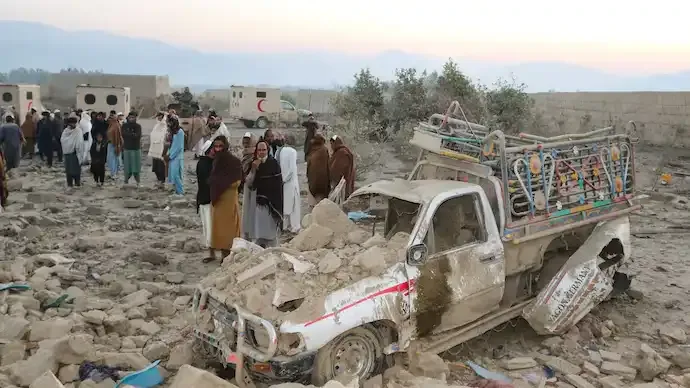
Pakistan confirmed that it carried out overnight airstrikes on February 22 in Afghanistan’s eastern Nangarhar and southeastern Paktika provinces. Islamabad stated that the operation targeted militant infrastructure allegedly linked to cross-border attacks against Pakistan.

Taliban spokesperson Zabihullah Mujahid described the strikes as a “shameful act” and indicated that Kabul’s response would “naturally” be military, though he declined to share operational details. His remarks have intensified concerns of further escalation along the volatile border.

Pakistani authorities said the strikes were “intelligence-based and selective,” aimed at camps associated with Tehrik-e-Taliban Pakistan (TTP) and fighters allegedly linked to the Islamic State group. Islamabad has repeatedly accused militants of using Afghan territory to stage attacks inside Pakistan.

However, the Taliban government in Kabul has strongly denied these allegations. Afghan officials accused Pakistan of targeting civilian areas rather than militant hideouts.

According to Afghan authorities, at least 17 civilians were killed in Nangarhar province, and five others were injured. Taliban officials also claimed that a school building in Paktika province was damaged during the strikes. They insisted that no armed individuals were present at the targeted locations.

Nangarhar Province and Paktika Province lie close to the Afghanistan-Pakistan border, an area that has long witnessed militant activity and security operations. The region remains sensitive due to historical tensions and cross-border insurgent movements.

The airstrikes followed a rise in militant violence within Pakistan. Recent attacks included a suicide bombing near the Afghan border that killed 11 soldiers and a child, as well as another assault in Bannu that left two security personnel dead. Pakistani officials have blamed these incidents on groups operating from Afghan soil.

In the aftermath of the airstrikes, border clashes were reported in multiple sectors, including Torkham and Tirah. Both sides accused each other of initiating hostilities. Pakistani officials claimed Afghan forces opened unprovoked fire, while Afghan authorities maintained that their troops acted defensively.

Local officials in Nangarhar later stated that fighting in the Shahkot area of Nazyan district had ceased, with no additional Afghan casualties reported.

The latest confrontation threatens an already fragile ceasefire along the 2,600-kilometre Afghanistan-Pakistan border. Security analysts warn that continued escalation could destabilise the region further, especially at a time when both countries are dealing with internal security challenges.

As diplomatic channels remain uncertain, the situation continues to evolve, with the possibility of further military action raising regional security concerns.

Prev Article
Bill and Hillary Clinton to Testify in Congress Over Epstein Files Investigation
Next Article
Jamaat Chief Targets Bangladesh President, Sparks Debate Over Yunus-Islamist Links

Related to this topic: