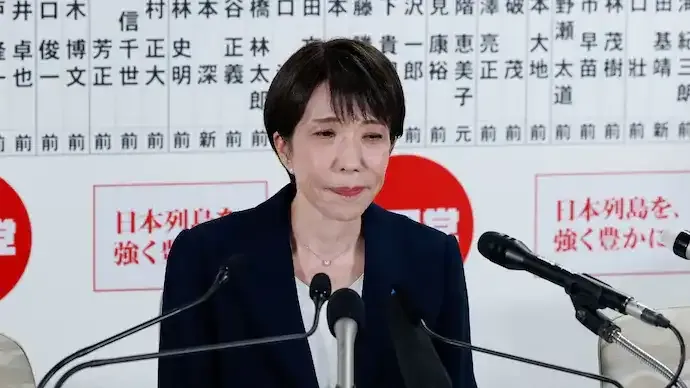
Japan’s political landscape has shifted significantly after Prime Minister Sanae Takaichi secured a decisive victory in the country’s winter snap elections, strengthening her leadership and consolidating power for the ruling Liberal Democratic Party (LDP). Early vote projections indicated that the LDP achieved a commanding majority in the lower house of parliament, reinforcing its dominance in national politics.
According to initial results reported by Japanese media, the LDP crossed the threshold required for an absolute majority within hours of polling stations closing. The outcome marked a historic milestone for Takaichi, who is both Japan’s first woman prime minister and the first female leader of the long-governing party. Analysts described the result as one of the strongest mandates for the LDP in recent years, potentially allowing the administration to push forward its legislative agenda with greater confidence.
Projections suggested that the LDP, along with its alliance partner Japan Innovation Party, could control a two-thirds supermajority in the 465-member lower chamber. Such a margin gives the ruling bloc the ability to override resistance from the upper house, where it does not hold complete authority. Political observers believe this strengthened mandate could accelerate policy initiatives related to economic reform, defence strategy and regional diplomacy.
International reactions to the election result were swift. Leaders from several countries welcomed the outcome, highlighting Japan’s role as a key strategic partner in Asia. Messages of congratulations emphasised expectations of stronger cooperation in areas such as security, technology and economic development. Analysts noted that the election result signals continuity in Japan’s foreign policy approach, particularly its close ties with major global allies.
Domestically, the election was seen as a test of public confidence in the LDP after a period marked by funding controversies and political scrutiny. Despite these challenges, the party managed to secure strong voter support, suggesting that Takaichi’s leadership and policy messaging resonated with a broad section of the electorate. Supporters credited her focus on stability and economic resilience, while critics have called for closer examination of governance issues in the coming months.
The landslide victory also holds symbolic significance, as Takaichi’s leadership represents a shift in Japan’s traditionally male-dominated political environment. Observers believe her continued success could influence discussions around gender representation and leadership in Asian politics.
With a strengthened mandate in parliament, Takaichi is expected to prioritise legislative initiatives that were previously slowed by political constraints. Economists and political analysts suggest that the government may focus on boosting growth, enhancing national security measures and strengthening Japan’s global partnerships.
As Japan enters a new political phase following the snap polls, the scale of the ruling party’s victory has reinforced its position at the centre of policymaking, setting the stage for potentially transformative decisions in both domestic governance and international relations.
Prev Article
Bangladesh Election Violence Escalates as BNP and Jamaat Supporters Clash Days Before Crucial Poll
Next Article
Israel Warns It Will Strike Iran Alone If Ballistic Missile Red Line Is Crossed