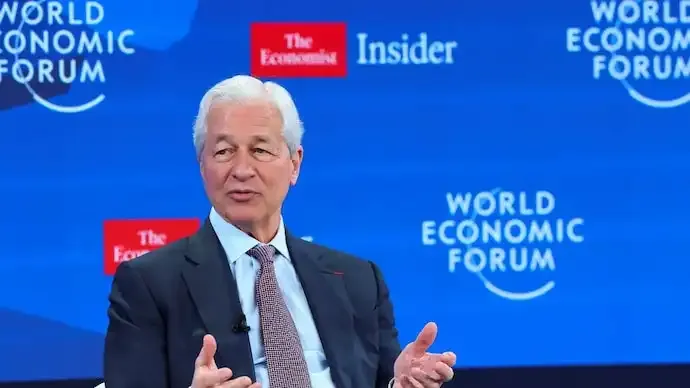
JP Morgan Chase chief executive Jamie Dimon has cautioned that current global geopolitical shifts could create long-term challenges for the United States, particularly as key allies recalibrate their foreign policy engagements with emerging powers such as China and India. Speaking on the sidelines of the World Economic Forum in Davos, Dimon responded to remarks made by Canadian Prime Minister Mark Carney, who recently described the global order as undergoing a “rupture”.
Dimon, while stopping short of endorsing that characterisation, acknowledged that the United States is no longer viewed with the same degree of absolute reliability it once enjoyed. He stressed that this does not mean Washington has become unreliable, but that global partners are increasingly diversifying their diplomatic and economic relationships.
According to Dimon, some of the unintended consequences of recent US policy positions may prove problematic over time. He specifically cited Canada’s renewed engagement with China and its expanding outreach to India as indicators of a broader shift among middle powers. “We’re causing some things that may not be good for America in the long run,” Dimon said, pointing to Prime Minister Carney’s recent visit to China and his upcoming trip to India.
Canada’s outreach to Beijing earlier this month marked the first visit by a Canadian head of government to China in nearly eight years, signalling a reset in strained bilateral relations. At the same time, Ottawa is preparing to deepen engagement with India after Carney accepted an invitation from Narendra Modi to visit New Delhi later this year. The move follows efforts by both countries to stabilise relations after a prolonged diplomatic freeze triggered by allegations made by former Canadian prime minister Justin Trudeau.
Dimon argued that these developments reflect a changing global environment in which countries are seeking strategic autonomy rather than exclusive dependence on a single power. However, he rejected the notion that the United States has abandoned its global commitments. He noted that Washington remains a military ally to more than 40 countries and continues to play a central role in collective defence arrangements.
“When I talk to the military, they are fully geared up to defend allies around the world,” Dimon said, adding that US security commitments have not been rolled back under President Donald Trump. At the same time, he admitted that he does not agree with all policy decisions, urging observers to approach the situation with nuance rather than alarm.
Carney’s speech at Davos marked a significant shift in Canada’s strategic outlook. Without naming Trump directly, the Canadian leader warned against excessive dependence on “American hegemony” and argued that economic integration is increasingly being weaponised by major powers. He urged middle powers to rethink participation in systems that no longer safeguard their interests, warning that countries excluded from decision-making risk becoming vulnerable.
The remarks come amid heightened global uncertainty, driven by trade disputes, tariff threats, and geopolitical realignments. Trump has recently signalled flexibility on trade measures, announcing that proposed tariffs on several European countries would be shelved following discussions with NATO leadership at Davos.
Dimon’s comments underline growing concern within global financial and policy circles that shifting alliances and reduced predictability could reshape the balance of power. As countries like Canada seek stronger engagement with China and India, analysts believe the US may need to recalibrate its approach to partnerships to retain long-term strategic influence.
Prev Article
Karnataka High Court Lifts Ban on Bike Taxi Services, Allows Licensing
Next Article
Amazon Braces for Major Layoffs as Up to 16,000 Jobs Face Cuts Next Week