

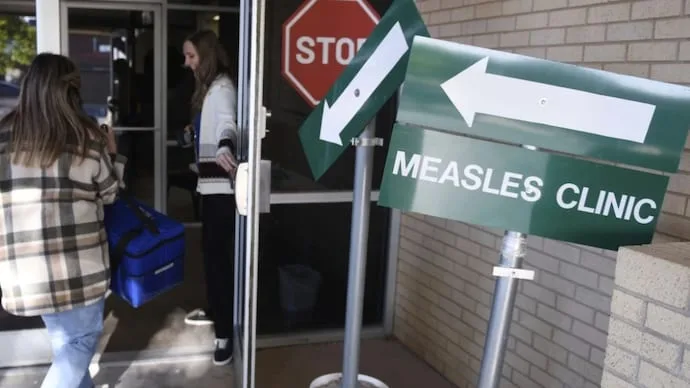

The measles outbreak 2026 is becoming a growing global health concern, with major outbreaks reported in the United States, Bangladesh and other regions. Health experts say the resurgence is exposing gaps created by missed vaccine doses, disrupted healthcare services, access barriers and growing vaccine hesitancy.
The US is experiencing its worst measles outbreak in more than three decades, with nearly 3,900 confirmed cases reported this year. Pennsylvania alone has recorded more than 1,000 cases, while New York has declared a statewide disaster emergency following a rise in cases, particularly in under-immunised communities.
Bangladesh is facing another severe outbreak. Reports cited in the source indicate more than 1.75 lakh hospitalisations linked to measles since March, with 1,134 suspected or confirmed deaths recorded this year. Children under five reportedly account for nearly four in five cases.

Why the 95% Vaccination Mark Matters
Measles is among the most contagious human infections. One infected person can potentially transmit the virus to as many as 18 susceptible people.
The World Health Organization estimates that around 11 million people contracted measles in 2024. However, only 84% of children received their first measles-containing vaccine dose and 76% received the second. Around 95% two-dose coverage in every community is considered necessary to prevent sustained transmission.
Europe and Central Asia recorded nearly 34,000 cases in 2025, a sharp decline from more than 127,000 in 2024. However, WHO and UNICEF have warned that endemic transmission continues in several countries.
The Americas have also seen a major reversal, with more than 47,000 confirmed cases reported by July 2026 — the highest figure in 22 years.
India Still Has Vulnerable Pockets
India has made substantial progress in childhood immunisation, but coverage remains uneven. The source cites NFHS-6 data showing second-dose measles-containing vaccine coverage rising from 58.6% in NFHS-5 to 71.8%. Full immunisation among children aged 12–23 months has also increased to 87.1%.
Despite this progress, the second-dose figure remains below the level needed for reliable community protection.
India has experienced limited measles outbreaks in recent years, including in Maharashtra, Gujarat, Delhi and Madhya Pradesh. Experts warn that national averages can hide vulnerable communities where missed vaccinations are concentrated.
The key priorities are therefore identifying zero-dose and missed children, improving second-dose coverage, strengthening disease surveillance and addressing vaccine hesitancy through local community engagement.
The global resurgence serves as a reminder that measles can quickly exploit gaps in immunisation coverage, making sustained vaccination efforts essential even when overall childhood immunisation rates appear to be improving.








Conversation
Be kind and stay on topic. Comments are moderated; abuse, spam and personal attacks are removed. Report a problem