Shopping cart
Your cart empty!


Your cart empty!
Terms of use dolor sit amet consectetur, adipisicing elit. Recusandae provident ullam aperiam quo ad non corrupti sit vel quam repellat ipsa quod sed, repellendus adipisci, ducimus ea modi odio assumenda.
Lorem ipsum dolor sit amet consectetur adipisicing elit. Sequi, cum esse possimus officiis amet ea voluptatibus libero! Dolorum assumenda esse, deserunt ipsum ad iusto! Praesentium error nobis tenetur at, quis nostrum facere excepturi architecto totam.
Lorem ipsum dolor sit amet consectetur adipisicing elit. Inventore, soluta alias eaque modi ipsum sint iusto fugiat vero velit rerum.
Sequi, cum esse possimus officiis amet ea voluptatibus libero! Dolorum assumenda esse, deserunt ipsum ad iusto! Praesentium error nobis tenetur at, quis nostrum facere excepturi architecto totam.
Lorem ipsum dolor sit amet consectetur adipisicing elit. Inventore, soluta alias eaque modi ipsum sint iusto fugiat vero velit rerum.
Dolor sit amet consectetur adipisicing elit. Sequi, cum esse possimus officiis amet ea voluptatibus libero! Dolorum assumenda esse, deserunt ipsum ad iusto! Praesentium error nobis tenetur at, quis nostrum facere excepturi architecto totam.
Lorem ipsum dolor sit amet consectetur adipisicing elit. Inventore, soluta alias eaque modi ipsum sint iusto fugiat vero velit rerum.
Sit amet consectetur adipisicing elit. Sequi, cum esse possimus officiis amet ea voluptatibus libero! Dolorum assumenda esse, deserunt ipsum ad iusto! Praesentium error nobis tenetur at, quis nostrum facere excepturi architecto totam.
Lorem ipsum dolor sit amet consectetur adipisicing elit. Inventore, soluta alias eaque modi ipsum sint iusto fugiat vero velit rerum.
Do you agree to our terms? Sign up
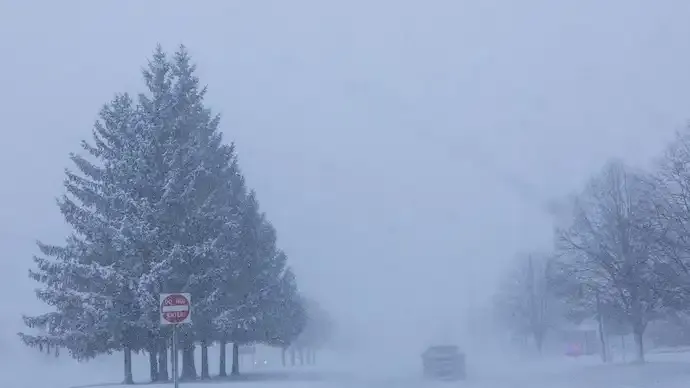
A powerful and sprawling winter storm has swept across the United States, triggering widespread travel disruption, power outages and life-threatening cold conditions, with more than 200 million people affected across nearly half the country. The storm system, stretching from the Rocky Mountains to the Eastern Seaboard, has been described by weather officials as the most intense and expansive of the winter season so far.
The extreme weather has already grounded air travel on a massive scale. According to flight-tracking data, more than 7,000 flights scheduled over the weekend were cancelled, while thousands of others faced delays as major airport hubs struggled to operate amid snow, ice and freezing rain. Airports in cities such as Dallas, Chicago and New York were among the worst hit, prompting airlines to urge passengers to monitor schedules closely and avoid non-essential travel.
Meteorologists warned that the storm presents a dangerous combination of heavy snowfall, sleet, freezing rain and plunging Arctic air. Over a dozen states have declared weather emergencies as conditions rapidly deteriorated. Large parts of the central and eastern United States remain under winter storm, ice storm and extreme cold alerts, with snowfall totals expected to exceed one foot in several regions.
Of particular concern is the risk of severe ice accumulation across the southern edge of the storm system. Areas spanning the southern Plains, lower Mississippi Valley, Tennessee Valley and parts of the Southeast are bracing for up to an inch of ice in some locations. Weather experts cautioned that such levels of icing can cause damage comparable to a hurricane, snapping trees, collapsing power lines and rendering roads impassable.
States including Louisiana, Mississippi and Tennessee face the highest icing threat, increasing the likelihood of prolonged power outages. Utility providers have placed emergency crews on high alert as freezing rain continues to weigh down infrastructure. Officials warned that restoration efforts could take days even after the storm weakens.
The storm is being fuelled by moisture drawn from both the Pacific Ocean and the Gulf of Mexico, while a surge of Arctic air spilling south from the Rockies is driving temperatures sharply lower. Wind chill readings dropped below minus 10 degrees Celsius in parts of the northern Plains, with exposure posing a serious risk of hypothermia within minutes. Sub-zero temperatures are expected to push as far south as the lower Mississippi Valley and mid-Atlantic, potentially breaking long-standing cold records.
Across the Midwest and Northeast, schools were closed, public events cancelled and churches shifted services online as hazardous conditions intensified. In southern states less accustomed to prolonged winter weather, officials warned residents to remain indoors as roads turned treacherous due to ice.
Emergency responses have been ramped up nationwide. Authorities have opened warming centres and shelters for vulnerable populations, while federal agencies have pre-positioned food supplies, blankets and generators in anticipation of prolonged disruptions. Search-and-rescue teams have also been placed on standby in case of weather-related emergencies.
As the storm continues its eastward advance, forecasters cautioned that recovery will be slow. Lingering ice, deep snow and extreme cold are expected to persist into the coming week, posing ongoing risks to travel, power supply and public safety across large swathes of the country.
79
Published: Jan 24, 2026

All India Story is your trusted source for comprehensive and up-to-the-minute news coverage across India. Bringing you the latest on politics, business, technology, entertainment, sports, and more, we are dedicated to keeping you informed with accurate, engaging, and insightful stories from every corner of the nation.