
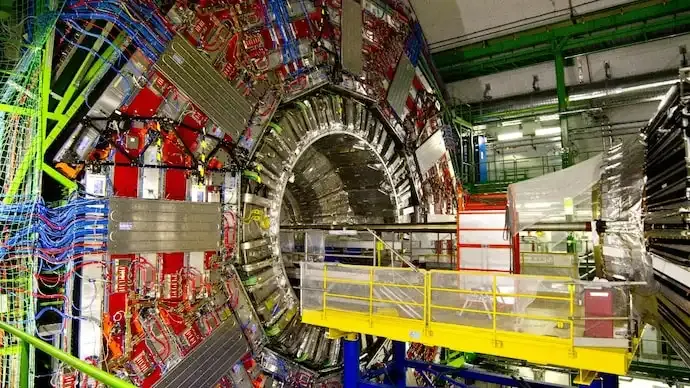
The central government has announced a significant expansion of India’s quantum technology ecosystem by approving quantum teaching laboratories in 100 engineering colleges, each receiving ₹1 crore in funding. The initiative aims to strengthen indigenous research capacity and support emerging talent in the field.
The announcement was made by Department of Science and Technology (DST) Secretary Prof. Abhay Karandikar during an event at the Indian Institute of Technology (IIT) Bombay. He noted that the programme is designed to help institutions develop undergraduate minor programmes in quantum technology. Over 500 proposals have already been submitted, out of which 100 colleges will be selected for funding.
Progress Under the National Quantum Mission
Prof. Karandikar highlighted the growing momentum under the National Mission on Interdisciplinary Cyber Physical Systems and the National Quantum Mission (NQM). He acknowledged IIT Bombay’s leadership through its Technology Innovation Hub, which has been actively working with start-ups, emerging technologies, and Indian-language AI models.
All four hubs under the NQM—IISc Bengaluru, IIT Madras, IIT Delhi, and IIT Bombay—have demonstrated notable progress. The quantum sensing hub at IIT Bombay was specifically appreciated for its advancements.
₹720 Crore Investment in New Quantum Fabrication Facilities
During his visit to IIT Bombay, Union Science and Technology Minister Dr. Jitendra Singh announced the establishment of two major quantum fabrication and central facilities at IIT Bombay and IISc Bengaluru, backed by an investment of ₹720 crore.
Two smaller-scale facilities will also be set up at IIT Delhi and IIT Kanpur.
According to the Minister, these centres will enable India to indigenise the fabrication of quantum computing chips and quantum sensors, reducing reliance on foreign infrastructure and accelerating research and development cycles.
Boost to Cryogenics and Quantum Engineering
Dr. Singh also stressed the need to reinforce India’s cryogenic infrastructure, noting that liquid helium plays a crucial role in MRI systems, advanced materials research, and cryo-electron microscopy.
The new facilities will include a helium recovery system, expected to reduce cryogenic experiment costs to one-tenth of current levels.
The upcoming infrastructure will be accessible to academia, industry, MSMEs, start-ups, and strategic sectors, supporting prototyping, innovation, and small-scale manufacturing.
Dr. Singh said IIT Bombay’s initiatives demonstrate the effectiveness of collaboration between government, academia, and industry in driving advanced scientific and technological development.




Conversation
Be kind and stay on topic. Comments are moderated; abuse, spam and personal attacks are removed. Report a problem