
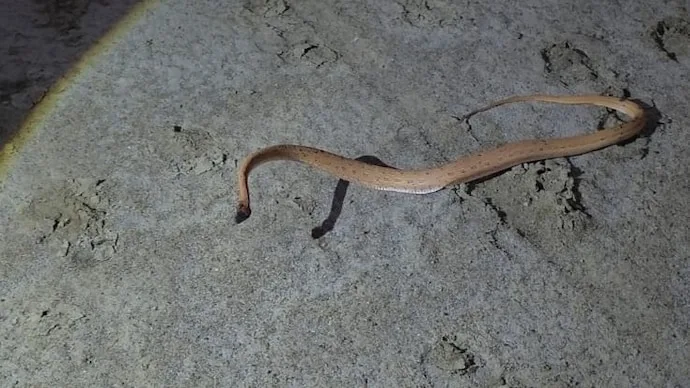
A rare sand snake has been photographed in Gujarat's Kutch region more than 150 years after the species was last conclusively recorded there. The Afro-Asian sand snake, also known as the Schokari Sand Racer, was spotted near Kala Dungar, close to Bhuj, during a routine forest patrol earlier this month.
The discovery has renewed interest in the region's lesser-known wildlife and could provide fresh information about species surviving in Kutch's dry and arid habitats.
Snake spotted during routine forest patrol
The unusual encounter took place on the evening of September 6. Range Forest Officer Jayesh Dumadiya and his team from the Gujarat Forest Department's Bhuj North Range were returning from patrol at around 7:30 pm when they stopped after spotting a black-headed royal snake.
While the team was dealing with the first snake, another unfamiliar reptile appeared on the road. Dumadiya, who had recently been transferred to Kutch, photographed the animal and recorded a video before sharing the material with experts for identification.
Experts subsequently identified the reptile as the Afro-Asian sand snake, a slender species known for its speed and association with dry landscapes.
Last confirmed record dates to 1872
The importance of the sighting comes from the species' long absence from confirmed records in Kutch.
Czech naturalist Ferdinand Stoliczka collected specimens during surveys of the region in 1871 and 1872. The species was subsequently documented in scientific literature.
The Afro-Asian sand snake is adapted to arid environments and is known in India mainly from parts of Gujarat and Rajasthan. It is mildly venomous but generally considered to pose little threat to humans. Its diet includes small animals such as lizards and rodents.
Although there may have been possible sightings over the intervening years, officials said the latest observation is the first conclusive record in Kutch since the 19th century.
Kutch's hidden wildlife gets fresh attention
The discovery highlights the biodiversity found across Kutch's deserts and scrublands. Despite appearing barren in many areas, the region supports a variety of wildlife, including species that remain relatively poorly studied.
Forest officials are expected to document the sighting further and publish details in scientific journals. The observation could therefore add an important new entry to the natural history records of Kutch and encourage further study of its dryland ecosystems.



Conversation
Be kind and stay on topic. Comments are moderated; abuse, spam and personal attacks are removed. Report a problem