

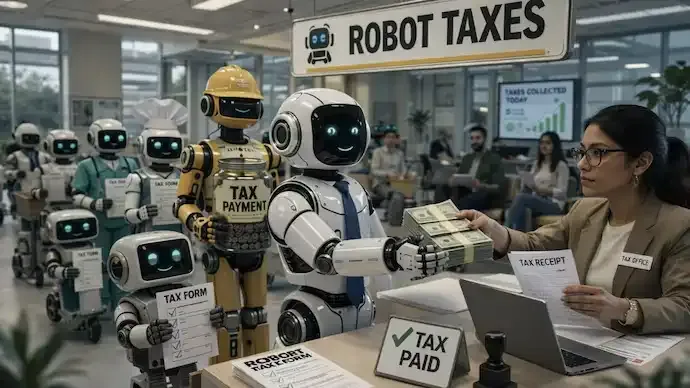

Sam Altman has proposed a bold idea for the future—taxing robots and AI systems as they increasingly take over human jobs.
As artificial intelligence continues to evolve rapidly, Altman suggests that machines could soon handle a significant portion of economic activity.
What Is the Robot Tax Concept?
The concept of a “robot tax” revolves around governments taxing automated systems and AI-driven work, similar to how human labor is taxed today.

The idea is to ensure that as machines generate wealth, they also contribute to public finances, helping maintain economic balance.
Why This Idea Matters Now
AI is already transforming industries, from customer service to manufacturing and software development.
With automation expanding, concerns are growing about job displacement, income inequality, and the future role of humans in the workforce.
Altman’s proposal aims to address these challenges before they become widespread.
What Happens to Human Jobs?
One of the biggest questions raised by this idea is the future of employment.
If machines perform most tasks, humans may need to shift towards more creative, strategic, or interpersonal roles.
Alternatively, governments may need to explore models like universal basic income (UBI) to support citizens.
Potential for Economic Abundance
Some tech leaders believe that AI could lead to a future of abundance, where goods and services become cheaper and more accessible.
In such a scenario, taxing AI systems could help redistribute wealth and ensure that benefits reach a broader population.
Challenges and Criticism
While the idea sounds promising, it also raises practical questions:
- How will governments define and measure “robot work”?
- Could such taxes slow innovation?
- How will global coordination work in regulating AI?
These challenges make implementation complex.
Global Debate on AI Regulation
The proposal has added momentum to ongoing global discussions about AI regulation, ethics, and economic policy.
Countries are increasingly exploring ways to manage the impact of automation on society.
Outlook: Redefining Work and Economy
As AI continues to advance, concepts like robot taxation may become central to economic planning.
The future could see a major shift in how work, income, and productivity are defined.








Conversation
Be kind and stay on topic. Comments are moderated; abuse, spam and personal attacks are removed. Report a problem