

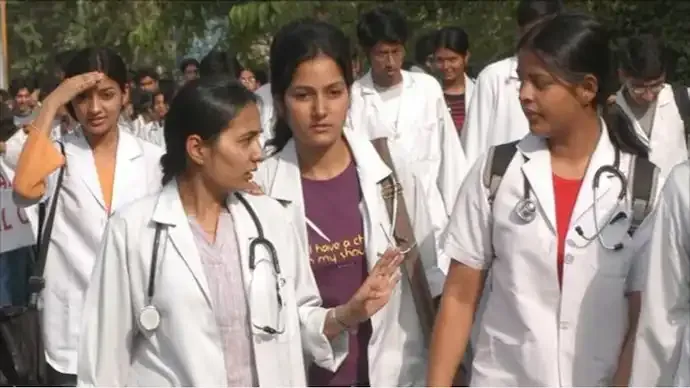

The Centre has approved additional MBBS seats in government medical colleges for the 2026-27 academic session, continuing its push to expand affordable medical education across India. While the move is expected to benefit thousands of aspiring doctors, public health experts believe that simply increasing undergraduate seats will not be enough to address the country's long-standing shortage of healthcare professionals.
They argue that stronger infrastructure, more teaching faculty, expanded postgraduate education and better rural healthcare incentives are equally critical to building a sustainable medical workforce.
Centre Expands MBBS Seats in Government Medical Colleges
India has significantly expanded medical education over the past decade.

According to government data, the number of MBBS seats has more than doubled—from around 51,000 in 2013-14 to over 1.18 lakh by 2024-25. During the last five years alone, undergraduate medical seats have increased by nearly 39%.
Earlier this year, the Centre also approved 10,023 additional medical seats under centrally sponsored schemes between 2025-26 and 2028-29 to improve the doctor-population ratio, particularly in underserved regions.
Government medical colleges continue to remain the preferred choice for most students because of their substantially lower tuition fees compared to private institutions.
More MBBS Seats Are Only the Beginning
Medical experts say expanding admissions is a positive step but will not immediately improve healthcare delivery.
Since an MBBS course takes five and a half years, including the mandatory internship, students admitted today will only join the healthcare workforce well into the next decade.
Experts say increasing seats without improving training capacity risks affecting the quality of medical education.
Faculty and Infrastructure Need Equal Attention
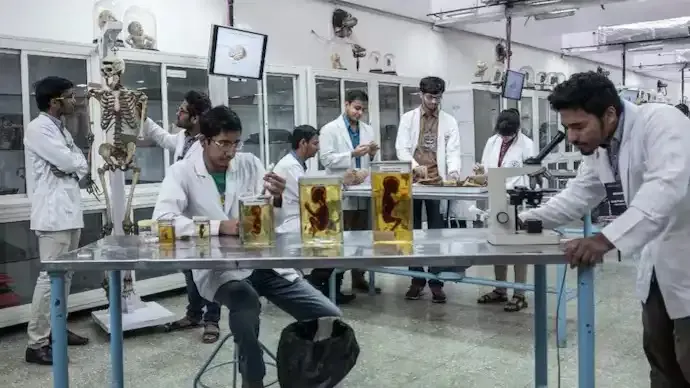
Medical colleges require adequate faculty, teaching hospitals, laboratories and patient exposure to train larger batches of students effectively.
Experts warn that several government medical colleges already face shortages of teaching staff and infrastructure that fall short of National Medical Commission (NMC) norms.
Without proportional investment in classrooms, hospital facilities, equipment and faculty recruitment, expanding seats alone may strain existing institutions.
Many specialists have also called for stricter implementation of NMC standards through regular inspections and greater transparency in evaluation reports.
Rural Healthcare Remains a Major Challenge
India's healthcare challenge is not limited to the number of doctors—it also involves where they choose to practise.
Many primary and community health centres continue to experience severe shortages despite the growing number of MBBS graduates.
Experts say doctors are often reluctant to accept rural postings due to:
- Limited diagnostic facilities
- Inadequate infrastructure
- Poor housing
- Security concerns
- Limited career growth opportunities
They recommend offering stronger financial incentives, better accommodation and improved working conditions to encourage more doctors to serve in underserved areas.
Postgraduate Seat Shortage Is Becoming a Bottleneck
While MBBS seats have expanded rapidly, postgraduate (PG) medical education has not kept pace.
Between 2020-21 and 2025-26, India added 48,563 MBBS seats but only 29,080 postgraduate seats, according to National Medical Commission data.
This imbalance has intensified competition for specialist training through NEET PG, leaving many graduates waiting years to enter their preferred specialties.
Experts say India now needs to accelerate the expansion of postgraduate education to ensure the availability of specialist doctors across the country.
What Experts Say Needs to Change
Healthcare professionals believe India's medical education reforms should now focus on improving quality alongside quantity.
Suggested priorities include:
- Expanding postgraduate medical seats
- Recruiting more qualified faculty
- Upgrading medical college infrastructure
- Strict implementation of NMC norms
- Strengthening rural healthcare facilities
- Promoting Family Medicine
- Integrating artificial intelligence and telemedicine into healthcare
- Improving communication skills and research training in medical education
- Providing stronger legal protection for healthcare workers
Can More MBBS Seats Solve India's Doctor Shortage?
Experts believe increasing admissions is an important milestone, but not a complete solution.
A stronger healthcare system will depend on producing well-trained doctors, expanding specialist education, improving medical infrastructure and ensuring doctors are available where patients need them most.
Without these parallel reforms, simply increasing MBBS seats may not fully address India's healthcare workforce challenges.
Key Highlights
- The Centre has approved additional MBBS seats in government medical colleges for 2026-27.
- India now has over 1.18 lakh MBBS seats, more than double the number a decade ago.
- Experts say faculty, infrastructure and hospital facilities must expand alongside admissions.
- Rural healthcare shortages continue despite rising numbers of medical graduates.
- The limited availability of postgraduate seats remains a major challenge for specialist training.
FAQs
Why is the government increasing MBBS seats?
The Centre aims to improve access to affordable medical education and strengthen India's doctor-population ratio, particularly in underserved regions.
Will more MBBS seats solve India's doctor shortage?
Experts say increased admissions will help over time, but shortages cannot be solved without improving faculty, infrastructure, postgraduate education and rural healthcare.
Why are government medical colleges preferred?
Government medical colleges offer significantly lower tuition fees than private institutions, making medical education more affordable for students.
What is the biggest challenge after MBBS?
Many graduates face intense competition for postgraduate medical seats through NEET PG, limiting the number of specialists entering the healthcare system.
Why do rural areas still face doctor shortages?
Doctors often avoid rural postings due to inadequate infrastructure, limited facilities, housing challenges, security concerns and fewer career opportunities.






Conversation
Be kind and stay on topic. Comments are moderated; abuse, spam and personal attacks are removed. Report a problem