

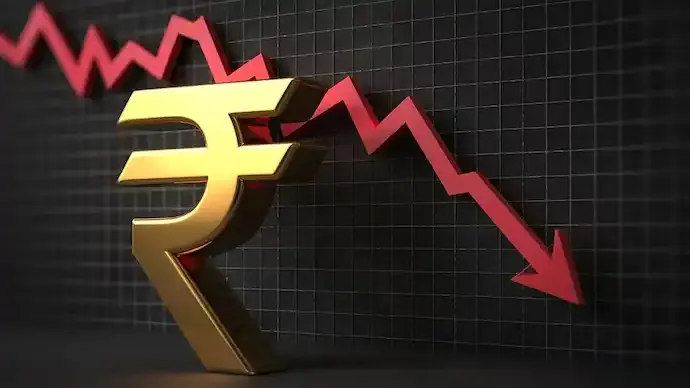

The Indian rupee slipped past the psychologically crucial 91-per-dollar mark on Wednesday, hitting fresh record lows and reflecting mounting pressure from both global and domestic factors. In early trade, the currency briefly touched 91.38 against the US dollar before recovering slightly, but the move underscored growing vulnerability in India’s foreign exchange market.
Market participants say the sharp fall is largely the result of rising global uncertainty, which has triggered a renewed shift by investors toward safe-haven assets. As risk aversion spreads across global markets, the United States dollar has strengthened sharply, putting sustained pressure on emerging market currencies, including the rupee.
Global uncertainty and tariff tensions
One of the primary drivers behind the rupee’s decline is the worsening global risk environment. Renewed trade and geopolitical tensions between the US and Europe have unsettled financial markets, pushing investors to pull money out of riskier assets such as equities and emerging market currencies.

As global equity markets weaken, investors are increasingly parking funds in the dollar, which is traditionally seen as a safe store of value during periods of uncertainty. This “risk-off” sentiment has weighed heavily on the rupee, which tends to weaken whenever global capital flows reverse.
Foreign outflows add pressure
Foreign investor behaviour has compounded the rupee’s troubles. After heavy selling through much of 2025, foreign institutional investors have continued to exit Indian equities and bonds in early 2026. These outflows reduce the supply of dollars in the domestic market and increase demand for the greenback, pushing the rupee lower.
When foreign investors repatriate funds, they convert rupees into dollars, amplifying downward pressure on the local currency. Traders say this trend has been persistent, making it difficult for the rupee to stabilise despite occasional bouts of intervention.
Import demand and hedging activity
Strong demand for dollars from importers has further strained the currency. India’s dependence on imported commodities such as crude oil, electronics, and industrial inputs means that a weaker rupee immediately raises costs. With global prices remaining elevated, many companies have stepped up dollar purchases to hedge against further depreciation.
This aggressive hedging has tilted market activity in favour of dollar buyers, with importers significantly more active than exporters. Dealers say concerns about the rupee weakening further have intensified these defensive strategies, creating a feedback loop that keeps the currency under pressure.
RBI’s calibrated response
The Reserve Bank of India has so far adopted a cautious approach to the rupee’s slide. Market participants believe the central bank has intervened intermittently through state-run banks to smooth excessive volatility, but has avoided defending any specific exchange rate level.
Economists suggest the RBI is allowing the rupee to adjust gradually in line with global developments, stepping in only to prevent disorderly movements. A more aggressive response is likely only if speculative attacks or panic-driven selling emerge.
What the fall means for consumers and markets
A rupee trading beyond 91 per dollar has wide-ranging implications. Higher import costs can translate into costlier fuel, electronics, and manufactured goods, potentially feeding into inflation over time. Overseas travel, foreign education, and purchases denominated in dollars also become more expensive for Indian consumers.
At the same time, a weaker rupee can support exporters by increasing the rupee value of foreign earnings, offering some relief to export-oriented sectors. However, currency weakness often adds to volatility in equity markets, particularly when driven by foreign fund outflows.
Outlook remains uncertain
In the near term, the rupee’s trajectory will depend heavily on global cues. Any easing of geopolitical tensions, improvement in global risk appetite, or slowdown in dollar strength could provide temporary relief. On the flip side, continued foreign selling or fresh global shocks could push the currency deeper into uncharted territory.
For now, the rupee remains vulnerable, caught between global anxiety, persistent capital outflows, and strong demand for the US dollar.






Conversation
Be kind and stay on topic. Comments are moderated; abuse, spam and personal attacks are removed. Report a problem