

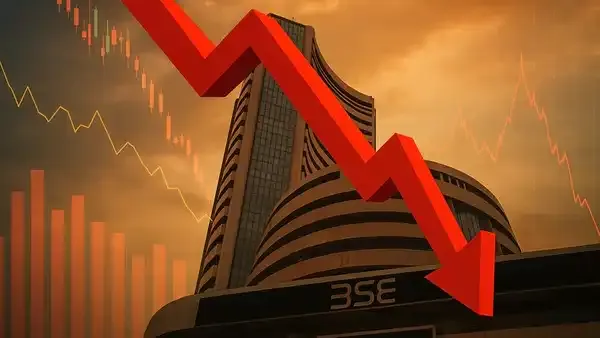

Indian equity markets witnessed a sharp decline on April 13, 2026, with benchmark indices falling significantly due to rising geopolitical tensions and global economic concerns. The Sensex dropped nearly 1,600 points in early trade, while the Nifty 50 slipped below the 23,600 mark, reflecting weak investor sentiment.
Oil Prices Surge Above $100 Adds Pressure
One of the primary reasons behind the market crash is the sharp rise in crude oil prices. Oil prices surged above $100 per barrel after the failure of US-Iran talks and rising tensions in the Middle East.
Higher oil prices directly impact India’s economy, as the country is heavily dependent on crude imports. This increases inflation risks and puts pressure on corporate profitability.

US-Iran Conflict Triggers Global Market Weakness
The ongoing conflict between the United States and Iran has significantly impacted global markets. The failure of peace talks and the possibility of further escalation have created uncertainty across financial markets worldwide.
Global indices also showed weakness, with US futures, European markets, and Asian indices trading in the red, adding to the negative sentiment in Indian equities.
Broad-Based Selling Across Sectors
Selling pressure was visible across all major sectors, with no segment spared. Banking, financial services, and PSU bank stocks led the decline, while oil and gas stocks also remained under pressure.
Defensive sectors such as pharma and healthcare showed relatively lesser decline but still traded in negative territory.
Rupee Weakens and Bond Yields Rise
The Indian rupee weakened against the US dollar, further adding to market concerns. Rising bond yields also indicated tightening financial conditions, making equities less attractive for investors.
These macroeconomic factors contributed to a risk-off sentiment among investors.
Foreign Investors Continue Selling
Persistent foreign institutional investor (FII) outflows have also played a major role in the market decline. Heavy selling by global investors has reduced liquidity and increased volatility in Indian markets.
Volatility Spikes as Market Sentiment Turns Weak
Market volatility surged sharply, with the India VIX rising over 10%, indicating increased fear among investors. This reflects uncertainty regarding future market direction.
Gold and Commodities React to Global Developments
Gold prices declined amid a stronger US dollar and reduced expectations of interest rate cuts. Meanwhile, silver also saw a sharp drop, highlighting broader weakness in commodities.
Experts Advise Caution Amid Uncertainty
Market experts suggest adopting a cautious approach in the current scenario. With geopolitical risks, rising oil prices, and global uncertainty, investors are advised to wait and watch before making major investment decisions.
Outlook Remains Uncertain
The near-term outlook for the Indian stock market remains uncertain. Future movements will largely depend on geopolitical developments, crude oil trends, and global economic signals.







Conversation
Be kind and stay on topic. Comments are moderated; abuse, spam and personal attacks are removed. Report a problem