

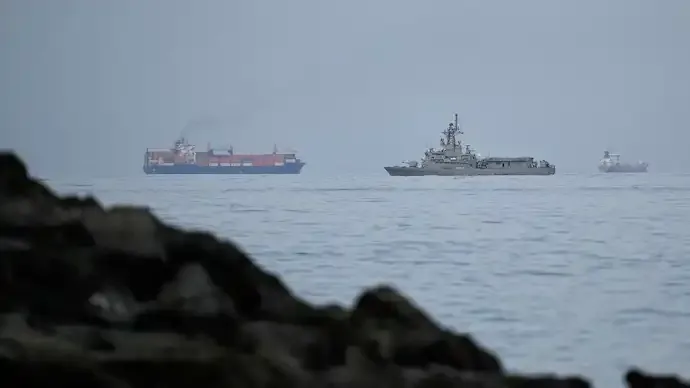

Shipping companies are increasingly steering clear of the US-guided transit route through the Strait of Hormuz following a series of attacks on commercial vessels allegedly carried out by Iran. The growing security risks have sparked fresh concerns over the safety of seafarers, the stability of global energy supplies and the future of maritime trade in one of the world's busiest shipping corridors.
The Strait of Hormuz, a vital passage for global oil and liquefied natural gas (LNG) exports, has become the latest flashpoint in escalating tensions between the United States and Iran.
Shipping Firms Reconsider Hormuz Transit
Several shipping companies are reportedly delaying or suspending voyages through the Strait of Hormuz despite a US military-led escort operation aimed at protecting commercial vessels.

Industry officials cited rising concerns over:
- Crew safety
- Vessel security
- Escalating military tensions
- Increased attacks on commercial ships
Executives say many operators no longer consider the current transit route sufficiently safe for normal commercial operations.
Iranian Attacks Increase Pressure
According to reports, attacks on commercial vessels have intensified in recent weeks.
Iran's Islamic Revolutionary Guard Corps (IRGC) has reportedly claimed responsibility for attacks on two Emirati oil supertankers.
Since July 7, at least five commercial vessels have reportedly come under attack, including:
- Three crude oil supertankers
- One LNG carrier
- One container ship
Most of these incidents reportedly occurred in waters near Oman, where the US-guided shipping corridor has primarily been operating.
Why the Strait of Hormuz Is So Important
The Strait of Hormuz is one of the world's most strategically important maritime routes.
A significant share of global crude oil and liquefied natural gas exports passes through the narrow waterway, connecting Gulf producers with international markets.
Traditionally, ships have used internationally recognised shipping lanes established in 1968.
However, after tensions between Washington and Tehran escalated earlier this year, parts of the traditional route were reportedly disrupted, forcing commercial vessels to use alternative corridors closer to the Iranian and Omani coastlines.
US Escort Operation Faces New Challenges
The United States launched a coordinated security operation involving:
- Naval assets
- Helicopters
- Surveillance drones
- Maritime drones
The mission was designed to escort commercial vessels safely through the Strait of Hormuz and reduce disruptions to global oil shipments.
While the operation initially helped maintain energy exports, recent attacks have raised questions about its effectiveness.
Some shipping companies now believe the security risks remain too high despite military protection.
US Maintains Waterway Is Open
Despite growing concerns from the shipping industry, the White House has maintained that the Strait of Hormuz remains open to international commercial traffic.
US officials have accused Iran of targeting civilian vessels and stated that American forces are working to protect freedom of navigation.
According to US defence officials:
- More than 100 vessels coordinated directly with the US military during transit over the past week.
- More than 300 ships passed through the wider region during the same period.
US President Donald Trump also stated that the Strait of Hormuz remains open to all commercial shipping except Iranian vessels.
Maritime Security Firms Issue Fresh Warnings
Independent maritime security firms continue to urge shipping operators to exercise extreme caution.
Greek security companies Diaplous and MARISKS have advised commercial operators to postpone voyages through the Strait of Hormuz, warning that the current security environment remains highly volatile.
The continued attacks have increased uncertainty over regional shipping routes, crew safety and the uninterrupted flow of energy exports from the Gulf.
Key Highlights
- Shipping companies are increasingly avoiding the US-guided Strait of Hormuz transit route.
- Recent Iranian attacks on commercial vessels have heightened safety concerns.
- At least five ships have reportedly been attacked since July 7.
- The US continues escort operations but shipping firms remain cautious.
- Maritime security experts have advised delaying voyages through the strategic waterway.
FAQs
Why are shipping companies avoiding the Strait of Hormuz?
Shipping firms are citing growing security risks after recent attacks on commercial vessels, raising concerns over crew safety and vessel security.
What is the US-guided transit route?
The US military has been escorting commercial ships through the Strait of Hormuz using naval assets, helicopters and drones to help protect maritime traffic.
Why is the Strait of Hormuz important?
The Strait of Hormuz is one of the world's busiest energy corridors, carrying a significant share of global crude oil and liquefied natural gas exports.
Has the US closed the Strait of Hormuz?
No. US officials maintain that the waterway remains open for international commercial shipping despite heightened regional tensions.
What have maritime security firms advised?
Security firms have urged shipping companies to delay voyages through the Strait of Hormuz until safety conditions improve.





Conversation
Be kind and stay on topic. Comments are moderated; abuse, spam and personal attacks are removed. Report a problem