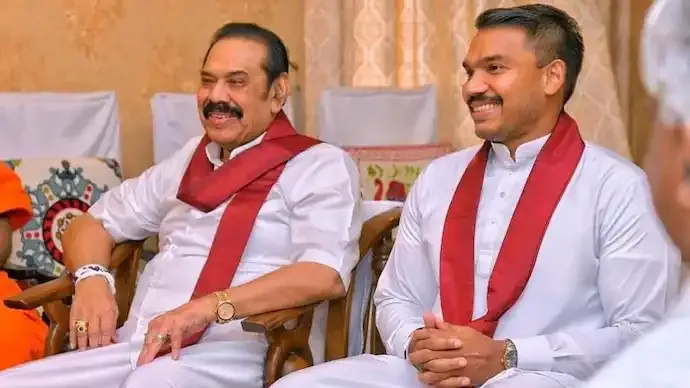
As political instability and public unrest continue to reshape South Asia, Sri Lankan parliamentarian Namal Rajapaksa has called on India to assume a stronger leadership role in maintaining regional stability. His remarks come at a sensitive moment, with neighbouring countries Bangladesh and Nepal preparing for elections amid lingering political volatility.
In a public statement, Rajapaksa stressed the urgency of deeper regional cooperation, pointing to recurring cycles of unrest and regime change across South Asia in recent years. He highlighted India’s strategic importance as a stabilising force capable of addressing shared challenges such as extremism, political violence, and threats to minority communities.
Rajapaksa, the son of former Sri Lankan president Mahinda Rajapaksa, noted that countries including Bangladesh, Nepal, and Sri Lanka have experienced similar trajectories of political disruption. According to him, public dissatisfaction, economic pressure, and governance challenges have repeatedly escalated into mass protests and leadership changes.
Sri Lanka witnessed one of the earliest waves of this turbulence in 2022, when widespread anger over economic mismanagement and corruption erupted into large-scale demonstrations. The unrest ultimately led to the resignation of then-President Gotabaya Rajapaksa, marking a turning point in the country’s political history.
Bangladesh followed with its own crisis in 2024. What began as student protests over employment quotas escalated into a nationwide movement against the ruling establishment. The unrest resulted in the exit of Prime Minister Sheikh Hasina and the formation of an interim administration ahead of national elections.
Nepal saw a similar pattern emerge in 2025. Protests initially sparked by opposition to a social media ban rapidly broadened into an anti-corruption movement. The agitation eventually forced the resignation of the prime minister and president, reinforcing concerns over political fragility in the region.
Against this backdrop, Rajapaksa argued that some of these upheavals may have been intensified by extremist elements exploiting public anger. He underlined the need for a coordinated South Asian response to counter radicalisation, prevent political violence, and protect minority rights.
The emphasis on minority protection has gained particular relevance amid rising concerns over violence against Hindu communities in Bangladesh. Recent incidents and heightened anti-India rhetoric have added to regional unease, reinforcing calls for collective security mechanisms.
Rajapaksa described the upcoming elections in Bangladesh and Nepal as a critical opportunity to restore democratic legitimacy and strengthen regional stability through transparent and credible processes. He suggested that successful elections could help curb further unrest and restore public trust in governance.
India’s role, he said, remains central to achieving these goals. New Delhi has already demonstrated leadership during regional crises, particularly during Sri Lanka’s economic collapse, when India extended financial assistance, credit facilities, and humanitarian support. India also played a key role in disaster response efforts and announced significant aid packages to support Sri Lanka’s recovery.
With South Asia navigating a complex mix of political transitions and security concerns, Rajapaksa’s message reflects a growing expectation that India will continue to act as a pillar of stability, diplomacy, and regional cooperation in an increasingly uncertain neighbourhood.
Prev Article
After Venezuela, Is Iran Next? How Trump’s Regime Change Playbook Is Fueling Global Fears
Next Article
Two Indian Truckers Arrested in US With Cocaine Worth $7 Million, DHS Flags Illegal Entry