

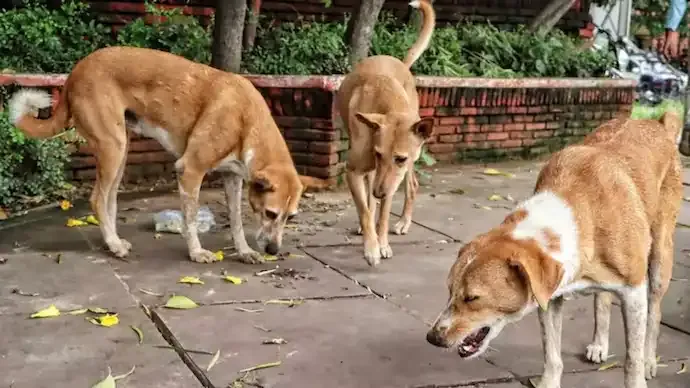
The Supreme Court of India on Thursday resumed hearings in the long-running case concerning the growing menace of stray dogs across the country, focusing on public safety, rising dog bite incidents and the responsibility of civic authorities in managing stray animal populations.
A bench comprising Justices Vikram Nath, Sandeep Mehta and NV Anjaria took up petitions highlighting the increasing risk posed by stray dogs in residential areas, public spaces and near educational institutions. The proceedings come amid growing public concern over dog attacks, especially on children and elderly citizens.
During the hearing, the court made a significant observation, noting that dogs can sense fear in humans and may become aggressive when they perceive it. The bench indicated that human behaviour could be one of the contributing factors in dog bite incidents, while also underlining that the issue cannot be viewed in isolation from administrative failures.
The court is examining whether existing rules and guidelines on stray dog management are being implemented effectively by municipal bodies and local administrations. Petitioners have argued that civic authorities have failed to regulate feeding zones, vaccination drives and population control measures, leading to unchecked aggression and territorial behaviour among stray dogs.
Senior counsel representing one of the petitioners told the court that designated feeding zones, instead of reducing conflict, have in many cases become sources of nuisance. Concentration of dogs in such areas, the counsel argued, has resulted in heightened territorial aggression, making it difficult for residents to access common spaces safely.
Concerns were also raised over violations by pet owners, with allegations that dogs are often taken into public areas without leashes, in clear violation of existing norms. Such practices, the petitioners claimed, blur the line between stray and owned dogs and increase the risk of attacks.
Clarifying the legal position, counsel informed the bench that the state cannot be considered the owner of stray dogs. However, the government does bear responsibility for vaccination, sterilisation and disease control under animal welfare laws. The court was told that while animal protection is essential, public safety must remain a priority.
The bench appeared keen to strike a balance between animal welfare concerns and citizens’ right to safety. Observations made during the hearing suggested that the court may examine whether current regulations sufficiently address both objectives or require stricter enforcement mechanisms.
The stray dog issue has been taken up by the court amid reports of a surge in dog bite cases across several states, prompting demands for clearer accountability and stronger policy implementation. The hearing is part of a suo motu case initiated to assess whether authorities are complying with existing animal birth control rules and public safety guidelines.
The Supreme Court is expected to continue deliberations on the matter, with possible directions to municipal corporations, state governments and animal welfare boards on improving coordination, enforcement and public awareness.
The case remains closely watched, as its outcome could shape future policy on stray animal management, balancing humane treatment with the safety and rights of citizens.




Conversation
Be kind and stay on topic. Comments are moderated; abuse, spam and personal attacks are removed. Report a problem