
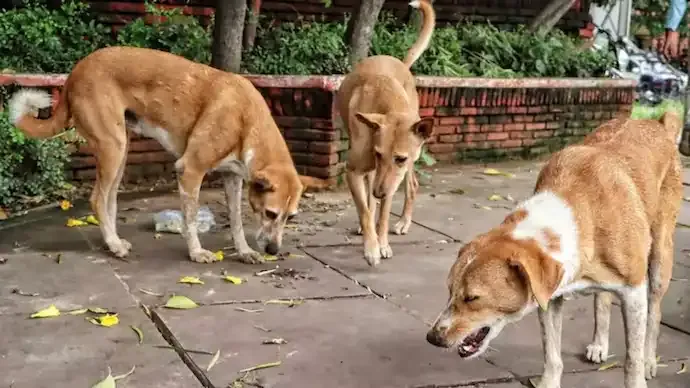
The Supreme Court of India on Wednesday continued hearing a series of petitions related to the growing stray dog problem, raising sharp questions over arguments that focus exclusively on dogs while ignoring the lives of other animals. During the proceedings, the court asked pointedly whether concerns for animal welfare should extend beyond dogs, remarking, “What about other animal lives? What about chickens and goats? Don’t they have lives?”
The observation came amid intense arguments from petitioners, victims’ families, animal welfare activists, and government representatives, highlighting the deeply polarised debate surrounding stray dog management in urban India. The hearing reflected the difficult balance between animal welfare, public safety, and administrative responsibility.
During the proceedings, one of the petitioners attempted to show the court a photograph of a 90-year-old individual who was allegedly attacked by stray dogs and later died due to injuries. The court stopped the attempt, stating that displaying such images was unnecessary for the legal discussion. Counsel representing victims argued that citizens were living in fear and that human rights must be given priority, particularly in cases involving children and senior citizens.
Referring to international practices, the counsel cited countries such as Japan and the United States, where abandoned dogs are taken to shelters and euthanised if not adopted. He claimed that such measures have helped Japan eliminate rabies deaths since 1950 and prevent large-scale stray dog populations. The argument was countered by animal rights activists, who warned that removing dogs from urban ecosystems without addressing waste management and other factors could lead to unintended consequences, including increased problems caused by other animals.
The hearing also saw emotional submissions from affected families. The father of an eight-year-old girl who was attacked by stray dogs in Noida last year told the court that authorities failed to act despite repeated complaints. He urged that Resident Welfare Associations (RWAs) be empowered to declare their housing societies as “no dog zones” to protect residents.
Senior advocate Kapil Sibal, appearing in the matter, stated that animal welfare should be approached holistically. When questioned by the bench about the lives of animals other than dogs, he responded by emphasising humane treatment across species and drew parallels with wildlife conservation, arguing that isolated incidents should not lead to blanket actions against all animals. He strongly supported the global Capture–Sterilise–Vaccinate–Release (CSVR) model, claiming it has significantly reduced stray dog populations in several cities worldwide.
Sibal further argued that in a country facing challenges such as unregulated garbage dumping and densely populated slums, removing stray dogs without systemic reforms could worsen sanitation and rodent control issues. He also highlighted the financial burden of sheltering large numbers of dogs and criticised municipal bodies for failing to properly implement Animal Birth Control (ABC) rules through qualified agencies and NGOs.
Senior advocate Colin Gonsalves, representing animal welfare organisations, questioned the accuracy of dog bite data, stating that reported figures were inflated due to multiple vaccine doses being counted as separate cases. He warned that hasty decisions driven by public hysteria could have irreversible consequences for animal welfare.
The court observed that its earlier directions were limited to institutional areas such as schools, hospitals, and courts, questioning the resistance to removing stray dogs from such sensitive locations. The Solicitor General added that the debate had become centred on dog lovers rather than animal lovers, arguing that decisions in gated communities should reflect the collective will of residents through RWAs.
As the hearing progressed, Justice Vikram Nath remarked that the court would hear all sides, acknowledging both emotional and practical concerns. The proceedings underscored the complexity of the stray dog issue, as the court continues to weigh public safety, animal rights, and sustainable urban governance in search of a balanced solution.



Conversation
Be kind and stay on topic. Comments are moderated; abuse, spam and personal attacks are removed. Report a problem