

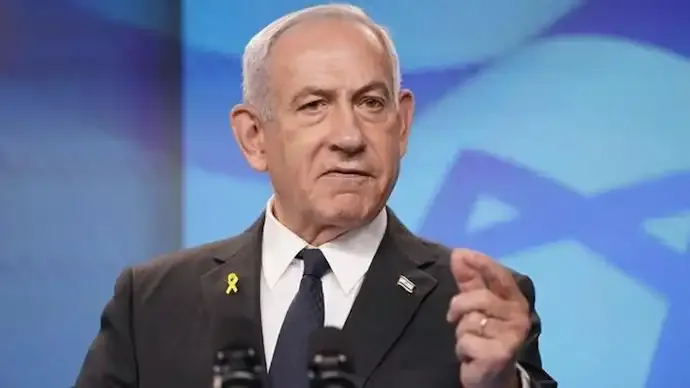

Israeli Prime Minister Benjamin Netanyahu has publicly opposed US President Donald Trump's proposal to sell F-35 stealth fighter jets to Turkey, warning that such a move could significantly alter the military balance in the Middle East and embolden Ankara.
The remarks come as the United States signals a reset in relations with Turkey, including plans to ease sanctions linked to Ankara's purchase of the Russian-made S-400 missile defence system and renewed discussions over Turkey's return to the F-35 fighter programme.
Netanyahu said he had personally conveyed Israel's concerns to Trump, arguing that supplying one of the world's most advanced combat aircraft to Turkey could have far-reaching security implications for the region.

Netanyahu raises concerns over Turkey's role
Speaking during an interview, Netanyahu questioned Turkey's reliability as a strategic partner for the United States.
He argued that Ankara's current policies and regional posture do not justify access to advanced American military technology.
According to Netanyahu, strengthening Turkey's air power with fifth-generation stealth fighters could shift the regional balance and create new security challenges for Israel and its allies.
The Israeli leader also claimed he had directly urged Trump to reconsider any decision regarding the proposed sale.
Trump signals warmer ties with Turkey
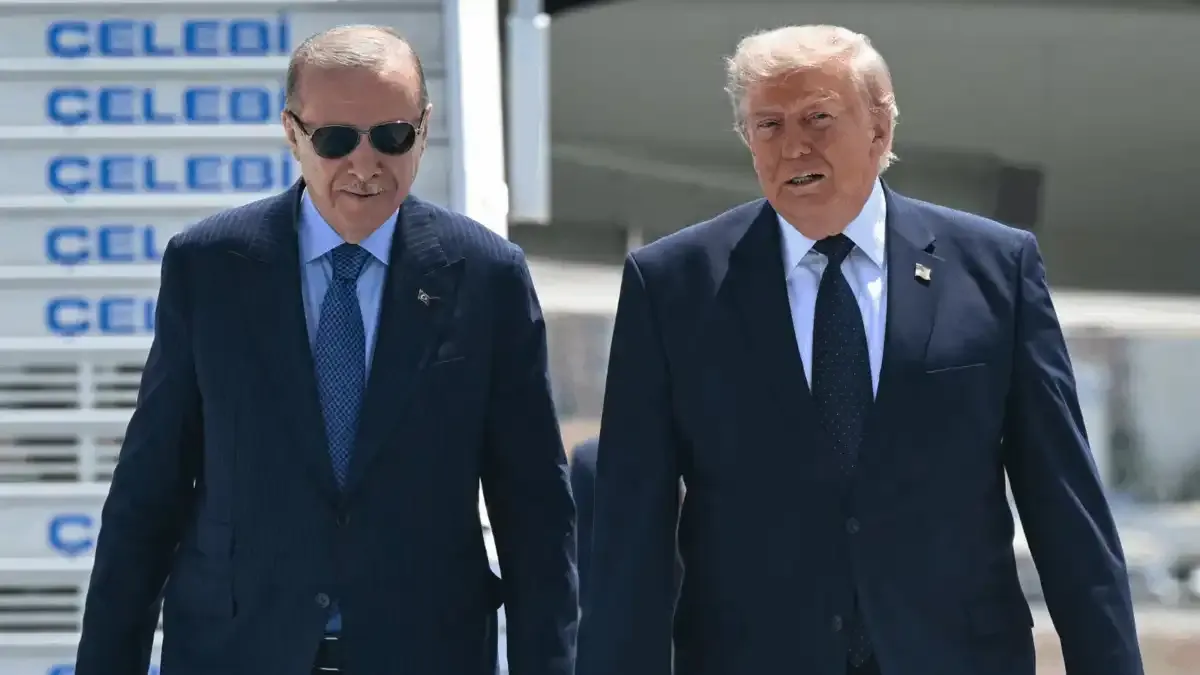
Netanyahu's comments came shortly after President Trump announced that Washington intends to improve its relationship with Turkey.
During his visit for the NATO summit, Trump indicated that the United States plans to remove sanctions imposed on Ankara following its acquisition of the Russian S-400 air defence system.
The US President also expressed openness to allowing Turkey to rejoin the F-35 programme, describing bilateral ties as stronger than they had been in years.
Trump praised Turkish President Recep Tayyip Erdogan, saying relations between the two countries had improved significantly.
Why was Turkey removed from the F-35 programme?
Turkey was originally a partner in the multinational F-35 programme and had planned to acquire the stealth fighter aircraft.
However, the United States suspended Turkey's participation after Ankara purchased the Russian-made S-400 missile defence system.
Washington argued that operating both systems together could expose sensitive information about the F-35's stealth capabilities, posing a security risk to NATO.
The disagreement led to:
- Turkey's removal from the F-35 programme.
- Suspension of aircraft deliveries.
- US sanctions targeting Turkey's defence procurement agency.
The latest statements from Trump indicate a possible shift in that policy.
Why Israel opposes the sale
Israel has traditionally maintained a Qualitative Military Edge (QME) in the Middle East, a longstanding US policy aimed at ensuring Israel retains superior military capabilities compared to potential regional adversaries.
The F-35 plays an important role in preserving that technological advantage.
Israeli officials fear that supplying the same aircraft to Turkey could reduce Israel's operational superiority and complicate regional security dynamics.
Netanyahu argued that advanced fighter aircraft should not be transferred if they risk upsetting the existing military balance.
Erdogan pushes for F-35 return
President Erdogan welcomed Trump's remarks and expressed optimism about Turkey's efforts to rejoin the programme.
Turkish officials have consistently argued that the country fulfilled its commitments as an original F-35 partner and should be allowed to receive the aircraft.
Ankara also maintains that the S-400 purchase was driven by national defence requirements and should not permanently affect cooperation with NATO allies.
What are the F-35 fighter jets?
The F-35 Lightning II is one of the world's most advanced fifth-generation multirole combat aircraft.
Developed by Lockheed Martin, the aircraft features:
- Stealth technology
- Advanced electronic warfare systems
- Network-centric battlefield capabilities
- Precision strike capability
- Multi-role combat performance
The aircraft is operated by several NATO members and US allies and is regarded as one of the most capable fighter platforms currently in service.
Strategic implications for the Middle East
The disagreement reflects broader geopolitical tensions involving the United States, Israel and Turkey.
Key issues include:
- Military balance in the Middle East.
- NATO cohesion.
- Defence cooperation among allies.
- Regional security architecture.
- The future of US-Turkey strategic relations.
While Washington seeks to rebuild ties with Ankara, Israel remains concerned about the long-term implications of expanding Turkey's military capabilities.
Whether the proposed F-35 sale ultimately proceeds will likely depend on future diplomatic negotiations and broader US foreign policy priorities.
Defence & Geopolitical Impact
Regional Security
- Israel fears losing its qualitative military advantage.
- Turkey could significantly strengthen its air force if the deal proceeds.
- Regional military dynamics may shift depending on future arms transfers.
Impact on NATO
The proposal reflects Washington's efforts to improve relations with an important NATO ally despite previous disagreements over Russian defence equipment.
Future Outlook
The issue is expected to remain a key point of discussion between Washington, Ankara and Jerusalem. Any final decision on the F-35 sale will likely involve broader strategic and security considerations beyond defence procurement alone.
Featured Snippet
Israeli Prime Minister Benjamin Netanyahu has opposed US President Donald Trump's proposal to sell F-35 fighter jets to Turkey, warning the move could upset the Middle East's military balance. Trump, meanwhile, has indicated that Washington is open to restoring defence cooperation with Ankara.
Key Highlights
- Netanyahu opposed Trump's proposed F-35 sale to Turkey.
- Israel fears the deal could alter the regional military balance.
- Trump has indicated support for improving US-Turkey relations.
- Washington plans to lift sanctions linked to Turkey's S-400 purchase.
- Turkey is seeking to rejoin the F-35 fighter programme.
- Israel wants to preserve its qualitative military edge.
- The disagreement highlights broader geopolitical tensions within NATO.
- Any final decision will depend on future diplomatic negotiations.
Conclusion
The debate over supplying F-35 fighter jets to Turkey extends far beyond a conventional defence sale. It reflects competing security priorities among close US partners and underscores the complex geopolitical landscape of the Middle East. While Washington appears interested in rebuilding ties with Ankara, Israel remains firmly opposed to any move it believes could weaken its long-standing military advantage. The outcome of these discussions could influence regional security calculations and NATO dynamics for years to come.
FAQs
1. Why is Netanyahu opposing the F-35 sale to Turkey?
He believes supplying advanced stealth fighters to Turkey could upset the Middle East's military balance and reduce Israel's strategic advantage.
2. Why was Turkey removed from the F-35 programme?
Turkey was removed after purchasing the Russian-made S-400 missile defence system, which the US said posed security risks to NATO technology.
3. What is the F-35 fighter jet?
The F-35 Lightning II is a fifth-generation stealth multirole fighter aircraft developed by Lockheed Martin.
4. Has Trump approved the sale?
Trump has expressed openness to the proposal and improving relations with Turkey, but no final decision has been announced.
5. Why is the S-400 system controversial?
The US argues that operating Russian S-400 systems alongside F-35 aircraft could compromise sensitive military technology.
6. What is Israel's Qualitative Military Edge?
It is a long-standing US policy aimed at ensuring Israel maintains superior military capabilities compared to potential regional adversaries.
7. What sanctions were imposed on Turkey?
The United States imposed sanctions after Turkey acquired the Russian S-400 air defence system and suspended Ankara from the F-35 programme.
8. What could happen next?
Future negotiations between the US, Turkey and Israel will determine whether defence cooperation resumes and whether Turkey eventually rejoins the F-35 programme.







Conversation
Be kind and stay on topic. Comments are moderated; abuse, spam and personal attacks are removed. Report a problem