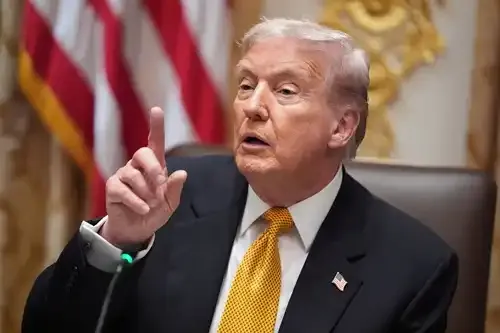
In a move that has stirred diplomatic controversy, US President Donald Trump announced that no American officials will attend the upcoming G20 summit in South Africa, accusing the Pretoria government of “mistreating white farmers” — a claim strongly denied by South African authorities.
The summit, scheduled for November 22–23, was expected to bring together world leaders from major and emerging economies to discuss global trade, energy, and climate policy. However, the United States’ withdrawal marks one of the most dramatic boycotts in the history of the G20 forum.
Trump’s Accusations and Social Media Statement
Taking to his social media platform, Trump wrote:
“It is a total disgrace that the G20 will be held in South Africa. Afrikaners — people descended from Dutch, French, and German settlers — are being killed, and their land and farms are being illegally confiscated. No US Government Official will attend as long as these Human Rights abuses continue. I look forward to hosting the 2026 G20 in Miami, Florida!”
Trump’s remarks refer to long-debated claims of violence and land seizures targeting white farmers in South Africa — allegations that have been widely disputed by local and international human rights observers.
Vice President JD Vance Cancels Attendance
Vice President JD Vance, who had been slated to represent the US at the summit, has reportedly canceled his travel plans following Trump’s directive. A person close to the vice president, speaking anonymously, confirmed the withdrawal to multiple media outlets.
Pretoria Rejects Claims of Discrimination
The South African government, led by President Cyril Ramaphosa, dismissed Trump’s accusations as “baseless and politically motivated.” Officials emphasized that white citizens continue to hold significant economic power in the country, with wealth and land distribution still largely favoring minority communities decades after apartheid.
Ramaphosa has previously stated that reports of “systematic persecution” of white farmers are “completely false”, insisting that South Africa’s land reform policies aim to address historic inequality rather than promote racial discrimination.
Wider Diplomatic Fallout
The boycott represents the latest flashpoint in strained US–South Africa relations under Trump’s presidency. Earlier this year, his administration drew criticism for its decision to prioritize white South Africans in its refugee resettlement program, while drastically reducing overall refugee intake to 7,500 per year.
Trump has also repeatedly called for South Africa to be expelled from the G20, arguing that the forum should not include countries that “fail to protect basic property rights.”
In February, Secretary of State Marco Rubio skipped the G20 Foreign Ministers’ Meeting in Johannesburg, objecting to what he called an “ideological agenda” centered on diversity and climate change.
Looking Ahead to Miami 2026
Despite growing tensions, Trump reiterated his intention to host the next G20 summit in Miami in 2026, framing it as a symbol of “freedom, fairness, and respect for all nations.”
The South African government has not yet issued a formal response to the boycott decision, but officials privately expressed concern that the move could undermine multilateral cooperation ahead of key global discussions on energy, trade, and development.
For now, Trump’s G20 withdrawal underscores the administration’s increasingly nationalist and selective approach to global diplomacy, reshaping how the US engages with both allies and rivals on the world stage.