Shopping cart
Your cart empty!


Your cart empty!
Terms of use dolor sit amet consectetur, adipisicing elit. Recusandae provident ullam aperiam quo ad non corrupti sit vel quam repellat ipsa quod sed, repellendus adipisci, ducimus ea modi odio assumenda.
Lorem ipsum dolor sit amet consectetur adipisicing elit. Sequi, cum esse possimus officiis amet ea voluptatibus libero! Dolorum assumenda esse, deserunt ipsum ad iusto! Praesentium error nobis tenetur at, quis nostrum facere excepturi architecto totam.
Lorem ipsum dolor sit amet consectetur adipisicing elit. Inventore, soluta alias eaque modi ipsum sint iusto fugiat vero velit rerum.
Sequi, cum esse possimus officiis amet ea voluptatibus libero! Dolorum assumenda esse, deserunt ipsum ad iusto! Praesentium error nobis tenetur at, quis nostrum facere excepturi architecto totam.
Lorem ipsum dolor sit amet consectetur adipisicing elit. Inventore, soluta alias eaque modi ipsum sint iusto fugiat vero velit rerum.
Dolor sit amet consectetur adipisicing elit. Sequi, cum esse possimus officiis amet ea voluptatibus libero! Dolorum assumenda esse, deserunt ipsum ad iusto! Praesentium error nobis tenetur at, quis nostrum facere excepturi architecto totam.
Lorem ipsum dolor sit amet consectetur adipisicing elit. Inventore, soluta alias eaque modi ipsum sint iusto fugiat vero velit rerum.
Sit amet consectetur adipisicing elit. Sequi, cum esse possimus officiis amet ea voluptatibus libero! Dolorum assumenda esse, deserunt ipsum ad iusto! Praesentium error nobis tenetur at, quis nostrum facere excepturi architecto totam.
Lorem ipsum dolor sit amet consectetur adipisicing elit. Inventore, soluta alias eaque modi ipsum sint iusto fugiat vero velit rerum.
Do you agree to our terms? Sign up

Former US National Security Adviser John Bolton has described President Donald Trump’s foreign policy decision-making as impulsive, episodic and driven more by personal calculations than long-term strategic thinking, as Washington weighs its next steps on Iran amid escalating unrest.
Speaking in an interview, Bolton said the possibility of US military action against Iran cannot be ruled out, but cautioned that Trump’s approach to foreign policy lacks a consistent framework. According to him, Trump does not operate with a clear doctrine or grand strategy, instead making decisions that are “transactional, ad hoc and episodic,” often shaped by what he perceives as politically or personally advantageous at a given moment.
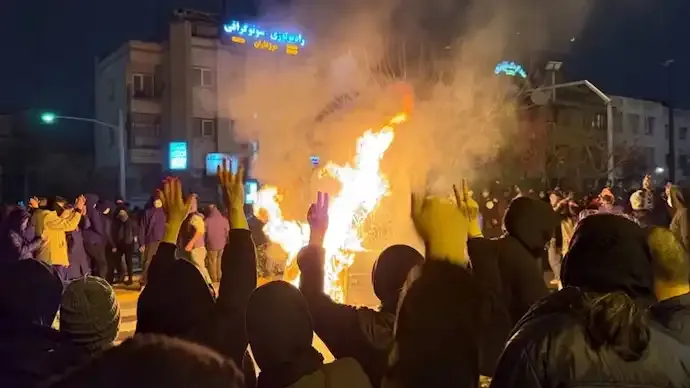
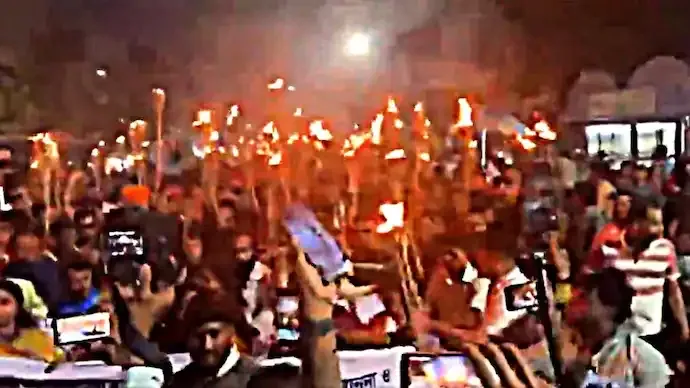
Bolton’s comments come as Iran faces its most intense wave of protests in years, triggered by economic distress and rapidly evolving into a broader challenge to the country’s clerical leadership. The unrest has drawn strong reactions from Washington, with Trump publicly urging Iranians to remain on the streets and claiming that “help is on the way.” He has also announced the cancellation of all diplomatic engagements with Tehran, citing what he called the senseless killing of protesters.
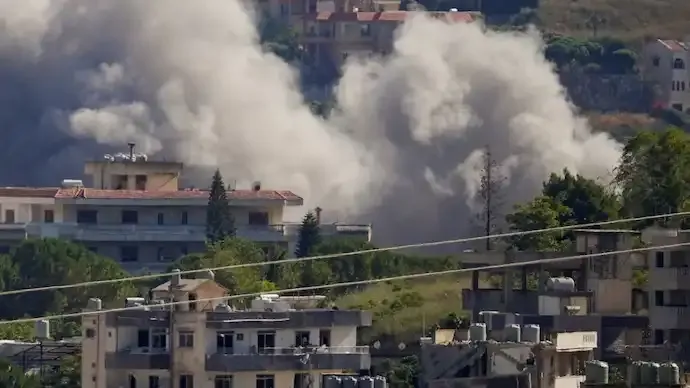
Assessing Trump’s warnings about taking the “strongest possible options,” Bolton said the threat of military force is real. He pointed out that the United States and Israel had already conducted strikes against Iran’s nuclear infrastructure in the recent past, demonstrating that the use of force is not merely rhetorical. However, he stressed that it remains unclear whether Trump has a defined objective behind his statements.
Bolton argued that clarity of purpose is essential if Washington is to take decisive action. He said that if the aim were regime change, the nature of military and diplomatic targets would be very different from a limited show of force meant only to signal support for protesters. In his view, isolated strikes without a broader political and strategic roadmap would have little lasting impact.
The former national security adviser rejected the argument that external military pressure would automatically push Iranians to rally behind their rulers. Referring to past strikes on Iran’s nuclear programme, Bolton noted that instead of consolidating support for the regime, public anger has intensified, with protesters openly calling for the downfall of the leadership. He described the current phase as one of the weakest moments for the Iranian establishment since the 1979 Islamic Revolution.
Bolton also highlighted the uncertainty surrounding Trump’s newly announced economic measures, including a proposed 25 per cent tariff on countries trading with Iran. He termed the move extraordinary and questioned whether it would survive legal scrutiny in the United States, suggesting that courts could intervene before such tariffs are fully enforced. In his assessment, more effective pressure could come from cracking down on illicit oil shipments that allow sanctioned Iranian crude to reach global markets.
Despite outlining what he believes should be a more coherent approach, Bolton admitted that predicting Trump’s next move is difficult. He said Trump does not follow policy-making norms and often changes course abruptly. Still, Bolton noted that Iran has long been a focal point of Trump’s worldview, dating back to his opposition to the 2015 nuclear deal.
According to Bolton, the coming days could prove decisive. If Trump concludes that decisive action against Tehran aligns with his political interests, Washington may move quickly. “We’ll know soon,” he said, underscoring the volatile and unpredictable nature of US policy toward Iran at this critical juncture.
29
Published: Jan 14, 2026

All India Story is your trusted source for comprehensive and up-to-the-minute news coverage across India. Bringing you the latest on politics, business, technology, entertainment, sports, and more, we are dedicated to keeping you informed with accurate, engaging, and insightful stories from every corner of the nation.