
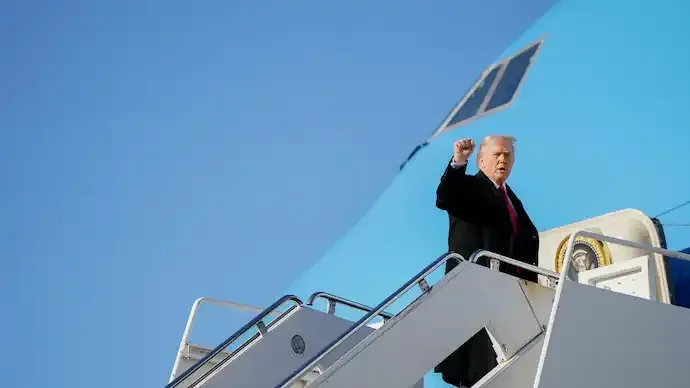
US President Donald Trump has indicated he will play an indirect role in upcoming negotiations with Iran over its nuclear programme, as tensions escalate across the Gulf region. Speaking to reporters aboard Air Force One, Trump described the dialogue as highly significant and suggested the outcome could shape regional stability.
“I’ll be involved in those talks, indirectly. And they’ll be very important,” he said, emphasizing the stakes ahead of the next round of negotiations.
Tough Tone Ahead of Critical Negotiations
Trump suggested Iran may approach negotiations with greater caution following last summer’s US military strikes on Iranian nuclear sites. He stated that Tehran understands the potential consequences of failing to reach an agreement and indicated that the current environment could encourage compromise.
“I don’t think they want the consequences of not making a deal,” he said.
The comments come ahead of a second round of talks aimed at addressing concerns over Iran’s nuclear activities.
US Military Build-Up Signals Pressure Strategy
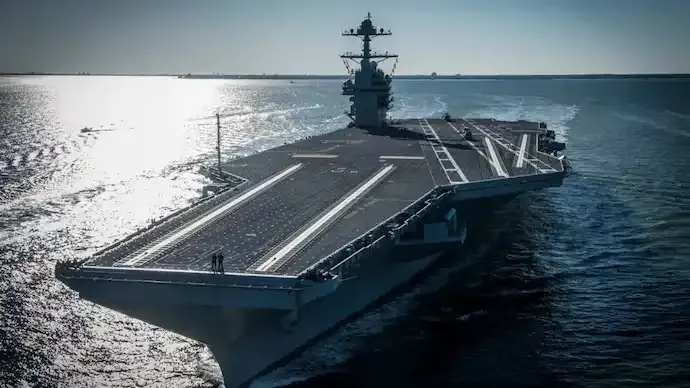
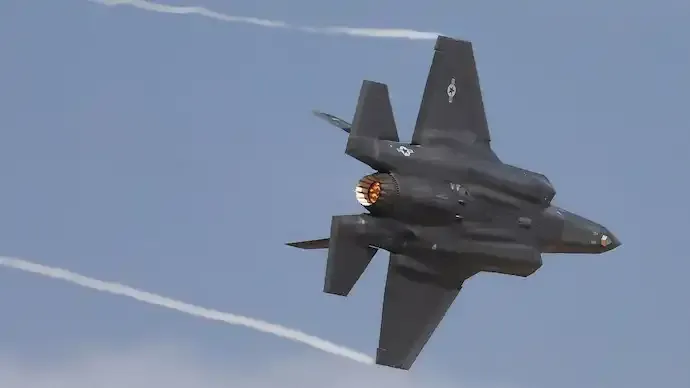
Tensions have risen sharply in recent weeks, with the United States deploying additional military assets to the Middle East. A second aircraft carrier strike group has been positioned in the region, and further reinforcements are reportedly being prepared.
The USS Gerald R. Ford, the world’s largest aircraft carrier, is being deployed to join existing naval forces. The enhanced presence signals Washington’s readiness to maintain military pressure if diplomatic efforts fail.
Officials have stressed that diplomacy remains the preferred path but noted that contingency plans exist should negotiations collapse.
Rising Naval Activity in the Strait of Hormuz
Iran has conducted multiple naval exercises in recent weeks, testing operational readiness across the Strait of Hormuz, the Persian Gulf, and the Gulf of Oman — waterways vital to global energy supplies.
Maritime advisories warned of possible live-fire drills in Iranian territorial waters, raising concerns among commercial shipping operators. Similar exercises earlier prompted warnings from US military command urging safe and professional conduct in international waters.
Regional tensions escalated further earlier this month when a US Navy aircraft shot down an Iranian drone approaching a carrier group. Reports also indicated harassment of a US-linked merchant vessel transiting the Strait of Hormuz.
Diplomacy, Sanctions, and Nuclear Limits
Washington continues to seek an agreement that prevents Iran from developing nuclear weapons and restricts uranium enrichment. Iran maintains that its nuclear programme is for peaceful purposes but has signaled that sanctions relief must be part of any agreement.
Iranian officials have indicated openness to compromise if economic restrictions are eased. Diplomatic channels have remained active, with Oman hosting indirect talks earlier this month.
Previous negotiations collapsed amid regional conflict, underscoring the fragile nature of diplomacy in the region.
High-Stakes Moment for Regional Stability
The upcoming negotiations come at a critical moment, with military posturing, maritime tensions, and diplomatic maneuvering unfolding simultaneously. Analysts say the outcome could influence regional security, energy markets, and global geopolitical stability.
As talks resume, the balance between diplomacy and deterrence will likely shape the next phase of US–Iran relations.

Conversation
Be kind and stay on topic. Comments are moderated; abuse, spam and personal attacks are removed. Report a problem