



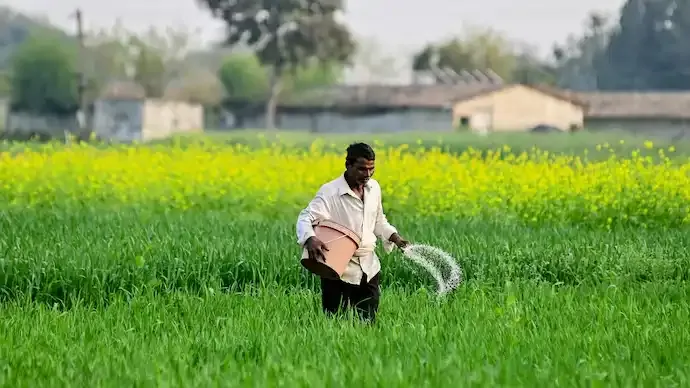
India’s Minimum Support Price (MSP) system has reached unprecedented scale, with record procurement volumes, rising government spending, and a growing number of farmers receiving support. Despite these gains, farmer protests continue, shifting the national debate from expansion to income security and legal assurance.
Government data shows that 122.3 million metric tonnes of crops were procured under MSP in 2024–25, highlighting the growing reach of the programme.
Record Spending and Procurement Growth
The Centre spent ₹3.47 lakh crore on MSP procurement in 2024–25 — the highest ever. This marks a sharp rise from ₹2.63 lakh crore in 2023–24 and exceeds the previous peak of ₹2.80 lakh crore recorded in 2020–21.

The increase reflects:
-
Higher MSP rates
-
Larger procurement volumes
-
Expanded participation by farmers
Total procurement rose from 108.9 million metric tonnes in 2023–24 to 122.3 million metric tonnes in 2024–25.
Meanwhile, the number of farmers benefiting from MSP purchases increased from 15.2 million to 19.6 million.
More Farmers Now Linked to MSP
For years, MSP was criticised for benefiting only a small fraction of farmers. A 2015 Shanta Kumar Committee report estimated that just 6% of farmers received MSP benefits.
Recent data suggests the situation has evolved.
With increased procurement of pulses, oilseeds, and other crops beyond wheat and paddy:
-
Around 14% of India’s farming households are now connected to MSP purchases.
-
Out of roughly 140 million farming families, nearly 19.6 million received MSP support in 2024–25.
Experts say older estimates may no longer reflect current realities.
Why Protests Continue Despite Expansion
Even as MSP coverage grows, farmers continue to protest due to structural concerns.
1. No Legal Guarantee
MSP applies only to government procurement. Private traders are not legally required to pay MSP.
As a result:
-
Market prices often fall below MSP.
-
Farmers sell at lower rates when procurement centres are limited or delayed.
Farmer groups demand a legal framework preventing purchases below MSP.
2. Gap Between MSP and Market Prices
In many mandis, actual selling prices remain lower than MSP, reducing real income.
Without adequate procurement access, announced MSP rates do not always translate into earnings.
Debate Over MSP Calculation Formula
Another key dispute concerns how MSP is calculated.
Current Formula: A2+FL
Includes:
-
Paid-out costs
-
Value of family labour
Farmer Demand: C2 Formula
Includes:
-
Land rent
-
Capital costs
-
Full production expenses
This method was recommended by the Swaminathan Commission.
Example (2025–26 Kharif season):
-
Paddy MSP (A2+FL): ₹2,369 per quintal
-
Estimated MSP (C2): ₹3,135 per quintal
Farmers argue the difference significantly affects their income.
How MSP Procurement Works
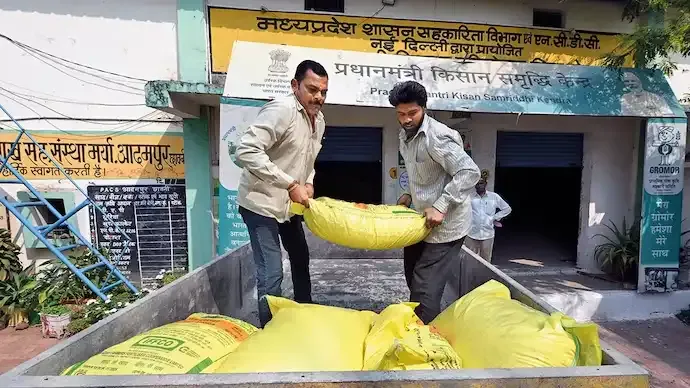
MSP procurement is carried out through multiple agencies:
-
Food Corporation of India (FCI) and state agencies procure wheat and rice.
-
PM-AASHA scheme supports pulses, oilseeds, and copra procurement.
-
NAFED and NCCF manage procurement for select crops.
-
Specialised agencies procure cotton and jute.
MSP is announced for 22 crops based on recommendations from the Commission for Agricultural Costs and Prices.
The system is designed to provide farmers with a price safety net when market rates fall.
Scale Has Expanded, Security Debate Continues
India’s MSP framework is clearly expanding, with higher procurement, greater spending, and more beneficiaries.
However, the policy debate has shifted. Farmers are increasingly focused on:
-
Legal guarantees
-
Market price enforcement
-
Fair cost calculation
Until these concerns are addressed, record procurement numbers alone may not ease unrest.





Conversation
Be kind and stay on topic. Comments are moderated; abuse, spam and personal attacks are removed. Report a problem