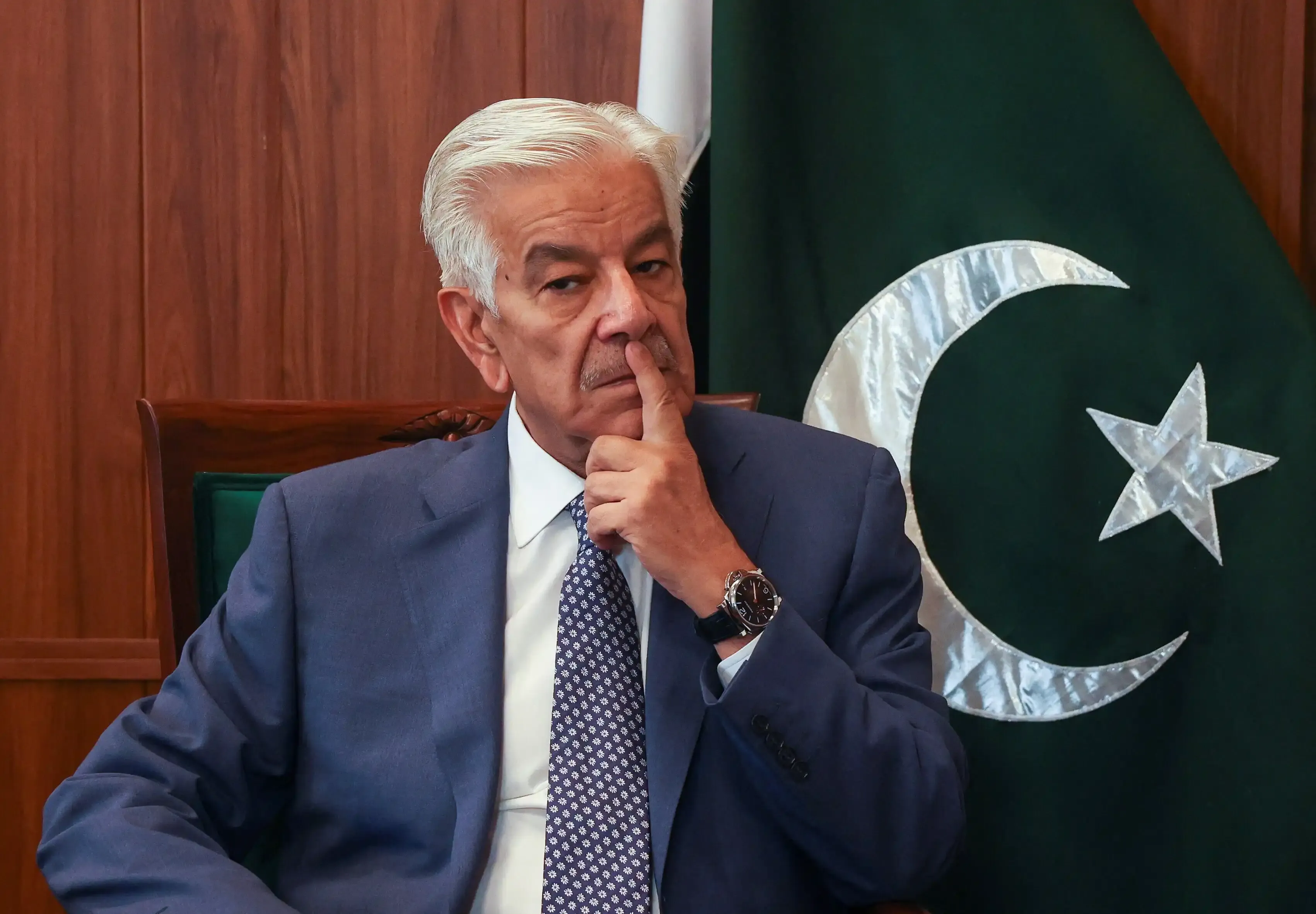
Pakistan’s Defence Minister Khawaja Asif recently drew attention to the country’s long and complex relationship with the United States, remarking in Parliament that Pakistan had been treated “worse than toilet paper” by Washington. His statement has reignited debate over decades of strategic cooperation, shifting alliances, and geopolitical realities that have defined US–Pakistan relations since 1947.
From its early years, Pakistan sought security and economic support from the United States, driven largely by concerns over regional security and its rivalry with India. Initially, Washington showed greater interest in India due to its size and democratic framework. However, India’s commitment to non-alignment during the Cold War led the US to view Pakistan as a strategic partner in containing Soviet influence.
Pakistan’s alignment became formalised in the 1950s when it joined US-backed military alliances such as the Southeast Asia Treaty Organization (SEATO) and the Central Treaty Organization (CENTO). These agreements provided military aid and strategic cooperation but were primarily aimed at Cold War containment rather than addressing Pakistan’s regional concerns.
During the late 1950s, the establishment of a US intelligence facility near Peshawar underscored Pakistan’s strategic significance. The site supported reconnaissance missions, including the 1960 U-2 surveillance flight incident that escalated Cold War tensions and exposed Pakistan to potential retaliation threats.
Pakistan’s strategic importance increased again following the Soviet invasion of Afghanistan in 1979. As part of US-led efforts to counter Soviet forces, Pakistan became a key operational hub, facilitating support to Afghan resistance fighters. While this partnership brought financial and military assistance, it also contributed to long-term regional challenges, including refugee influxes, arms proliferation, narcotics trafficking, and the spread of extremist networks.
After Soviet withdrawal, US aid declined and sanctions were imposed in 1990 over Pakistan’s nuclear program, reinforcing perceptions of a transactional partnership. The relationship regained urgency after the September 11, 2001 attacks, when Pakistan supported US-led counterterrorism operations and provided logistical routes and intelligence cooperation.
However, this phase also triggered internal security challenges. Militant groups emerged in response to military operations in tribal regions, leading to domestic instability and major terror incidents within Pakistan. Relations were further strained following the 2011 US operation that killed Osama bin Laden in Abbottabad without prior notification to Pakistani authorities, raising sovereignty concerns.
The US withdrawal from Afghanistan in 2021 again left Pakistan confronting regional instability, border security challenges, and refugee pressures. Pakistani officials expressed frustration that strategic cooperation had repeatedly left the country managing long-term consequences.
Analysts often describe US–Pakistan relations as cyclical: periods of close cooperation driven by strategic necessity followed by disengagement once geopolitical priorities shift. Meanwhile, India has built a separate trajectory, maintaining strategic autonomy while expanding economic and defence cooperation with the United States.
Asif’s remarks have revived debate within Pakistan about whether past policies contributed to the country’s strategic vulnerabilities. The discussion continues over how Pakistan should shape its future foreign policy to ensure long-term stability, sovereignty, and economic resilience in an evolving geopolitical landscape.
Prev Article
IIT Guwahati Partners with Skyroot Aerospace to Develop Space-Grade Components
Next Article
Indian Railways Food Menu in the 1990s: A Nostalgic Journey