

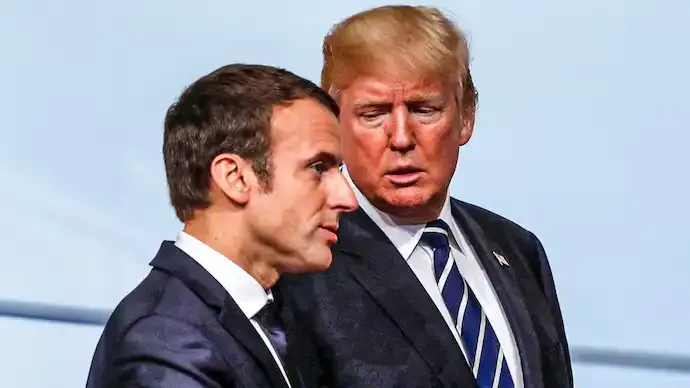

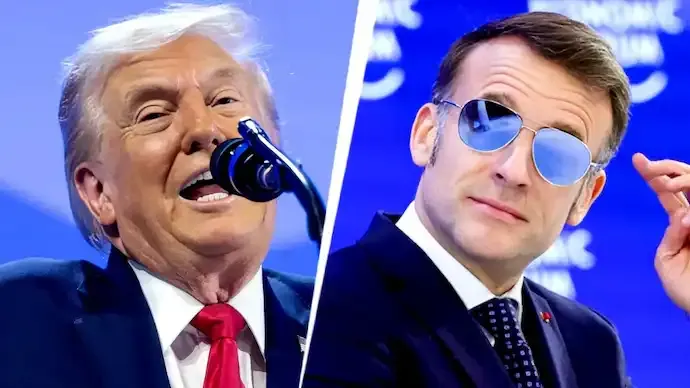
US President Donald Trump has once again ignited transatlantic tensions after vowing to impose a 200 per cent tariff on French wine and champagne, reacting angrily to French President Emmanuel Macron refusing to join Washington’s proposed Board of Peace initiative.
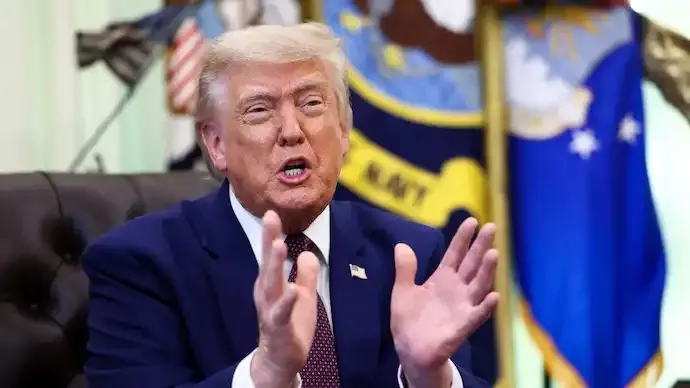
Speaking to reporters in Washington, Trump dismissed Macron’s decision in unusually blunt terms, claiming the French leader lacked political relevance while warning of punitive trade action against one of France’s most valuable export sectors. The comments, widely shared on social media, immediately triggered concerns of a fresh US–EU trade confrontation.
According to US officials, the tariff threat is directly linked to France’s decision to stay out of the American-led peace platform, which Trump has positioned as a central pillar of his foreign policy outreach in 2026. Macron’s office confirmed that France would not join the initiative “at this stage,” citing concerns over its structure and compatibility with established international frameworks.

France has made it clear that it views the United Nations as the cornerstone of global conflict resolution. Senior French officials argued that the proposed Peace Board risks undermining multilateral institutions by creating a parallel system dominated by US political priorities. Paris also rejected the idea that economic pressure could influence its foreign policy choices.
The dispute has unfolded against a backdrop of already strained relations between Washington and several European capitals. Trump has recently announced fresh tariff measures on multiple EU countries over their public support for Denmark and Greenland, a region Trump has repeatedly said the US should control for strategic reasons. European leaders have pushed back strongly, warning that trade coercion would invite retaliation.
Trump’s latest remarks included the assertion that steep tariffs would force compliance. “I’ll put a 200% tariff on his wines and champagnes,” he said, suggesting France’s resistance would collapse under economic pressure. The statement immediately drew criticism from European officials, who described it as an attempt to weaponise trade for diplomatic leverage.
French leaders responded by stressing that tariff threats aimed at shaping foreign policy are neither acceptable nor effective. Officials also pointed out that France remains one of the world’s largest exporters of wine and champagne, with the United States being a major market. Any such tariff move could significantly disrupt global wine trade flows and provoke countermeasures from Brussels.
The controversy has also reignited debate within the European Union about deploying its strongest trade retaliation tool, the Anti-Coercion Instrument, should US threats translate into action. EU diplomats have warned that escalation could harm both economies at a time of fragile global growth.
Trump’s Board of Peace, first announced in late 2025, was initially framed as a mechanism to address the Gaza conflict but has since expanded in scope to include broader geopolitical disputes. Reports suggest that participating countries may be required to make substantial financial contributions, a condition that has added to international scepticism.
As the standoff continues, analysts warn that rhetoric-driven diplomacy risks spilling over into real economic damage. With tariffs, territorial disputes and diplomatic snubs colliding, the Trump–Macron clash underscores how quickly political disagreements can escalate into trade wars, placing pressure on already delicate US–EU relations.






Conversation
Be kind and stay on topic. Comments are moderated; abuse, spam and personal attacks are removed. Report a problem