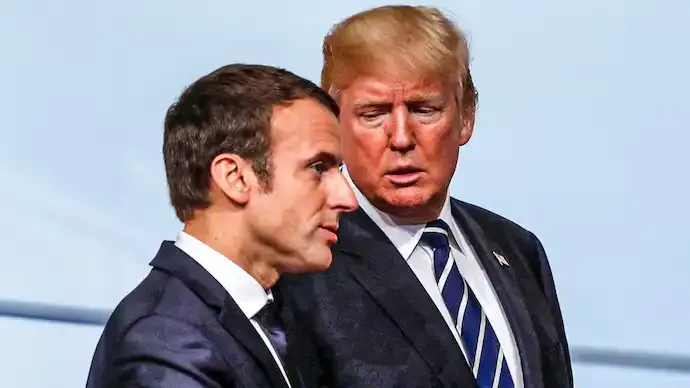
Denmark today finds itself in an extraordinary geopolitical predicament. A founding member of the NATO, Copenhagen is facing open pressure from its most powerful ally, the United States, as Donald Trump repeatedly asserts that Washington should take control of Greenland — an autonomous territory under Danish sovereignty.
As Denmark seeks military and diplomatic reassurance from its European NATO allies, critics and historians are pointing to a striking irony. More than five decades ago, Denmark itself opposed NATO intervention during a crisis between two alliance members — Greece and Turkey — arguing that NATO had no mandate to act when conflict erupted within its own ranks.
That historical stance is now resurfacing in public debate, with some asking whether Denmark is experiencing a moment of geopolitical karma.
Trump, Greenland and a NATO Paradox
Trump’s rhetoric over Greenland has rattled Europe. The Arctic island, rich in strategic minerals and critical to polar security, has become central to Washington’s renewed focus on Arctic dominance. Trump has framed Greenland as vital to US national security, even hinting that military force could not be ruled out.
Denmark, which manages Greenland’s defence and foreign policy, has flatly rejected these assertions. Danish Prime Minister Mette Frederiksen has warned that Europe “will not be blackmailed,” as Copenhagen rallies support from EU and NATO partners.
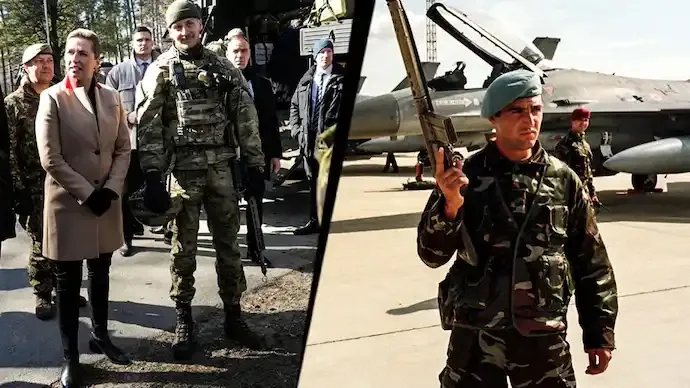
Several European countries have responded symbolically by deploying small contingents of troops to Greenland for reconnaissance and coordination missions. While militarily limited, the move was meant as a political signal of unity. It instead provoked Trump’s anger, triggering tariff threats against European nations backing Denmark.
This leaves NATO facing an uncomfortable question: what happens when the threat to a member comes from another member — especially the alliance’s dominant power?
The Cyprus Crisis: A Forgotten Precedent
The dilemma is not without precedent. In 1974, NATO faced a similar crisis when two of its members, Greece and Turkey, went to war over Cyprus.
Both countries had joined NATO in 1952, but long-standing disputes over Cyprus erupted after a Greek-backed coup sought to unite the island with Greece. Turkey responded with a military invasion, eventually occupying around 36% of Cyprus — a division that still exists today.
Greece demanded NATO intervention against Turkey. The alliance refused.
According to former Greek finance minister Yanis Varoufakis, Denmark was among the countries that argued NATO’s mandate applied only to defending members against external threats, not against each other.
“NATO is committed to defending member states from belligerent non-member states – but not from each other,” Varoufakis wrote recently, drawing a direct parallel between 1974 and today’s Greenland crisis.
Greece ultimately withdrew from NATO’s military command structure in protest, returning only in 1980. The episode exposed a structural flaw in the alliance — one that remains unresolved.
NATO’s Legal Silence on Internal Conflict
At the heart of the problem lies NATO’s charter. Article 5, the alliance’s cornerstone, treats an attack on one member as an attack on all — but only when the attack comes from outside the alliance.
The charter is silent on aggression from within.
This legal grey zone explains NATO’s paralysis during the Cyprus crisis and now looms over Greenland. While Article 4 allows consultations when a member feels threatened, it does not guarantee collective defence.
If the US were to act forcefully against Greenland, NATO would face an unprecedented internal rupture — one that could challenge the alliance’s very survival.
Europe’s Uneasy Support and Strategic Asymmetry
European backing for Denmark has been firm but cautious. Countries like the UK and Norway have sent only a handful of personnel, reflecting political solidarity rather than military escalation.
The imbalance of power is stark. The US defence budget runs into trillions of dollars, while Denmark’s defence spending stood at roughly $10 billion in 2025. Unlike Greece in 1974, Denmark lacks the military capacity to deter a superpower independently.
Spanish Prime Minister Pedro Sánchez has warned that any US invasion of Greenland would mark the “death knell” of NATO, underlining the existential stakes involved.
Greenland, Self-Determination and the Bigger Question
Greenland’s predominantly Inuit population has long demanded greater autonomy and eventual independence. While Denmark governs defence and diplomacy, the island’s future is ultimately tied to the wishes of its people — a factor often overshadowed in great-power posturing.
The European Union has backed Denmark unequivocally, but NATO leadership, including Secretary General Mark Rutte, has remained notably restrained, avoiding direct confrontation with Washington.
A Test NATO Has Never Passed
NATO survived the Cyprus crisis, but the scars remain. Today’s Greenland standoff is more dangerous, involving the alliance’s most powerful member and a strategically critical territory.
Denmark once argued that NATO should stay out of conflicts between allies. Now, as it seeks protection from an ally’s pressure, that argument has come full circle.
Whether this is karma or coincidence, the crisis exposes a truth NATO has long avoided: when friends turn into adversaries, the alliance offers no shield — and members may stand alone.