Shopping cart
Your cart empty!


Your cart empty!
Terms of use dolor sit amet consectetur, adipisicing elit. Recusandae provident ullam aperiam quo ad non corrupti sit vel quam repellat ipsa quod sed, repellendus adipisci, ducimus ea modi odio assumenda.
Lorem ipsum dolor sit amet consectetur adipisicing elit. Sequi, cum esse possimus officiis amet ea voluptatibus libero! Dolorum assumenda esse, deserunt ipsum ad iusto! Praesentium error nobis tenetur at, quis nostrum facere excepturi architecto totam.
Lorem ipsum dolor sit amet consectetur adipisicing elit. Inventore, soluta alias eaque modi ipsum sint iusto fugiat vero velit rerum.
Sequi, cum esse possimus officiis amet ea voluptatibus libero! Dolorum assumenda esse, deserunt ipsum ad iusto! Praesentium error nobis tenetur at, quis nostrum facere excepturi architecto totam.
Lorem ipsum dolor sit amet consectetur adipisicing elit. Inventore, soluta alias eaque modi ipsum sint iusto fugiat vero velit rerum.
Dolor sit amet consectetur adipisicing elit. Sequi, cum esse possimus officiis amet ea voluptatibus libero! Dolorum assumenda esse, deserunt ipsum ad iusto! Praesentium error nobis tenetur at, quis nostrum facere excepturi architecto totam.
Lorem ipsum dolor sit amet consectetur adipisicing elit. Inventore, soluta alias eaque modi ipsum sint iusto fugiat vero velit rerum.
Sit amet consectetur adipisicing elit. Sequi, cum esse possimus officiis amet ea voluptatibus libero! Dolorum assumenda esse, deserunt ipsum ad iusto! Praesentium error nobis tenetur at, quis nostrum facere excepturi architecto totam.
Lorem ipsum dolor sit amet consectetur adipisicing elit. Inventore, soluta alias eaque modi ipsum sint iusto fugiat vero velit rerum.
Do you agree to our terms? Sign up
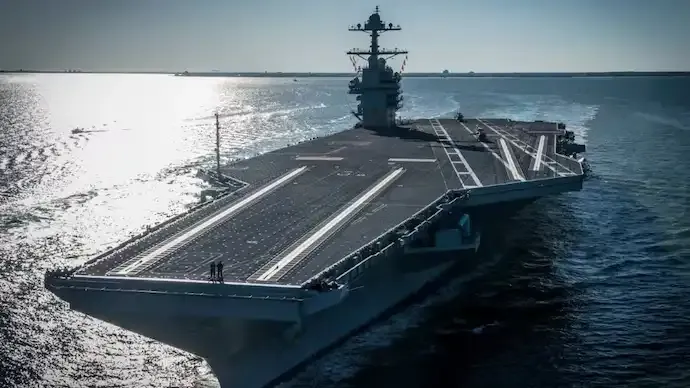
The United States has significantly expanded its military presence in the Middle East, deploying more than 50 advanced fighter jets while diplomatic talks with Iran over its nuclear programme continue. The move signals a dual strategy combining military preparedness with ongoing negotiations.
According to US officials and aviation tracking data, multiple F-22, F-35 and F-16 fighter jets were deployed to the region within a 24-hour period. Several aerial refuelling tankers accompanied the aircraft, indicating preparations for sustained operational readiness.
Officials described the deployment as a major reinforcement of air power aimed at strengthening deterrence and ensuring rapid response capability amid regional tensions.
In addition to the air deployment, the USS Gerald R. Ford carrier strike group is heading toward the Middle East. The aircraft carrier, accompanied by guided-missile destroyers USS Mahan, USS Bainbridge and USS Winston Churchill, departed from the Caribbean and is currently transiting the Atlantic.
Given its current position, the strike group is expected to take more than a week to reach waters near Iran. The deployment adds to the US naval presence already in the region, including earlier deployments such as the USS Abraham Lincoln carrier group.
Carrier strike groups provide air power projection, missile defence capability and maritime security support, making them central to US military operations in strategic regions.
The military buildup coincides with renewed indirect nuclear negotiations between the United States and Iran taking place in Geneva. Officials from both sides described the latest round of discussions as constructive, though significant details remain unresolved.
US representatives indicated progress was made, with further technical discussions expected in the coming weeks. Iranian officials also described the talks as serious and positive, noting that a clearer path forward has emerged.
Mediators involved in the negotiations reported progress in identifying shared objectives and technical issues, although they cautioned that reaching a final agreement will require additional dialogue.
The simultaneous pursuit of diplomacy and military reinforcement reflects Washington’s effort to maintain leverage while pursuing a negotiated solution. Analysts say the deployment sends a strong signal of deterrence while reassuring regional allies of continued security commitments.
The presence of advanced fighter aircraft and carrier strike groups enhances surveillance, rapid response capability and defensive readiness in a region critical to global energy supplies and geopolitical stability.
As negotiations continue, the evolving situation highlights the delicate balance between diplomatic engagement and strategic preparedness in addressing nuclear concerns and maintaining regional security.
21
Published: Feb 18, 2026

All India Story is your trusted source for comprehensive and up-to-the-minute news coverage across India. Bringing you the latest on politics, business, technology, entertainment, sports, and more, we are dedicated to keeping you informed with accurate, engaging, and insightful stories from every corner of the nation.