

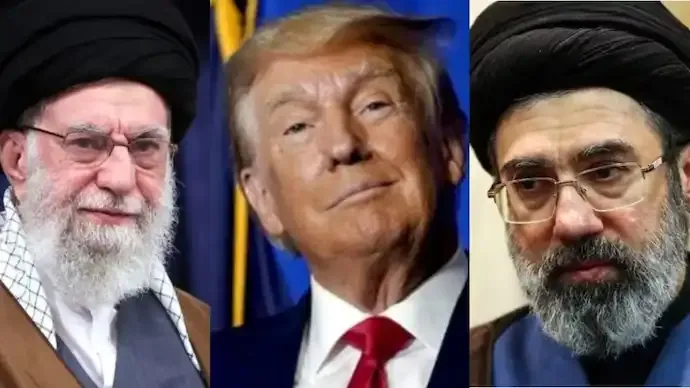

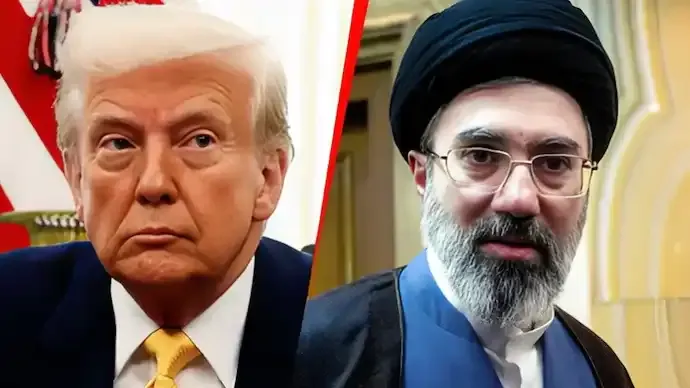
US President Donald Trump has been briefed on a range of military options targeting Iran’s top leadership, including Supreme Leader Ayatollah Ali Khamenei and his son Mojtaba Khamenei, according to a recent report citing senior administration sources. The options are part of broader contingency planning as tensions between Washington and Tehran intensify.
Sources familiar with the discussions said one scenario involves a targeted strike aimed at eliminating Iran’s highest leadership figures. Mojtaba Khamenei, widely viewed as a possible successor to his father, was also included in the proposed scenarios. However, officials stressed that no final decision has been taken and the situation remains fluid.
Advisors indicated that multiple military strategies have been prepared, allowing the administration to respond quickly depending on developments. Strategic ambiguity is reportedly being maintained, keeping both allies and adversaries uncertain about potential US actions.

Officials confirmed that similar proposals were presented weeks earlier, suggesting that such options have been under consideration for some time. Despite growing speculation, the White House declined to comment on specific operational plans, stating that only the President will determine the course of action.
Any direct strike on Iran’s leadership would represent a significant escalation and could reshape security dynamics across the Middle East. Analysts warn such action could trigger retaliation, disrupt global energy markets, and intensify regional instability.
Nuclear Standoff Deepens Amid Diplomatic Efforts
The military deliberations come as the US continues to pressure Iran to accept a comprehensive nuclear agreement. Trump has warned that failure to reach a meaningful deal could result in severe consequences.
Indirect negotiations are ongoing in Geneva, where officials are attempting to ease tensions and prevent further escalation. Washington insists Iran must curb its uranium enrichment and reduce nuclear stockpiles, citing proliferation concerns. Tehran maintains its nuclear programme is for peaceful civilian use and asserts enrichment as a sovereign right.
Major US Military Build-Up in the Region
Amid the escalating standoff, the United States has significantly increased its military presence in the Middle East. The deployment includes advanced fighter aircraft such as F-35s, F-22s, F-15s, and F-16s, supported by surveillance and command aircraft and enhanced air defence systems.
Naval forces in the region include 13 ships in the Middle East and eastern Mediterranean, including the aircraft carrier USS Abraham Lincoln and multiple guided missile destroyers. Another carrier strike group, led by USS Gerald R. Ford, is reportedly en route.
Defence officials indicate that deployed forces could be fully positioned by mid-March. While no strike has been authorised, the military posture signals readiness amid rising uncertainty.
With diplomatic efforts struggling and military assets increasing, the confrontation between Washington and Tehran is entering a critical phase that could shape regional stability and global security in the coming weeks.





Conversation
Be kind and stay on topic. Comments are moderated; abuse, spam and personal attacks are removed. Report a problem