US Fed Rate Cut Impact: How the Move Reshapes Global Markets and India’s Economic Outlook

US Fed Rate Cut Impact: How the Move Reshapes Global Markets and India’s Economic Outlook

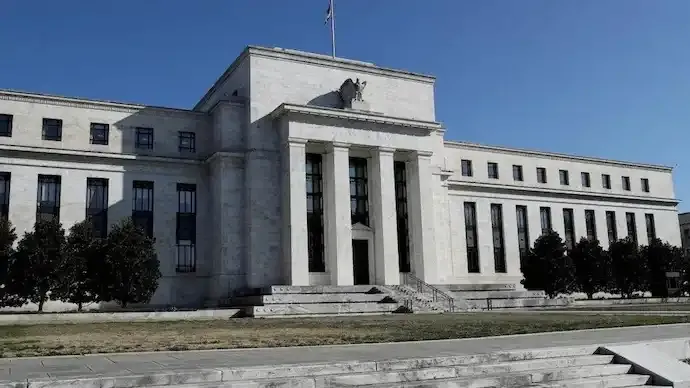
The US Federal Reserve has delivered its third rate cut of 2025, trimming the federal funds rate by 25 basis points to 3.5–3.75%—a move that has immediately reset market expectations worldwide. With inflation cooling, labour-market data softening and recession fears resurfacing, the Fed’s latest pivot is being closely examined for its impact on global markets, liquidity flows and emerging economies such as India.

Why the Fed Cut Rates Again

Subho Moulik, CEO of Appreciate, said the Fed remains focused on engineering a soft landing amid cooling economic indicators. Core PCE inflation has eased to 2.8% year-on-year, unemployment has edged up to 4.4% and job creation has slowed sharply.

Moulik noted that the current rate marks the final step in a three-cut cycle since September, placing policy rates close to neutral levels. With 10-year Treasury yields expected to stabilise near 4%, the Fed has signalled that further cuts in 2026 will be limited to one or two, depending on inflation and hiring trends.

Boston-based fund manager Nachiketa Sawrikar added that despite cumulative cuts of 75 bps this year, uncertainty remains high. The Fed’s latest dot plot indicates just one cut in 2026 and another in 2027, keeping long-term rates elevated. This has weighed on global equities and pushed the 10-year yield up to 4.16%.

For emerging markets, including India, this uncertainty is a headwind. With the India–US trade deal still pending, pressure on the rupee-dollar exchange rate may persist, affecting foreign inflows and equity valuations.

Risks and Market Implications

Axis Securities’ Rajesh Palviya said the Fed’s focus has clearly shifted from inflation control to growth risks. Lower yields typically support global equities, and India stands to benefit from easing concerns about dollar strength and capital outflows. Rate-sensitive sectors such as banking, consumption and cyclicals may see renewed interest, though volatility will persist until the Fed’s 2026 trajectory becomes clearer.

A major surprise came from the Fed’s enhanced bond-buying commitment—nearly USD 40 billion versus the expected USD 15 billion. TrustLine Holdings CEO N. ArunaGiri called this a “materially positive” signal for near-term yields and liquidity conditions. The Fed also upgraded its 2026 GDP growth forecast by 50 basis points.

However, the central bank’s messaging makes clear that future cuts hinge entirely on incoming data, not a preset easing plan.

What It Means for Indian Investors

Analysts highlight that India will feel the effects through currency movement, foreign investor behaviour and domestic liquidity. With rupee pressure likely in the near term, global investors may stay cautious even as India remains a strong long-term growth story.

Moulik emphasised that US assets still offer unmatched structural growth opportunities—AI, energy transition, biotech, consumer tech—making them a valuable long-term hedge for Indian investors. The rupee’s long-term depreciation trend, he added, makes USD-denominated exposure an effective tool against wealth erosion.

Overall, the Fed’s rate cut has steadied markets for now, but uncertainty over 2026 policy, global growth and currency volatility will continue to shape India’s macro and market outlook in the months ahead.

Prev Article
Meesho IPO: After a 50% Listing Pop, What Should Investors Track Now?
Next Article
India’s AI Boom: Big Tech Pours $68 Billion into India Despite Trump’s Warning

Related to this topic: