
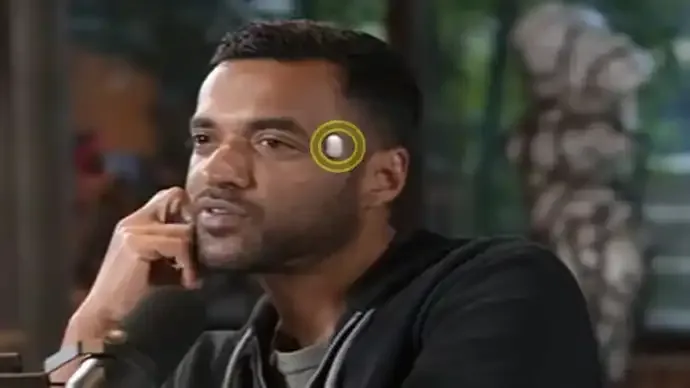
Entrepreneur Deepinder Goyal sparked widespread curiosity online after appearing on a popular podcast wearing a small metallic device attached near his temple. While his comments drew attention, viewers quickly focused on the unusual wearable, triggering a wave of memes, speculation and questions across social media platforms.
The appearance took place on Figuring Out, hosted by Raj Shamani. Screenshots and short clips from the episode circulated widely, with users guessing whether the object was a patch, a medical sensor, a data-storage device or even a futuristic charging tool. Some joked that it resembled chewing gum or an external hard drive.
However, the device is neither decorative nor fictional. The clip-like wearable is called Temple, an experimental brain-monitoring device designed to track cerebral blood flow in real time. Unlike consumer fitness trackers that measure heart rate or steps, Temple focuses on how blood circulates within the brain—an area of growing interest in neuroscience and ageing research.
The core concept behind Temple is continuous monitoring of cerebral blood flow, which scientists consider a critical indicator of brain health. Reduced or altered blood circulation in the brain has been linked to cognitive decline, neurological disorders and age-related changes. By collecting long-term data, researchers aim to better understand how the brain ages and how circulation patterns evolve over time.
Goyal’s involvement with the device goes well beyond casual interest. He has been personally testing Temple for close to a year as part of a privately funded research effort. The wearable is linked to an initiative called Continue Research, which Goyal finances independently. Reports indicate that he has invested approximately $25 million (around ₹225 crore) into the project.
The research initiative is built around what Goyal describes as the “Gravity Ageing Hypothesis.” The idea proposes that gravity’s constant pull over decades may subtly affect blood circulation to the brain, potentially influencing ageing and cognitive health. While the theory has attracted attention for its originality, it has also drawn scepticism from sections of the scientific community, with experts cautioning that ageing is influenced by a complex mix of biological, environmental and genetic factors.
It is important to note that Temple is not a consumer gadget and is not associated with Zomato or its parent company. The device is still in an experimental phase and is not available for public purchase. Its use remains limited to research and self-testing rather than clinical or commercial deployment.
Wearable technologies that monitor brain activity and blood flow are an active area of global research, though they typically remain confined to laboratories, hospitals or controlled trials. Real-world usage outside such environments is rare, making Temple’s public appearance particularly striking.
For now, Temple remains more of a scientific experiment than a health product. Whether it eventually evolves into a validated medical tool or stays within niche research circles remains uncertain. What is clear, however, is that a brief moment on a podcast has pushed the conversation around brain health, ageing and experimental wearables into the public spotlight.





Conversation
Be kind and stay on topic. Comments are moderated; abuse, spam and personal attacks are removed. Report a problem