



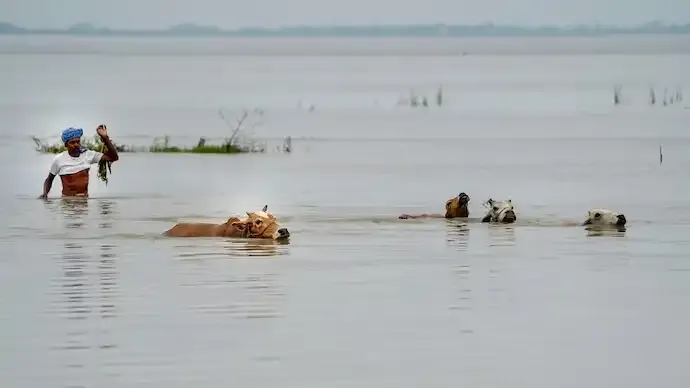
The flood situation in Assam showed signs of improvement on Tuesday, with water levels receding in several areas and no new fatalities reported, according to official bulletins.
However, 4.45 lakh people continue to be affected by flooding across six districts, while relief, rescue and restoration operations remain underway.
Officials confirmed that the death toll remains at 68, and no person is currently reported missing.

Six Districts Continue to Face Flood Impact
According to state authorities, the districts still affected by flooding are:
- Charaideo
- Sivasagar
- Golaghat
- Jorhat
- Nagaon
- Kamrup (Metropolitan)
Among them:
- Charaideo remains the worst-hit district with 1.88 lakh affected people.
- Sivasagar has 1.44 lakh affected residents.
- Jorhat has 74,458 people impacted by the floods.
The number of affected people has declined from over 5.24 lakh reported a day earlier, indicating a gradual improvement in conditions.
Relief Operations Continue
Authorities said relief operations remain active across the affected districts.
According to the latest official figures:
- 90 relief camps are operational.
- Nearly 28,695 displaced people are currently staying in these camps.
- 94 relief distribution centres continue to provide essential supplies.
Rescue and relief work is being carried out by multiple agencies, including:
- National Disaster Response Force (NDRF)
- State Disaster Response Force (SDRF)
- Civil Defence personnel
Rivers and Crop Damage
Officials said the Dhansiri River (South) continues to flow above the danger mark at Numaligarh in Golaghat district.
Floodwaters have also affected agriculture, with approximately 37,139.52 hectares of cropland remaining submerged.
Damage to houses, roads and other public infrastructure has also been reported from several districts.
Central Team Reviews Situation
A five-member central team led by a senior official from the Ministry of Home Affairs visited Sivasagar to assess the flood situation in Upper Assam.
The delegation was accompanied by state ministers and local officials during the review.
Government Focuses on Restoration and Public Health
Chief Minister Himanta Biswa Sarma said electricity restoration is progressing in phases.
According to the Chief Minister, the number of households without electricity has declined by another 25%, with restoration continuing as floodwaters recede.
The state government has also initiated:
- Village disinfection drives.
- Fogging operations to prevent disease outbreaks.
- Scientific disposal of livestock that died during the floods to reduce health risks.
Officials said these measures are intended to prevent contamination and minimise the spread of waterborne diseases in flood-affected areas.
Why This Matters
Although floodwaters are receding in several parts of Assam, hundreds of thousands of people remain affected and many continue to rely on relief assistance. Restoration of electricity, rehabilitation of infrastructure and disease prevention efforts will be critical in the coming weeks as the state transitions from emergency response to recovery.
Frequently Asked Questions (FAQs)
How many people are affected by the Assam floods?
According to the latest official bulletin, over 4.45 lakh people remain affected across six districts.
What is the flood death toll in Assam?
The official death toll remains 68, with no new fatalities reported.
Which district is the worst affected?
Charaideo is currently the worst-hit district, with around 1.88 lakh affected people.
How many relief camps are operational?
Authorities said 90 relief camps are functioning and are sheltering 28,695 displaced people.
What measures are being taken after the floods?
The government is continuing relief operations, restoring electricity, disinfecting villages, conducting fogging drives and disposing of dead livestock scientifically to reduce the risk of disease outbreaks.





Conversation
Be kind and stay on topic. Comments are moderated; abuse, spam and personal attacks are removed. Report a problem