

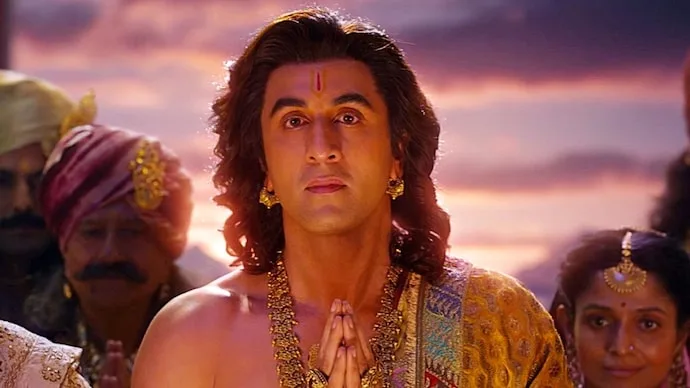

The Ramayana song Mangal Rang has sparked a debate over musical originality, cultural influences and the expectations surrounding one of India's most revered epics. Composed by AR Rahman, sung by Shreya Ghoshal and Arijit Singh, and written by Kumar Vishwas, the song celebrates the union of Rama and Sita, portrayed by Ranbir Kapoor and Sai Pallavi.
While some listeners have questioned whether the composition sounds too familiar, others have raised concerns about what they perceive as qawwali influences in a song depicting a sacred Hindu narrative.
Does Mangal Rang Sound Too Familiar?
One criticism centres on similarities listeners believe they hear between Mangal Rang and Rahman's earlier compositions, including Kun Faya Kun from Rockstar and the Tamil song Enna Solla Pogirai.

The discussion raises a broader question about musical identity. A composer can develop a recognisable signature over decades, but listeners may disagree over when that signature begins to feel repetitive.
Whether these similarities indicate a lack of originality or simply reflect Rahman's established musical style remains a matter of interpretation.
Why Are Listeners Discussing Qawwali Influences?
Some viewers have compared the song's chorus, repeated use of the word "rang" and musical arrangement to qawwali, including the well-known Sufi composition Aaj Rang Hai.
Qawwali is associated with Sufi devotional traditions and often features repeated refrains, collective singing and gradually intensifying musical arrangements. However, these characteristics are not exclusive to the genre, and perceived similarities do not automatically make a composition a traditional qawwali.
The lyrics of Mangal Rang focus on Rama and Sita's relationship, with references to sindoor, saubhagya and maryada. The debate therefore centres primarily on the musical arrangement rather than an explicit religious invocation.
Should Ramayana Adaptations Face Greater Scrutiny?
For many people, the Ramayana is more than a literary epic. It holds deep religious and cultural significance, making its cinematic representation particularly sensitive. Some viewers consequently expect its music and visuals to reflect the traditions they associate with the story.
Others argue that composers should be able to draw from diverse musical influences without diminishing the narrative's spiritual meaning.
Both perspectives highlight the challenge of adapting a culturally significant epic for contemporary cinema. Creative freedom and audience expectations can coexist, even when they lead to disagreement.
Will the Debate Affect the Film's Reception?
The scale of the reported investment in the two-part Ramayana project has further intensified public interest. Casting decisions, costumes, visual effects and music are all receiving attention before audiences have seen the complete film.
However, judging an entire cinematic adaptation through individual promotional releases may not capture how its elements work together in context.
For now, Mangal Rang has opened a wider conversation about artistic originality, cultural sensitivity and the responsibilities involved in adapting a sacred narrative. The song's ultimate impact will depend not only on its standalone reception but also on how it contributes to the film's larger storytelling.








Conversation
Be kind and stay on topic. Comments are moderated; abuse, spam and personal attacks are removed. Report a problem