Speculation around the stability of Iran’s leadership has intensified as the United States significantly increases its naval presence near the country, following a violent crackdown on mass protests by the Iranian regime. The arrival of a major US aircraft carrier strike group in the region has fuelled widespread discussion about the security of Iran’s Supreme Leader and the possibility of succession planning within the ruling establishment.
The USS Abraham Lincoln Carrier Strike Group has entered the US Central Command area of responsibility, placing substantial American naval firepower close to Iranian waters. The deployment comes amid escalating unrest inside Iran, where weeks of demonstrations against the government have been met with force, drawing international criticism and raising questions about the regime’s durability.
Amid these developments, online speculation has surged regarding the whereabouts of Ayatollah Ali Khamenei. Commentators and observers tracking Iran have circulated claims that the 86-year-old leader has taken refuge in a fortified bunker in Tehran as a precaution against potential airstrikes. While Iranian authorities have made no official statements, such reports have been amplified by open-source intelligence accounts and regional analysts monitoring military movements.
The rumours have also revived discussion about succession in Iran’s tightly controlled political system. Several analysts have suggested that contingency plans may be in place should the Supreme Leader become incapacitated or unable to govern. Though no formal announcement has been made, names frequently cited in speculative discussions include Mojtaba Khamenei, the Supreme Leader’s son, along with senior clerical and political figures such as Sadeq Larijani, Alireza Arafi and Hassan Khomeini, the grandson of the Islamic Republic’s founder.
Reports indicate that Iran’s powerful Assembly of Experts, the body constitutionally responsible for appointing a supreme leader, may already be considering potential successors. However, officials have remained silent, underscoring the opaque nature of Iran’s leadership transition mechanisms.
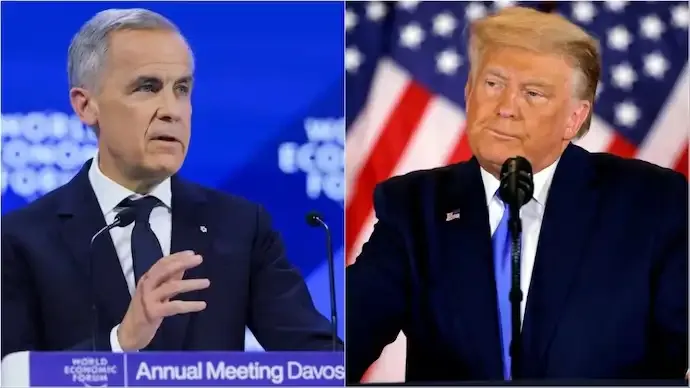
The heightened tension coincides with a broader US military build-up in the Middle East. Alongside the Abraham Lincoln, several guided-missile destroyers have been deployed to strengthen American naval capabilities in the region. US President Donald Trump has described the move as precautionary, saying the deployment is intended to protect American interests while expressing hope that the force will not need to be used.
Regional dynamics have added further complexity. Gulf nations have reportedly urged restraint, warning that a direct confrontation between the US and Iran could trigger a wider regional conflict. Analysts note that similar military posturing in the past has not always translated into direct action, though the current convergence of internal unrest and external pressure is seen as particularly significant.
Experts caution that focusing solely on the fate of a single leader may overlook the institutional depth of Iran’s political system. Even if leadership changes occur, the Islamic Republic’s structure is designed to ensure continuity, with power distributed across clerical, military and political networks.
The unrest inside Iran, driven by economic hardship, political repression and restrictions on civil liberties, has placed unprecedented strain on the ruling establishment. While previous protest movements failed to dislodge the leadership, the combination of sustained domestic dissent and mounting international pressure has created one of the most volatile moments Iran has faced in decades.
As global attention remains fixed on Tehran, the unfolding situation highlights the uncertainty surrounding Iran’s future and the broader implications for stability in the Middle East.
Prev Article
Mark Carney Stands by Davos Remarks After Call With Trump
Next Article
India to Gain Most From EU Trade Deal, Says US Trade Chief