

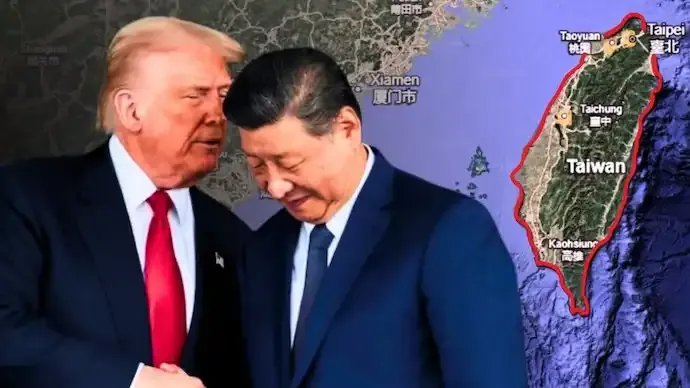

As global attention remains focused on the escalating conflict involving Iran, China has quietly intensified its efforts toward reunification with Taiwan. Analysts suggest that Beijing is strategically leveraging the current geopolitical distraction to push its long-standing agenda forward.
With the United States deeply engaged in Middle East developments, China appears to be taking advantage of shifting global priorities to strengthen its position in the Taiwan Strait.
High-Level Meeting Signals Strong Political Messaging
A significant development came when Taiwanese opposition leader Cheng Li-wun visited Beijing for a high-profile meeting. During her visit, she met Xi Jinping at the Great Hall of the People.

The message from China’s leadership was clear and firm. Xi Jinping reiterated that reunification with Taiwan is a “historical inevitability,” while strongly opposing any move toward independence. The statement reinforces Beijing’s consistent stance on Taiwan as part of its sovereign territory.
Semiconductor Supply Becomes Strategic Tool
One of the most critical aspects of this evolving situation is Taiwan’s global dominance in semiconductor manufacturing. The island plays a vital role in producing advanced chips that power industries worldwide, from consumer electronics to defense systems.
China’s strategy is believed to include leveraging its influence over global supply chains to apply indirect pressure. Control or influence over semiconductor production could significantly impact global markets, making this a key element in Beijing’s approach.
Geopolitical Timing and Strategic Calculations
Experts note that the timing of China’s actions is not coincidental. With international focus diverted toward the Iran conflict, Beijing has found an opportunity to advance its agenda with relatively less scrutiny.
This approach reflects a broader pattern in China’s foreign policy—carefully observing global dynamics and acting when conditions appear favorable.
Implications for Global Stability and Economy
The situation carries major implications for global stability. Any escalation in tensions between China and Taiwan could disrupt international trade, particularly in the technology sector.
The semiconductor industry, already under strain due to global demand, could face further challenges if geopolitical tensions intensify. This would affect not only regional economies but also global supply chains.
Rising Concerns Among International Observers
The international community is closely monitoring developments, as the Taiwan issue remains one of the most sensitive geopolitical flashpoints. Increased pressure from China could lead to heightened tensions involving major global powers.
While no immediate escalation has been reported, the strategic moves signal a shift that could influence future developments in the region.
Uncertain Road Ahead for Taiwan Strait
As China continues to assert its position, the future of Taiwan remains uncertain. Diplomatic efforts, economic strategies, and geopolitical calculations will all play a role in shaping the outcome.
With global attention divided, the Taiwan issue is once again emerging as a critical factor in international relations, carrying far-reaching consequences for peace and stability.




Conversation
Be kind and stay on topic. Comments are moderated; abuse, spam and personal attacks are removed. Report a problem