

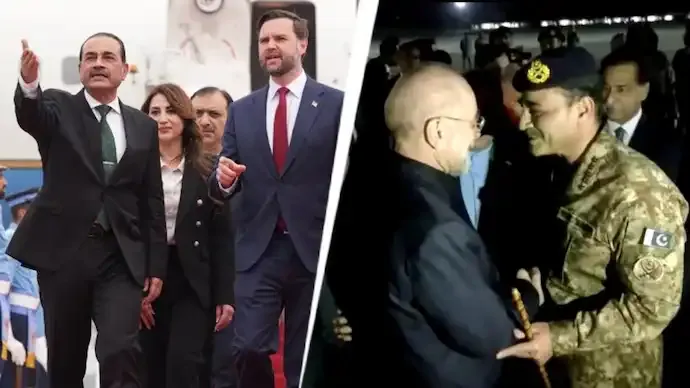

The arrival of delegations from Iran and the United States in Islamabad for crucial peace talks drew global attention—not just for the negotiations, but also for the symbolic gestures surrounding them.
A key point of discussion was the contrasting appearance of Asim Munir, who chose different attire while meeting leaders from Iran and the US delegation led by JD Vance.
Combat Gear vs Suit: A Calculated Message
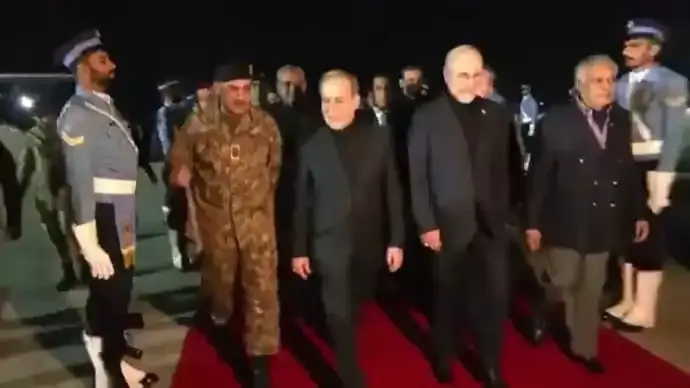
Asim Munir was seen wearing combat gear while receiving the Iranian delegation, projecting a strong military posture. In contrast, he opted for a formal suit while meeting JD Vance and the US delegation.

Experts believe that such choices are rarely coincidental in high-level diplomacy. Clothing, especially in sensitive geopolitical contexts, often serves as a subtle yet powerful communication tool.
The use of combat attire may signal solidarity with regional tensions or convey readiness and strength, while a suit reflects diplomatic engagement and formality.
Pakistan Army’s Central Role in Diplomacy
Another significant aspect of the event was that Asim Munir—not Shehbaz Sharif—personally received both delegations. This has reinforced perceptions that the military continues to play a dominant role in Pakistan’s strategic and foreign policy decisions.
Analysts suggest that Munir’s prominent presence at such a critical diplomatic moment highlights the military’s influence in shaping Pakistan’s international engagements.
High-Stakes Talks Amid Fragile Ceasefire
The meetings come at a crucial time, as both the US and Iran are attempting to stabilize relations following a fragile ceasefire. The talks in Islamabad are being viewed as a “make-or-break” opportunity to move toward a more permanent resolution.
Pakistan’s role as a host and mediator has placed it at the center of global diplomatic attention.
Symbolism in Global Diplomacy
In international relations, symbolism often carries as much weight as formal statements. From seating arrangements to attire, every detail can send a message about intent, alignment, and priorities.
Munir’s contrasting outfits have been widely interpreted as a reflection of Pakistan’s dual positioning—maintaining strategic ties with both Iran and the United States while navigating complex regional dynamics.
Global Focus on Islamabad Developments
As negotiations continue, global observers are closely analyzing every aspect of the interactions, including non-verbal cues and symbolic gestures.
While the outcome of the talks remains uncertain, the optics surrounding the meetings have already added another layer of complexity to the evolving geopolitical narrative.



Conversation
Be kind and stay on topic. Comments are moderated; abuse, spam and personal attacks are removed. Report a problem