

Cold wave conditions are set to intensify across Delhi and adjoining parts of the National Capital Region (NCR) over the next few days, with minimum temperatures expected to dip further. Even as winter chills tighten their grip, residents have received some relief on another front, as air quality levels in the national capital have shown a noticeable improvement.
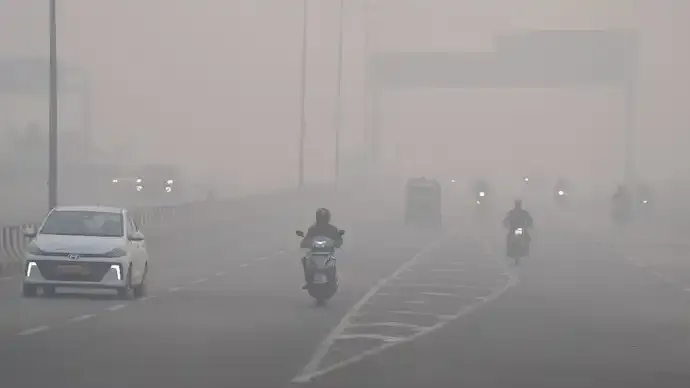
According to the India Meteorological Department, cold-wave conditions are likely to prevail at isolated places in Delhi between January 2 and January 5. The weather agency defines a cold wave as a situation where the minimum temperature falls 4.5 to 6.5 degrees Celsius below the seasonal average. Meteorologists have warned that the drop in temperatures could be accompanied by dense to very dense fog, particularly during night-time and early morning hours, potentially affecting visibility and daily travel.
The IMD has also forecast persistent fog conditions in Delhi till January 6, with similar cold-wave alerts issued for parts of Rajasthan, Punjab and Haryana until January 5. These weather patterns are typical of peak winter in north India, when cold air from the northern plains combines with low wind speeds to intensify chill and fog.
AIR QUALITY SHOWS IMPROVEMENT
Despite the falling temperatures, air quality in Delhi showed a significant improvement on Thursday. The city’s Air Quality Index (AQI) dropped to 302, placing it at the lower end of the ‘very poor’ category. This marked a sharp improvement from earlier in the week, when AQI levels had touched 380.
Neighbouring NCR cities also recorded better pollution levels. Noida reported an AQI of 299, categorised as ‘poor’, while Gurugram and Faridabad registered AQI readings of 232 and 220 respectively, both also in the ‘poor’ category. Ghaziabad’s AQI stood at 300. Overall, pollution levels across the NCR showed a downward trend, offering temporary relief to residents amid prolonged winter smog concerns.
Within Delhi, only one air quality monitoring station — Dwarka NSIT — remained in the ‘severe’ category, with an AQI reading of 423. Other pollution hotspots showed improvement. Anand Vihar, which had recorded AQI levels above 450 on December 31, saw its air quality index drop to 348.
FOG IMPACT LIMITED SO FAR
Although an orange alert has been issued for dense fog, its impact has so far been limited in the capital. At Indira Gandhi International Airport, general visibility was recorded at around 1,000 metres, allowing flight operations to continue without major disruptions.
BEST AIR QUALITY IN YEARS, SAYS DELHI GOVT
Amid the winter chill, the Delhi government highlighted long-term gains in air quality. Delhi Environment Minister Manjinder Singh Sirsa said the city recorded its best air quality in eight years during 2025. According to official data, PM2.5 levels declined from 104 micrograms per cubic metre in 2024 to 96 in 2025, while PM10 levels fell from 212 to 197 micrograms per cubic metre over the same period.
The minister said Delhi recorded around 200 days in 2025 when AQI remained below 200, an improvement of nearly 15 per cent compared to the previous four years. He credited science-led policy measures and sustained pollution-control efforts for the improvement.
As Delhi braces for harsher winter conditions, authorities have advised residents to take precautions against cold and fog while continuing to monitor air quality levels. While cleaner air offers some comfort, the coming days are expected to test the city’s resilience against intense cold and reduced visibility.



Conversation
Be kind and stay on topic. Comments are moderated; abuse, spam and personal attacks are removed. Report a problem