The deaths of more than 165 schoolgirls in Iran’s Minab city after a strike during the ongoing conflict have triggered global debate about the possible role of artificial intelligence in modern warfare.
The attack struck the Shajareh Tayyebeh girls’ elementary school in Hormozgan province, killing students aged between seven and twelve, along with teachers and staff members. The incident has become one of the deadliest civilian casualty events in the current conflict involving Iran, the United States, and Israel.
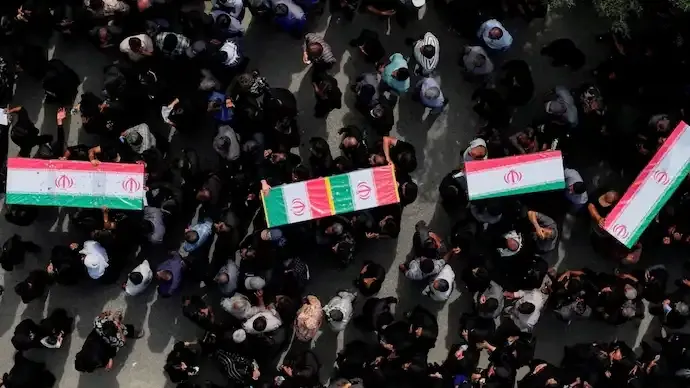
Images from the aftermath showed grieving families and large funeral gatherings, drawing international attention and condemnation.
Questions Over Target Identification
Following the strike, questions have emerged about how the target was identified and whether advanced digital systems may have contributed to the tragedy.
Some analysts have raised concerns about the growing use of AI-assisted targeting systems in modern military operations. These technologies can analyse large amounts of data and identify potential targets much faster than human analysts.
However, critics argue that even small errors in automated or algorithm-assisted systems could result in catastrophic consequences, especially when civilian areas are mistakenly identified as military targets.
Growing Role of AI in Warfare
Artificial intelligence has increasingly been used by militaries around the world for tasks such as intelligence analysis, surveillance, and target detection.
AI systems can process satellite imagery, communication data, and other information sources to identify possible military sites. These systems are designed to help commanders make faster decisions during high-intensity operations.
However, experts warn that the technology is not infallible. Incorrect data inputs, misinterpretation of imagery, or flawed algorithms could lead to incorrect conclusions about the nature of a target.
When such errors occur in a combat environment, the consequences can be devastating.
International Debate on Military AI
The incident has intensified global discussions about ethical and legal issues surrounding AI use in warfare.
Human rights groups and technology experts have repeatedly called for stronger regulations and oversight regarding autonomous and AI-assisted weapons systems.
Many specialists argue that human oversight must remain central to targeting decisions, even when advanced digital tools are used to support military operations.
Lack of Official Confirmation
At present, there has been no official confirmation that artificial intelligence directly contributed to the targeting of the school.
Military analysts say that investigations into such incidents often take time, as authorities must review satellite data, operational logs, intelligence reports, and communications records.
Until those findings are available, it remains unclear whether the tragedy resulted from an intelligence failure, targeting error, or other operational factors.
Global Concern Over Civilian Safety
The strike has renewed concerns about the risks civilians face during modern conflicts, especially in densely populated areas.
International humanitarian law requires military forces to avoid civilian targets and take precautions to minimise civilian casualties during armed conflict.
As warfare increasingly incorporates advanced technologies, the debate over the role of AI in military decision-making is expected to grow.
The Minab tragedy has therefore become a focal point in the broader conversation about whether artificial intelligence can be safely integrated into combat operations without increasing the risk to civilian lives.
Prev Article
Iran’s Strategy in War: Missiles, Oil Pressure and a Battle of Endurance
Next Article
What Balen Shah as Nepal PM Could Mean for India–Nepal Roti-Beti Relations