The arrest of Venezuela’s former leader Nicolás Maduro on drug trafficking and narco-terrorism charges has reignited debate over the origins of illicit drugs entering the United States. While US President Donald Trump has repeatedly linked Venezuela to America’s narcotics crisis, a closer examination of publicly available data suggests a more complex and geographically broader reality.
According to multiple US and international law-enforcement assessments, the overwhelming majority of cocaine and synthetic drugs consumed in the United States originate not from Venezuela, but from Mexico and Colombia. Venezuela’s role, while not negligible, is largely limited to transit routes supplying markets outside the US, particularly Europe.
Scale of the US Drug Crisis
The United States continues to face one of the world’s most severe drug epidemics. Data from the National Survey on Drug Use and Health indicates that tens of millions of Americans use illicit substances annually, excluding cannabis. Synthetic opioids, particularly fentanyl, remain the leading cause of overdose deaths, with US health agencies reporting tens of thousands of fatalities each year.
These substances include fentanyl, methamphetamine, cocaine, MDMA, heroin and other opioids—drugs that have caused widespread public health, economic and social disruption across American cities.
Primary Sources of US-Bound Narcotics
According to the Drug Enforcement Administration National Drug Threat Assessment, Mexico is the single largest source of illicit drugs entering the United States. Mexican criminal networks dominate the production of synthetic drugs and control most trafficking corridors into US territory.
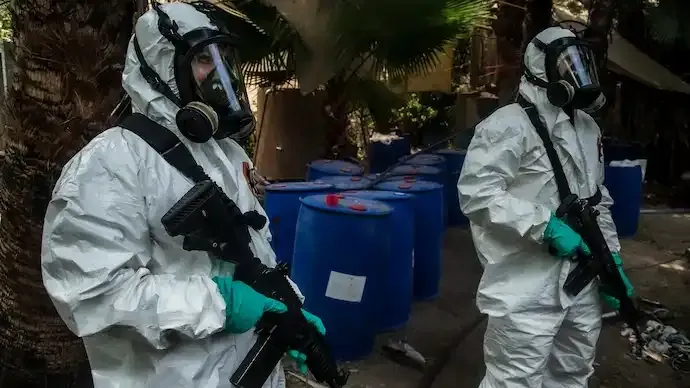
Two major organisations—the Sinaloa Cartel and the Cartel Jalisco Nueva Generación—operate large-scale laboratories producing fentanyl, methamphetamine and other synthetic narcotics. These substances are manufactured using precursor chemicals imported primarily from East and South Asia and are smuggled across the US–Mexico border through legal ports of entry, underground tunnels, concealed vehicles and maritime routes.
Colombia remains the world’s largest producer of cocaine. Reports from the United Nations Office on Drugs and Crime indicate that more than two-thirds of global cocaine production originates in Colombia, with most US-bound cocaine moving north through Central America and Mexico before entering the United States.
Venezuela’s Role in Global Drug Trafficking
Venezuela does not rank among the top producers of cocaine or synthetic drugs. International monitoring agencies describe the country primarily as a secondary transit corridor for cocaine produced in Colombia. Most Venezuelan trafficking routes lead through the Caribbean and Atlantic toward Western Europe, where demand for cocaine has risen sharply over the past decade.
US and UN reports note allegations of corruption involving Venezuelan officials facilitating trafficking, but available data shows that only a small fraction of cocaine transiting through Venezuela is destined for the United States. The country also lacks the industrial infrastructure required for large-scale synthetic drug manufacturing, which is concentrated in Mexico.
Trafficking Routes Into the United States
The dominant drug corridors into the US include:
-
Overland routes across the US–Mexico border
-
Maritime routes via the Pacific Ocean
-
Caribbean Sea trafficking corridors
Once inside the US, narcotics are distributed along major interstate highways, feeding large urban markets across the country.
Why Venezuela Remains a Focus
While Venezuela’s direct contribution to US-bound narcotics is limited compared to Mexico and Colombia, it has remained under US scrutiny due to broader concerns, including alleged state involvement in trafficking networks, long-standing diplomatic disputes, and sanctions-related enforcement actions.
What available data makes clear is that the structural drivers of the US drug crisis lie primarily in cross-border trafficking from Mexico and cocaine production in Colombia, rather than in Venezuela.
As US authorities continue to address narcotics supply chains, enforcement agencies and analysts emphasise that tackling the epidemic requires a region-wide strategy focused on production, transit and domestic demand—rather than attributing responsibility to a single country.
Prev Article
Why a Deleted Gen Z Op-Ed Has Rocked Pakistan and Sparked a Nationwide Debate
Next Article
Iran Could Be Next After Venezuela, Warns Economist Jeffrey Sachs on Trump’s Threats