Shopping cart
Your cart empty!


Your cart empty!
Terms of use dolor sit amet consectetur, adipisicing elit. Recusandae provident ullam aperiam quo ad non corrupti sit vel quam repellat ipsa quod sed, repellendus adipisci, ducimus ea modi odio assumenda.
Lorem ipsum dolor sit amet consectetur adipisicing elit. Sequi, cum esse possimus officiis amet ea voluptatibus libero! Dolorum assumenda esse, deserunt ipsum ad iusto! Praesentium error nobis tenetur at, quis nostrum facere excepturi architecto totam.
Lorem ipsum dolor sit amet consectetur adipisicing elit. Inventore, soluta alias eaque modi ipsum sint iusto fugiat vero velit rerum.
Sequi, cum esse possimus officiis amet ea voluptatibus libero! Dolorum assumenda esse, deserunt ipsum ad iusto! Praesentium error nobis tenetur at, quis nostrum facere excepturi architecto totam.
Lorem ipsum dolor sit amet consectetur adipisicing elit. Inventore, soluta alias eaque modi ipsum sint iusto fugiat vero velit rerum.
Dolor sit amet consectetur adipisicing elit. Sequi, cum esse possimus officiis amet ea voluptatibus libero! Dolorum assumenda esse, deserunt ipsum ad iusto! Praesentium error nobis tenetur at, quis nostrum facere excepturi architecto totam.
Lorem ipsum dolor sit amet consectetur adipisicing elit. Inventore, soluta alias eaque modi ipsum sint iusto fugiat vero velit rerum.
Sit amet consectetur adipisicing elit. Sequi, cum esse possimus officiis amet ea voluptatibus libero! Dolorum assumenda esse, deserunt ipsum ad iusto! Praesentium error nobis tenetur at, quis nostrum facere excepturi architecto totam.
Lorem ipsum dolor sit amet consectetur adipisicing elit. Inventore, soluta alias eaque modi ipsum sint iusto fugiat vero velit rerum.
Do you agree to our terms? Sign up

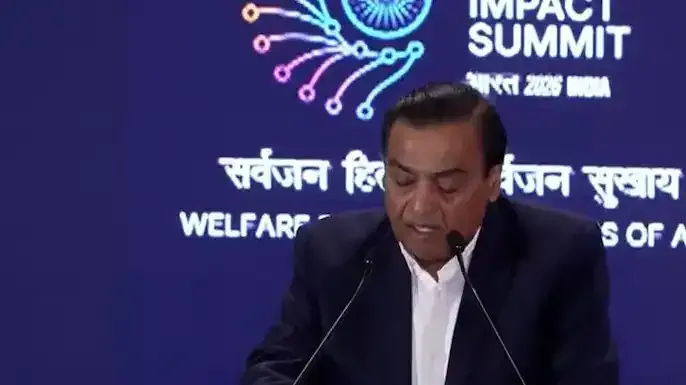
The Digital News Publishers Association (DNPA) hosted a high-level panel discussion on “AI and Media: Opportunities, Responsible Pathways, and the Road Ahead” at the IndiaAI Impact Summit 2026, organised by the Ministry of Electronics and Information Technology (MeitY). The session brought together senior leaders from India’s leading news organisations and global media representatives to examine how artificial intelligence is reshaping journalism and how India can guide this transformation responsibly.
Moderated by Ashish Pherwani, Partner – Media & Entertainment at EY, the panel featured prominent media leaders including Kalli Purie, Pawan Agarwal, Tanmay Maheshwari, Mohit Jain, Navaneeth L.V., and Robert Whitehead of the International News Media Association.
Opening the session, DNPA Secretary General Sujata Gupta emphasized that artificial intelligence is transforming how information is created, distributed, and trusted. She highlighted that in a diverse democracy like India, journalism serves as democratic infrastructure rather than mere content.
Panelists broadly agreed that journalism carries consequences beyond engagement metrics, influencing elections, markets, social stability, and national security. News content, they noted, represents intellectual property developed through editorial oversight, investment, and accountability.
Speakers stressed that while AI can assist newsroom workflows, human judgment remains essential. Accountability in journalism must remain traceable and transparent.
Panelists noted that when AI systems summarise and redistribute news content, they actively participate in public discourse and therefore require higher standards of responsibility and attribution.
The discussion highlighted international developments shaping the future of journalism and AI:
The European Union’s AI Act mandates labelling of AI-generated content.
France and Germany require platforms to compensate publishers for news usage.
Australia’s News Media Bargaining Code mandates commercial negotiations.
South Africa and Norway are advancing frameworks to sustain journalism.
These measures reflect growing recognition that professional journalism is foundational to AI systems and must be fairly valued.
AI-generated summaries in search platforms are already diverting traffic away from publisher websites in several markets, weakening revenue models that support credible reporting.
Panelists emphasized that if journalism contributes to AI accuracy and reliability, fair recognition, attribution, and compensation are essential.
Speakers highlighted India’s unique structural realities, noting that foreign AI models often struggle with Indian languages and regional nuance. Tier-2 and Tier-3 regions form the backbone of India’s demographic strength, requiring AI systems that reflect linguistic and cultural diversity.
Experts stressed the importance of building Indian data infrastructure, regional language capability, and traceability mechanisms to ensure meaningful AI sovereignty.
Despite challenges, panelists acknowledged AI’s potential to enhance journalism by:
improving newsroom efficiency
strengthening archives and contextual reporting
supporting subscription models
enabling deeper audience engagement
They emphasized that trust is built by institutions, not technology alone.
A key theme was the need for structured collaboration between technology platforms and publishers. Transparent partnerships based on reciprocity, attribution, and commercial fairness are seen as critical to sustaining credible journalism.
The session concluded with a shared understanding that artificial intelligence presents both immense opportunity and serious responsibility. As India advances its AI ambitions, safeguarding journalism as a trusted public good will remain vital to preserving democratic resilience and informed public discourse.
48
Published: Feb 18, 2026

All India Story is your trusted source for comprehensive and up-to-the-minute news coverage across India. Bringing you the latest on politics, business, technology, entertainment, sports, and more, we are dedicated to keeping you informed with accurate, engaging, and insightful stories from every corner of the nation.