

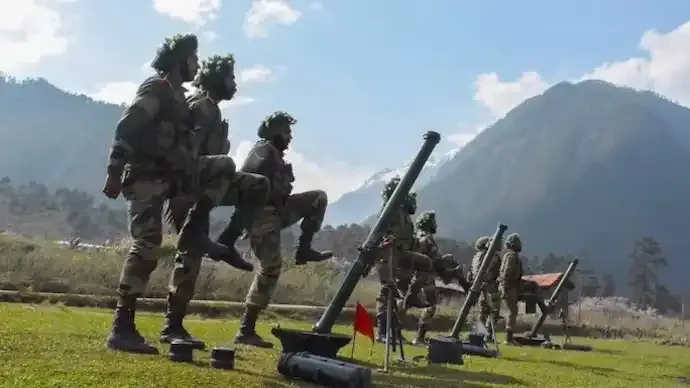

India successfully deployed artificial intelligence–powered prediction systems to anticipate and counter an unprecedented Chinese move along the Line of Actual Control (LAC) in Arunachal Pradesh, according to a senior military officer. The revelation highlights how advanced technology is reshaping India’s defence preparedness and modern warfare strategies.
Speaking at the India AI Impact Summit 2026, Lieutenant General Dinesh Singh Rana said AI-based predictive tools helped identify early warning indicators of a potential Chinese military build-up in a disputed sector. During his tenure commanding a Corps responsible for LAC security in Arunachal Pradesh, he oversaw the deployment of a locally developed, low-cost AI system designed to monitor patterns and detect unusual activity.
The AI system flagged indicators suggesting that a military move was being prepared. Using predictive analysis, the Indian Army was able to estimate the timing of the development and take preventive measures.

The officer described the Chinese action as unprecedented but noted that AI-enabled intelligence allowed timely force positioning and evacuation planning. As a result, Indian forces responded effectively, and there were no casualties on the Indian side.
The development reflects the growing role of artificial intelligence in national security planning and battlefield readiness. Military planners worldwide are integrating AI into decision-making processes to improve speed, accuracy and operational awareness.
Lt Gen Rana emphasised that AI is transforming global warfare doctrines and strategic thinking. He noted that major powers are investing heavily in AI technologies, creating an international race for technological dominance.
AI applications in defence now extend beyond surveillance and intelligence gathering. They include command-and-control systems, autonomous platforms, precision targeting, logistics optimisation, predictive maintenance, maritime surveillance, cyber defence and electronic warfare capabilities.
In the cyber domain, AI tools can detect vulnerabilities, prevent intrusions and strengthen defensive infrastructure. At the same time, the technology can also be used for sophisticated offensive operations, making cybersecurity preparedness essential.
The officer also warned about the future implications of artificial superintelligence (ASI). As a dual-use technology, advanced AI could be misused by rogue actors or leveraged for strategic coercion. Unlike nuclear technology, controlling the spread of AI capabilities may prove more challenging due to its digital nature.
Drawing lessons from modern conflicts such as the Russia–Ukraine war, he highlighted the importance of scalable, low-cost AI battlefield systems, including autonomous drones and intelligent surveillance tools.
He stressed the need for India to develop a comprehensive AI security doctrine that integrates military, cyber, economic and space capabilities. Such an approach would help leadership assess complex strategic impacts and future risks.
The use of AI to anticipate threats along the LAC underscores India’s evolving defence strategy and its commitment to becoming both a technologically advanced and responsible AI power.





Conversation
Be kind and stay on topic. Comments are moderated; abuse, spam and personal attacks are removed. Report a problem