

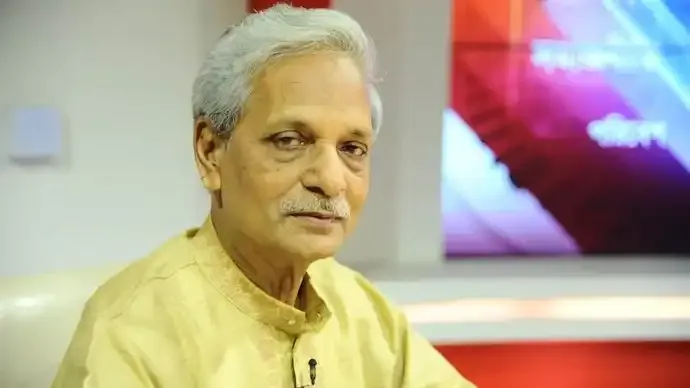

Veteran politician Nitai Roy Chowdhury has been inducted into Bangladesh Prime Minister Tarique Rahman’s Cabinet, becoming the only Hindu minister in the newly formed government. His inclusion is being viewed as a significant signal of minority representation following the recent political transition in Bangladesh.
Roy Chowdhury is among the 25 Cabinet ministers sworn in with the new administration. While portfolios are yet to be assigned, his presence in the ministry has drawn attention both domestically and internationally due to the representation of religious minorities in governance.
A senior leader of the Bangladesh Nationalist Party (BNP), Roy Chowdhury was elected to the Jatiya Sangsad from the Magura-2 constituency in the February elections. Contesting on a BNP ticket, he secured a decisive victory over his opponent, reinforcing his influence within the party.

Political background and early career
Born in 1949 in Magura district, Roy Chowdhury pursued his early education at Magura Government College before studying law at the University of Dhaka. His political journey began during his university years, where he became actively involved in student politics.
He was first elected to Parliament in 1988 from Magura-2 and briefly served as Minister of Youth and Sports in 1990 under the government of Hussain Muhammad Ershad. After the fall of that regime, he joined the BNP and gradually rose through its ranks.
Currently serving as Vice Chairman of the BNP Central Committee, Roy Chowdhury holds a senior leadership role responsible for shaping party strategy and advising top leadership.
Voice within minority and political discourse
Roy Chowdhury has been an outspoken critic of the previous Sheikh Hasina-led Awami League government. He has frequently raised concerns about communal violence and the treatment of minorities in Bangladesh, while also highlighting political tensions and governance issues.
Bangladesh’s Hindu population has declined significantly over decades — from about 28 percent in 1947 to less than 8 percent in recent years — making minority representation in political leadership a subject of ongoing discussion.
In addition to Roy Chowdhury, the new ministry also includes a Buddhist Chakma leader, reflecting broader minority inclusion efforts.
Views on regional relations and policy
Roy Chowdhury has expressed views on Bangladesh’s geopolitical and economic positioning, including concerns about foreign debt dependency and the influence of external financing on development projects.
He has also emphasised the importance of strong relations with India, noting that cooperation between the two neighbours is essential for regional stability and mutual growth.
Personal background
Roy Chowdhury comes from a politically active family. His daughter Nipun Roy Chowdhury is involved in BNP politics, while his son Debasish Roy Chowdhury serves as a judge in Bangladesh’s High Court. His extended family maintains strong political connections within the BNP.
Significance of his cabinet inclusion
Observers say Roy Chowdhury’s appointment could signal reassurance to minority communities and reflect an effort by the new administration to promote inclusivity. His political experience and legal background are also seen as assets in shaping governance and policy decisions.
As Bangladesh begins a new political chapter under the BNP-led government, Roy Chowdhury’s role in the cabinet may influence minority outreach, regional diplomacy and domestic political discourse.





Conversation
Be kind and stay on topic. Comments are moderated; abuse, spam and personal attacks are removed. Report a problem