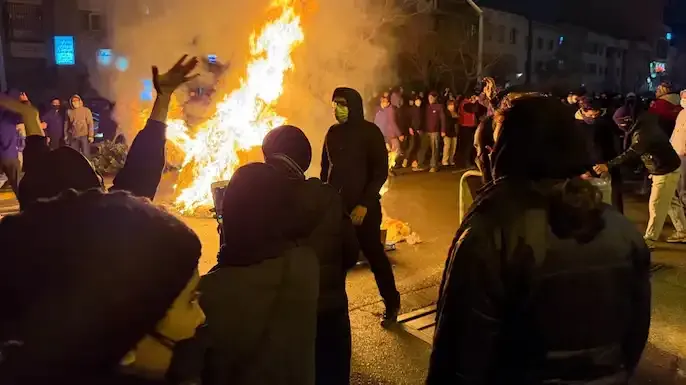
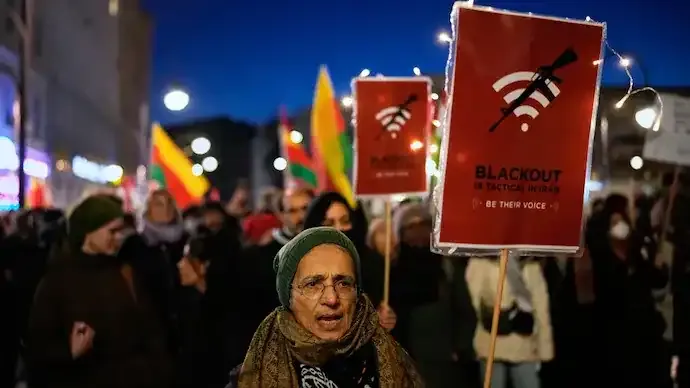
As chants of resistance fade from Iran’s streets, a far darker reality is emerging from behind the country’s digital blackout. Fresh accounts from inside Iranian prisons point to severe human rights abuses against those who dared to defy Supreme Leader Ayatollah Ali Khamenei, including forced nudity in freezing conditions, unexplained medical injections, and mass killings hidden during weeks of restricted communication.
The nationwide protests that erupted in late December marked the deadliest unrest Iran has witnessed since the Iranian Revolution. What began as demonstrations against economic collapse rapidly transformed into a direct challenge to Iran’s clerical rule. Slogans calling for the removal of the religious leadership spread across cities, towns, and villages, before being violently silenced by state forces.
As Iran descended into what activists describe as “digital darkness,” smuggled videos, broken phone calls, and rare satellite messages began revealing the scale of repression. Footage of bodies wrapped in black plastic, piled on floors and gurneys, and families desperately searching for missing relatives has surfaced, painting a grim picture of life after the protests were crushed.
The regime responded to the unrest with overwhelming force. The Islamic Revolutionary Guard Corps was deployed nationwide, supported by foreign militias reportedly brought in to suppress dissent. A sweeping internet blackout was enforced, and later intensified through the use of advanced signal-jamming equipment to disrupt satellite communications, including Starlink connections.
Testimonies from detainees and their families describe chilling abuse inside prisons. According to multiple accounts, prisoners were forced to strip naked in open courtyards and left exposed to freezing temperatures. Some detainees were allegedly sprayed with cold water by guards, while others reported being injected with unidentified substances without any explanation or consent. These claims have raised serious concerns about torture, medical abuse, and long-term health consequences.
Reports emerging after the blackout suggest that mass killings took place across more than 300 locations. Witnesses described streets washed down to remove bloodstains, and neighbourhoods where several people were killed in each alley. In some cases, families were allegedly asked to pay for the bullets used to kill their relatives. Others were pressured to falsely identify deceased loved ones as members of pro-regime militias.
The death toll remains disputed. The US-based Human Rights Activists News Agency estimates that over 4,000 people were killed, more than 26,000 arrested, and thousands injured. Other international outlets have suggested the number of dead could range from 12,000 to as high as 20,000.
The Iranian regime has labelled protesters as “mohareb,” or enemies of God—a charge that carries the death penalty. Iran’s judiciary has echoed this stance, raising fears of mass executions. One such case involved a young shopkeeper sentenced to death, whose execution was postponed only after intense international pressure.
While public protests have subsided, the true scale of the repression is only now coming to light. Accounts of forced nudity, unknown injections, mass graves, and coerced confessions suggest that what has been revealed may represent only a fraction of the suffering endured by Iranians who challenged the clerical establishment. The silence on Iran’s streets may mark not an end, but the beginning of a long reckoning with the atrocities committed in the shadows.