



India aspires to position itself as a global education hub, yet its universities continue to face deep-rooted structural challenges that limit international visibility and competitiveness. While India boasts some of the world’s brightest students, capable faculty, and emerging research-focused institutions, the journey toward global prominence remains slow and complex.
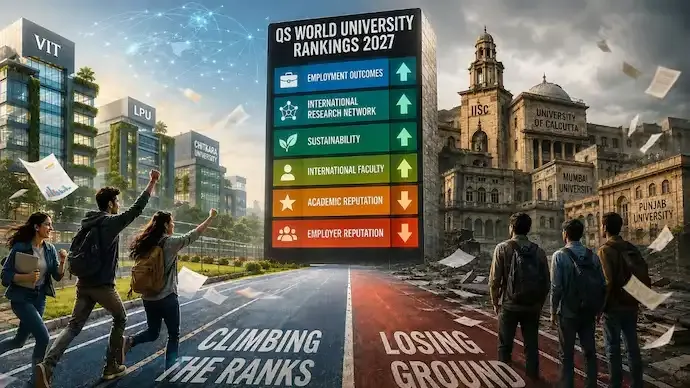
In global rankings such as QS and Times Higher Education (THE), only a handful of Indian institutions appear in the top 200. Even though India welcomed more than 72,000 international students from 200 countries during the 2024–25 academic year, the numbers remain far below countries like the US, UK, Australia, or Canada. Experts say the core issue is no longer talent—it is about funding, autonomy, perception, and global outreach.
Growing Demand, Limited Global Pull
According to Sudhir Kumar Pandey, Director of International Admissions and Outreach at Noida International University, the demand for diverse, globally aligned education has been rising significantly among Indian families. "Parents want multicultural exposure, industry-linked learning, and international relevance," he says. However, Indian universities are still building the global ecosystem required to attract international students at scale.

Why Indian Universities Lag in Global Rankings
Global rankings reward consistency and long-term institutional performance. Western universities hold advantages built over decades:
-
Massive research funding
-
Stronger alumni networks
-
Autonomy in governance
-
International faculty presence
-
English-medium programmes and global collaborations
Indian institutions face structural gaps that slow their climb up global league tables:
-
Insufficient Research Funding
Labs, grants, fellowships, and large-scale research support remain limited. Many universities cannot sustain long-term research projects that global rankings reward. -
Faculty Shortages and Retention Issues
Global institutions attract world-class faculty with competitive salaries and academic freedom. In contrast, Indian universities often struggle with slow recruitment and pay mismatches. -
Low Institutional Autonomy
Public universities typically operate under multiple layers of regulatory oversight, limiting their ability to innovate or collaborate globally. -
Weak International Outreach
Global partnerships, joint programmes, alumni networks, and international marketing efforts remain underdeveloped. -
Perception & Infrastructure Challenges
While India offers affordability, concerns around safety, accommodation, and career pathways influence foreign students’ choices.
Why International Student Numbers Remain Low
Pandey highlights that foreign students prioritise three factors: quality, safety, and post-study opportunities. Although India hosts institutions with strong research profiles—such as IIT Delhi, IIT Bombay, Ashoka University, Manipal, and Shoolini University—the global messaging is still fragmented. Limited internship pathways, complex visa processes, and fewer English-medium courses slow progress.
What Indian Universities Need to Do Next
Experts believe India must craft its own model of world-class higher education instead of copying Western systems. Some fundamental reforms include:
-
Greater Autonomy: Universities should be empowered to design courses, hire global faculty, and build international partnerships without bureaucratic barriers.
-
Stronger Research Ecosystem: Stable funding, large research centres, enhanced infrastructure, and long-term grants can help universities scale globally.
-
Faculty Development: International exchanges, performance-based incentives, and training will help attract and retain talent.
-
Industry Partnerships: Skill-based learning, internships, and corporate collaborations significantly increase student employability and global relevance.
-
Improved Campus Experience: Safe hostels, vibrant student life, international offices, and counselling services create trust among foreign students.
-
Clear Global Branding: Digital outreach, alumni ambassadors, and international collaborations can reshape global perception.
NEP’s Role in India’s Global Education Ambition
The National Education Policy (NEP) has laid the foundation for internationalisation through multidisciplinary learning, flexibility, and research-led growth. According to experts, India can realistically become an education hub within the next decade—but only if funding, regulation, and faculty recruitment reforms continue steadily.
India has the talent and ambition. What it needs now is structural reform, sustained investment, and a strong global narrative to elevate its universities onto the world stage.








Conversation
Be kind and stay on topic. Comments are moderated; abuse, spam and personal attacks are removed. Report a problem