Iran Attacks Dubai and Saudi Arabia as US Deploys Third Aircraft Carrier

Iran Attacks Dubai and Saudi Arabia as US Deploys Third Aircraft Carrier

The conflict in the Middle East has intensified dramatically as Iran launched fresh drone and missile attacks targeting several Gulf countries, including Saudi Arabia and the United Arab Emirates, despite an earlier apology issued by the Iranian president to neighbouring nations.

Explosions and security alerts were reported in multiple locations across the region as tensions continued to escalate. The latest attacks came as the conflict entered its eighth day, raising fears of a broader regional war.

According to reports, Dubai in the UAE and several locations in Saudi Arabia were among the areas targeted during the latest round of strikes. Other Gulf countries such as Qatar and Bahrain also faced security threats as missile and drone activity increased across the region.

The attacks came even after Iran’s leadership had earlier expressed regret over strikes affecting neighbouring countries. Despite the apology, military activity has continued to escalate, with both sides launching major operations.

At the same time, Israel carried out a large-scale wave of airstrikes across Iran, targeting strategic locations including Tehran and Isfahan. Reports indicated that around 80 Israeli fighter jets participated in the operation, striking multiple sites believed to be linked to Iran’s nuclear and military infrastructure.

The Israeli strikes triggered loud explosions across several Iranian cities, further intensifying the already volatile situation. Analysts say the coordinated airstrikes represent one of the most significant military operations in the current conflict.

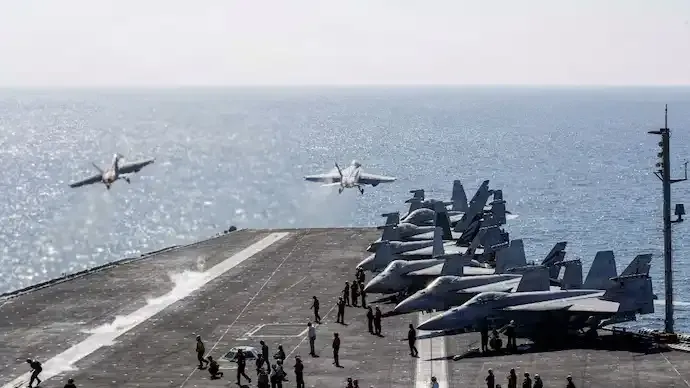
Amid the rapidly escalating hostilities, the United States has decided to deploy a third aircraft carrier to the region, signalling a significant increase in its military presence in the Middle East.

The additional carrier deployment is expected to strengthen US naval operations and provide support to allied forces in the region. Aircraft carriers serve as mobile military bases capable of launching fighter jets, surveillance missions, and defensive operations.

Security experts believe the increased US military presence is intended to deter further escalation and ensure the protection of key maritime routes, particularly in areas critical for global energy supply.

The Strait of Hormuz, one of the world’s most important oil shipping routes, remains under close monitoring as tensions continue to rise. Any disruption in this region could have serious consequences for global energy markets.

Meanwhile, several Gulf countries have heightened security measures, activating air defence systems and strengthening military readiness to respond to potential threats.

The continuing exchange of strikes between Iran and its opponents has raised global concerns about the possibility of a wider regional conflict involving multiple nations.

Diplomatic efforts are also underway as international leaders call for restraint and seek ways to prevent further escalation. However, with ongoing attacks and military deployments, the situation in the Middle East remains highly volatile.

As the conflict continues to unfold, governments and security agencies around the world are closely monitoring developments that could reshape the geopolitical landscape of the region.

Prev Article
Balen Shah Defeats KP Sharma Oli by 50,000 Votes in Nepal Election Upset
Next Article
Israel Raids Lebanon Graveyard Searching for Missing 1986 Pilot Ron Arad

Related to this topic: