Shopping cart
Your cart empty!


Your cart empty!
Terms of use dolor sit amet consectetur, adipisicing elit. Recusandae provident ullam aperiam quo ad non corrupti sit vel quam repellat ipsa quod sed, repellendus adipisci, ducimus ea modi odio assumenda.
Lorem ipsum dolor sit amet consectetur adipisicing elit. Sequi, cum esse possimus officiis amet ea voluptatibus libero! Dolorum assumenda esse, deserunt ipsum ad iusto! Praesentium error nobis tenetur at, quis nostrum facere excepturi architecto totam.
Lorem ipsum dolor sit amet consectetur adipisicing elit. Inventore, soluta alias eaque modi ipsum sint iusto fugiat vero velit rerum.
Sequi, cum esse possimus officiis amet ea voluptatibus libero! Dolorum assumenda esse, deserunt ipsum ad iusto! Praesentium error nobis tenetur at, quis nostrum facere excepturi architecto totam.
Lorem ipsum dolor sit amet consectetur adipisicing elit. Inventore, soluta alias eaque modi ipsum sint iusto fugiat vero velit rerum.
Dolor sit amet consectetur adipisicing elit. Sequi, cum esse possimus officiis amet ea voluptatibus libero! Dolorum assumenda esse, deserunt ipsum ad iusto! Praesentium error nobis tenetur at, quis nostrum facere excepturi architecto totam.
Lorem ipsum dolor sit amet consectetur adipisicing elit. Inventore, soluta alias eaque modi ipsum sint iusto fugiat vero velit rerum.
Sit amet consectetur adipisicing elit. Sequi, cum esse possimus officiis amet ea voluptatibus libero! Dolorum assumenda esse, deserunt ipsum ad iusto! Praesentium error nobis tenetur at, quis nostrum facere excepturi architecto totam.
Lorem ipsum dolor sit amet consectetur adipisicing elit. Inventore, soluta alias eaque modi ipsum sint iusto fugiat vero velit rerum.
Do you agree to our terms? Sign up


Anti-government protests in Iran intensified on Friday as unrest entered its sixth consecutive day, spreading to dozens of cities and reaching the clerical stronghold of Qom, a symbolic centre of Shia religious authority. The demonstrations, directed against Supreme Leader Ayatollah Ali Khamenei and the Islamic Republic’s ruling establishment, have reportedly left at least six people dead following clashes between protesters and security forces.

The protests, which began in late December over worsening economic conditions, have rapidly evolved into a broader political challenge to Iran’s theocratic system. Demonstrators in multiple cities were heard chanting slogans calling for the return of the monarchy and the restoration of the Shah’s rule, reflecting deep public frustration over inflation, unemployment, and long-standing governance failures.
The entry of protests into Qom has been viewed as a significant escalation. The city is regarded as a spiritual and ideological pillar of the Islamic Republic, housing influential seminaries and clerical institutions closely linked to the ruling establishment. Despite a heavy security presence, demonstrators reportedly raised pro-monarchy slogans, signalling growing defiance even in areas traditionally loyal to the regime.
Beyond Qom, protests and strikes have been reported across major urban centres including Tehran, Mashhad, Isfahan, Lorestan, and Khuzestan, as well as several smaller towns. Witnesses and rights monitors said demonstrations have widened both geographically and socially, drawing participation from workers, students, and traders, indicating a broad-based movement rather than isolated unrest.
Security forces have responded with force in multiple locations, leading to violent confrontations. Reports indicate that several protesters were killed during clashes, while many others were detained as authorities attempted to suppress the demonstrations. Internet disruptions and restrictions on information flow have also been reported, a tactic frequently used during periods of unrest in the country.
The unfolding situation has drawn international attention. The United States State Department described the protests as a reflection of the Iranian people’s “understandable anger” toward decades of economic mismanagement. US officials said Iran’s leadership has neglected critical sectors such as agriculture, electricity, and water infrastructure while diverting vast resources toward foreign militant proxies and nuclear-related activities.
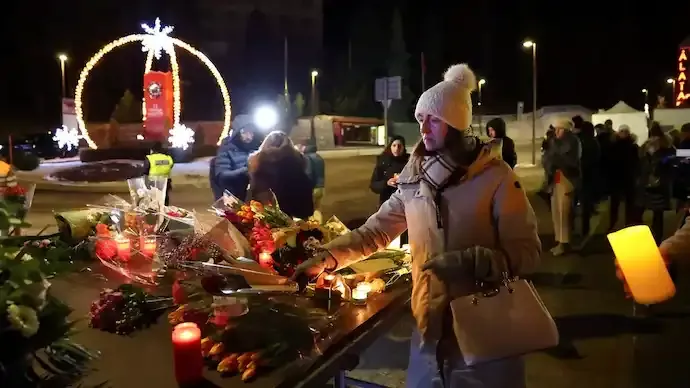
Meanwhile, Iran’s exiled former crown prince Reza Pahlavi issued a message paying tribute to those killed during the protests. Calling them “true heroes,” he urged Iranians to remain united, stating that the courage displayed on the streets was helping reclaim the nation’s future. Pahlavi, who resides in the United States, is the son of Mohammad Reza Pahlavi, the last Shah of Iran, whose rule ended with the 1979 Islamic Revolution.
As protests continue, analysts say the convergence of economic distress, political discontent, and symbolic challenges to clerical authority marks one of the most serious domestic tests faced by Iran’s leadership in recent years. With demonstrations persisting despite crackdowns, the coming days are expected to be critical in determining whether the unrest subsides or escalates further into a sustained nationwide movement.
39
Published: Jan 02, 2026

All India Story is your trusted source for comprehensive and up-to-the-minute news coverage across India. Bringing you the latest on politics, business, technology, entertainment, sports, and more, we are dedicated to keeping you informed with accurate, engaging, and insightful stories from every corner of the nation.