

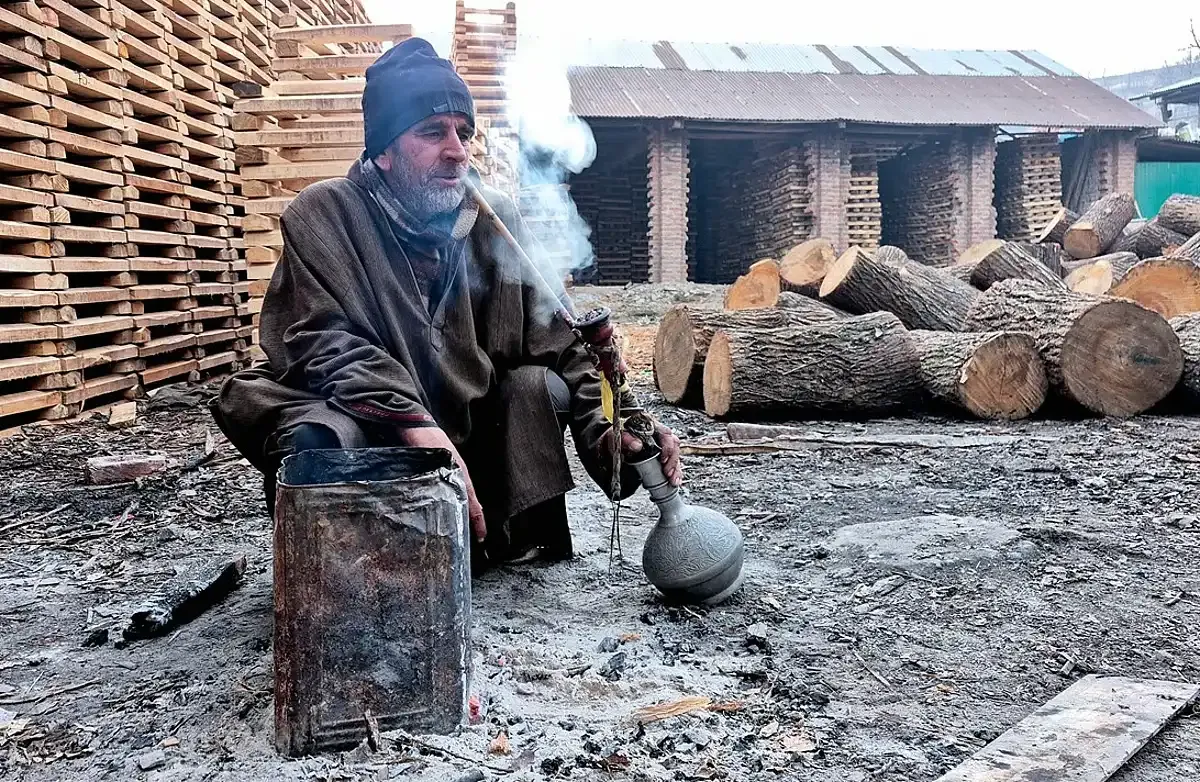

Kashmir’s iconic cricket bat industry, known worldwide for producing high-quality willow bats, is facing a serious crisis as climate change begins to disrupt its core resources. Once thriving due to abundant water sources and natural willow plantations, the industry is now struggling with declining raw material and uncertain future prospects.
For over a century, Kashmir has been a major hub for cricket bat manufacturing, producing nearly three million bats annually and supporting thousands of livelihoods. However, changing weather patterns are now putting this traditional industry at risk.
Declining Willow Trees Due to Water Scarcity
The primary raw material for these bats, willow wood (Salix alba), depends heavily on water-rich environments such as streams, wetlands, and riverbanks. However, reduced snowfall and irregular rainfall in recent years have led to drying water bodies across the region.

As a result, willow plantations have sharply declined, especially in south Kashmir, which was once the backbone of bat production. Farmers are increasingly finding it difficult to grow willow due to lack of water, forcing them to shift to other crops or tree species that require less moisture.
Impact on Employment and Local Economy
The crisis has begun to affect employment significantly. Around 1.5 lakh people are directly or indirectly dependent on the cricket bat industry, including labourers, craftsmen, traders, and transport workers.
With raw material becoming scarce, many manufacturing units have reduced their workforce. Where earlier a unit employed around 20 workers, many now operate with half that number or less. This has created economic uncertainty for families that rely solely on this industry for income.
Falling Production and Industry Challenges
Industry experts estimate that raw material supply has dropped drastically in recent years. In some regions, usable willow has almost disappeared, forcing manufacturers to source wood from distant areas, which further increases costs and reduces efficiency.
Additionally, the lack of large-scale plantation initiatives and limited policy support have worsened the situation. Despite the importance of the industry, systematic efforts to promote willow cultivation remain insufficient.
Competition and Changing Farming Patterns
Another challenge is the shift in land use and farming preferences. Farmers are increasingly opting for faster-growing trees like poplar, which provide quicker financial returns compared to willow, which takes years to mature.
Urbanisation, infrastructure development, and land fragmentation have also reduced the availability of land suitable for willow cultivation.
Need for Policy Intervention and Sustainable Solutions
Experts emphasize the urgent need for policy support to protect and revive willow plantations. This includes creating dedicated cultivation zones, offering financial incentives to farmers, and promoting modern irrigation techniques such as drip irrigation.
There is also a growing demand to provide legal protection to willow trees, similar to other important species, to prevent overexploitation and ensure long-term sustainability.
An Industry at a Crossroads
The Kashmir willow industry stands at a critical turning point. Without immediate intervention, the decline in raw material could lead to long-term damage, affecting both livelihoods and a globally recognized craft.
For many families, this industry is more than just a source of income—it is a legacy passed down through generations. Preserving it will require coordinated efforts between the government, industry stakeholders, and local communities.





Conversation
Be kind and stay on topic. Comments are moderated; abuse, spam and personal attacks are removed. Report a problem