

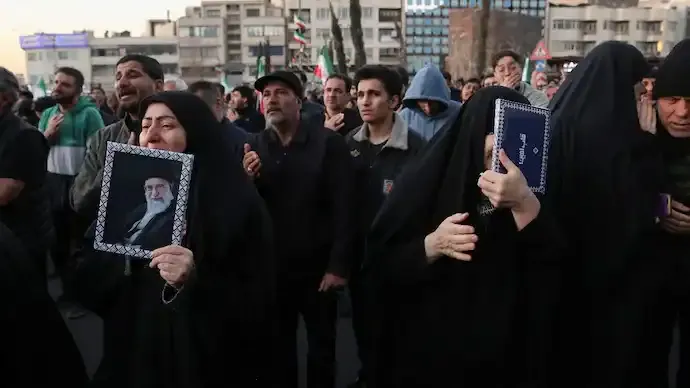

The killing of Iran’s Supreme Leader Ayatollah Ali Khamenei in coordinated US-Israeli strikes was widely seen as an attempt to decapitate the Iranian regime and force a strategic shift in Tehran’s behaviour. However, days after the operation, the outcome appears far more complex.
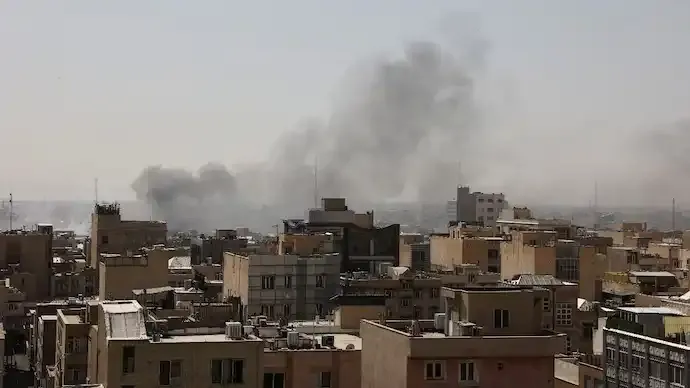
The strikes, part of what Washington called Operation Epic Fury and Israel termed Operation Roaring Lion, targeted senior Iranian leadership and military infrastructure. Several top commanders of the Islamic Revolutionary Guard Corps (IRGC), along with key defence officials, were reported killed. Suspected nuclear and missile facilities were also hit.
The strategic objective seemed clear: weaken the regime, disrupt its military capabilities, and potentially trigger internal collapse. Yet Iran has not shown signs of capitulation.

Instead, Tehran responded with rapid and large-scale retaliation. Ballistic missiles and drones were launched at Israeli cities and multiple US bases across the Gulf, including locations in Bahrain, Qatar, Kuwait, the UAE and Jordan. The scale and speed of the response signalled preparedness rather than paralysis.
A senior cleric, Ayatollah Arafi, was quickly named interim Supreme Leader, while a Leadership Council comprising clerics and IRGC officials was reportedly formed to ensure continuity. This rapid transition highlighted the institutional depth of Iran’s political structure. Unlike regimes built solely around one individual, Iran’s clerical system appears designed for succession during crises.
Iranian President Masoud Pezeshkian declared that retaliation was a “legitimate right and duty,” reinforcing the state’s defiant posture. Parliamentary leaders also indicated that contingency plans were in place for such a scenario.
Historically, Iran has absorbed sanctions, covert operations and limited strikes without collapsing. Previous confrontations, including regional wars and domestic protests, did not dismantle the system. Instead, external pressure often strengthened nationalist sentiment.
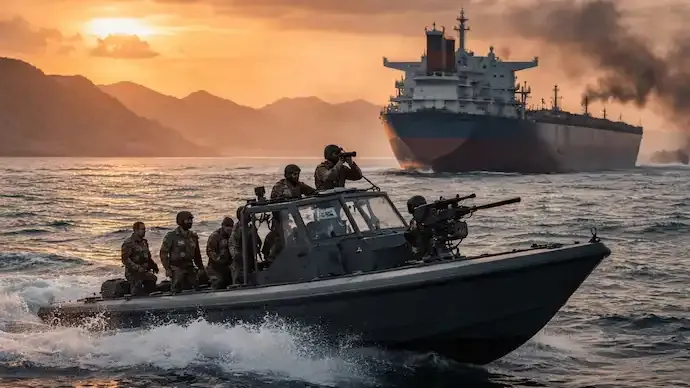
The broader regional conflict is now expanding. Iranian-backed groups remain active, and tensions have spilled into the Red Sea and Gulf waters. The Strait of Hormuz — a vital artery for global oil supply — faces disruption risks, amplifying global economic concerns.
While the strikes inflicted heavy leadership and infrastructure losses, there is no visible evidence of regime fragmentation. In fact, domestic mobilisation around the narrative of foreign aggression may be consolidating internal support.
The larger question remains unresolved: have the US and Israel achieved strategic deterrence, or have they triggered a prolonged confrontation? With retaliation ongoing and diplomatic channels limited, the conflict appears set for a sustained phase rather than a swift resolution.
Iran, an ancient civilisation with layered political institutions, has weathered external pressure before. The removal of a long-serving Supreme Leader is historic, but for now, the state apparatus remains operational and defiant.






Conversation
Be kind and stay on topic. Comments are moderated; abuse, spam and personal attacks are removed. Report a problem