

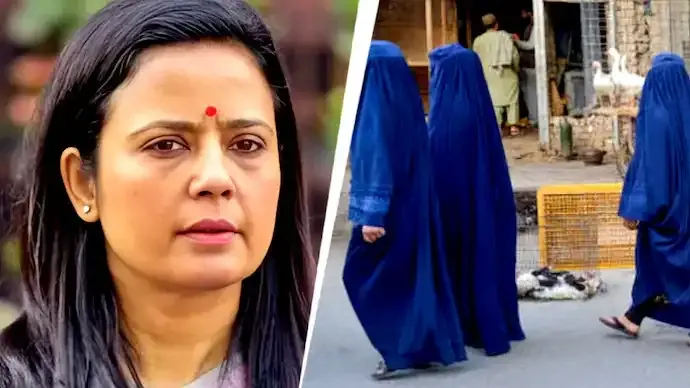

Trinamool Congress MP Mahua Moitra has strongly condemned the Taliban following reports that a newly introduced penal code in Afghanistan legitimises domestic violence against women and reduces their legal status. In a sharp statement, she accused the Taliban regime of institutionalising gender-based brutality and expressed solidarity with Afghan women.
Moitra also criticised India’s diplomatic engagement with Taliban representatives, stating that the developments were deeply troubling from a human rights perspective.
Reports Raise Alarm Over Women’s Rights
According to information circulating among rights groups and activists, the reported legal provisions place women on a subordinate legal footing and permit physical punishment by husbands or guardians under certain conditions.

Women’s rights advocates have expressed serious concern over the implications of such measures, warning that they could formalise systemic discrimination and violence.
Moitra’s Statement Sparks Political Debate
In her remarks, Moitra said she felt ashamed as an Indian woman and voiced support for Afghan women facing repression. She also took aim at the government’s previous interactions with Taliban officials, arguing that engagement with the regime raises ethical concerns.
Her comments have reignited debate over India’s diplomatic approach toward Afghanistan under Taliban rule.
Previous Criticism Over Taliban Engagement
This is not the first time Moitra has criticised government engagement with Taliban representatives. In October 2025, she objected to a press conference addressed by Taliban Foreign Minister Amir Khan Muttaqi in Delhi that was attended exclusively by male journalists.
She described the situation as disrespectful to women and said it mirrored the Taliban’s gender exclusion policies.
Wider Concerns Over Taliban Policies
Since returning to power in Afghanistan, the Taliban administration has faced international criticism for restrictions on women’s education, employment, and public participation. Rights groups have repeatedly warned that such measures undermine basic freedoms and gender equality.
The latest reports about the penal code have intensified global scrutiny of women’s rights under Taliban rule.
Ongoing Debate on Diplomacy and Human Rights
Moitra’s remarks highlight the ongoing tension between diplomatic engagement and human rights advocacy. While governments often maintain contact for strategic and humanitarian reasons, critics argue that engagement should not overlook violations of fundamental rights.
The issue continues to generate political debate and international concern as the situation in Afghanistan evolves.





Conversation
Be kind and stay on topic. Comments are moderated; abuse, spam and personal attacks are removed. Report a problem