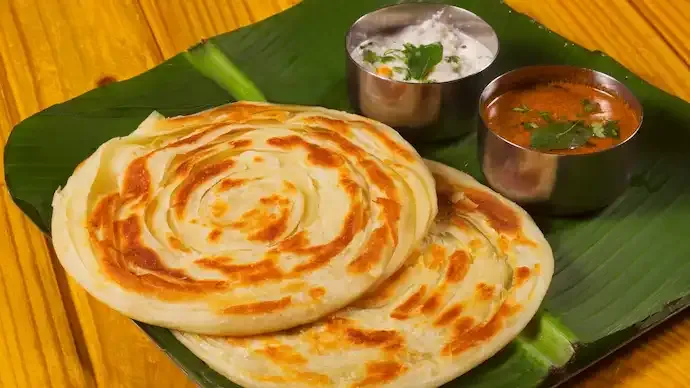
Is Malabar Parotta Really From Kerala?
Malabar parotta is widely known as a signature dish of Kerala, especially the Malabar region. However, its origins tell a more complex and global story.
Despite its strong association with Kerala cuisine, many food historians suggest that Malabar parotta may not have actually originated in the region.
A Layered Bread with a Global History
The preparation of Malabar parotta—with its soft, flaky layers and use of refined flour (maida)—points toward influences beyond traditional Kerala cooking.
Unlike Kerala’s staple foods, which are typically rice-based and rooted in local agriculture, parotta uses techniques and ingredients that resemble Middle Eastern and Central Asian breads.
Possible Origins Outside India
One of the most accepted theories links Malabar parotta to flatbreads like the paratha or even lachha paratha, which evolved through cultural exchanges during trade and migration.
Others believe its roots lie in Middle Eastern cuisines, where layered breads were introduced by traders and later adapted locally in South India.
Over time, the dish was embraced in Kerala and became a street food staple, especially in the Malabar region—hence the name.
How It Became a Kerala Icon
Even if its origins are debated, Malabar parotta became deeply embedded in Kerala’s food culture. It is now commonly served with rich gravies like:
- Chicken curry
- Beef fry
- Fish curry
The combination of flaky bread and spicy curries made it a favorite across households and restaurants.
Global Spread of Malabar Parotta
The popularity of Malabar parotta didn’t stop in India. Through migration, especially from South India, the dish spread to countries like Malaysia, Singapore, and the Gulf region.
Today, variations of parotta are enjoyed globally, often adapted to local tastes while retaining the original layered texture.
Why It Still Feels Uniquely Kerala
Despite its debated origins, Malabar parotta is now an integral part of Kerala’s culinary identity. Food evolves through cultural exchange, and this dish is a perfect example of how global influences can become local traditions.
A Dish That Blends Cultures
Malabar parotta represents more than just food—it reflects history, migration, and cultural fusion. Its journey from uncertain origins to global popularity highlights how cuisines evolve over time.