No Power, Widespread Fear: Indian in Caracas Describes Life After US Military Strikes

No Power, Widespread Fear: Indian in Caracas Describes Life After US Military Strikes

Life in Venezuela’s capital Caracas has descended into fear, darkness and uncertainty following United States military strikes that severely damaged key infrastructure and disrupted daily life, according to an Indian national living in the city.

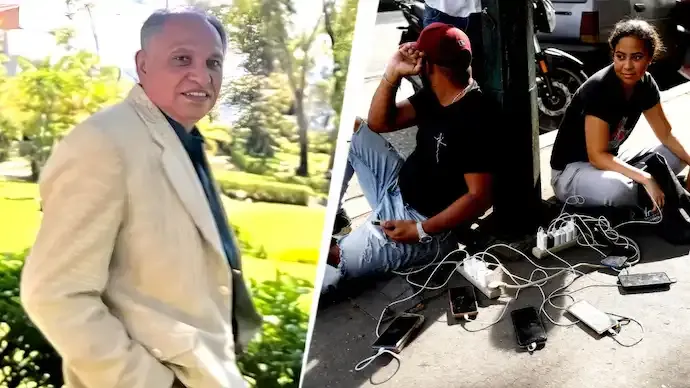
Sunil Malhotra, a member of the Indian community in Caracas, described a grim situation marked by prolonged power outages, communication breakdowns, shuttered businesses and long queues for basic supplies after the attacks.

Speaking from the Venezuelan capital, Malhotra said airstrikes targeted multiple strategic locations, including the main airport in Caracas and military installations outside the city. He said the heaviest damage was reported at Fuerte Tiuna, one of the country’s most critical military and administrative centres, which also plays a major role in power distribution.

Following the strikes, large parts of Caracas and neighbouring areas were plunged into darkness as electricity grids collapsed. With power outages continuing for hours, residents struggled to communicate, access food, or even charge their phones.

“Most of the city has no electricity. Public transport has stopped, shops are closed and people are afraid to step outside,” Malhotra said, adding that uncertainty has gripped the population.

He described massive queues outside small neighbourhood stores that remained open, as supermarkets shut down amid the chaos. Residents lined up for bread, canned food and medicines, with pharmacies becoming a crucial source for essential supplies.

“There are hundreds of people waiting in line in every block. Only one or two people are allowed inside stores at a time,” he said.

With communication networks disrupted, people walked long distances searching for any source of electricity. Malhotra said he waited for several hours near a streetlight that still had power, where makeshift connections were being used to charge mobile phones.

“There is no information coming from authorities. Even the police don’t know when electricity will be restored,” he said.

According to Malhotra, fear has prevented large-scale protests despite public anger. He recalled past protest crackdowns between 2014 and 2017, during which many civilians were arrested or killed, leaving lasting trauma among families.

“Parents don’t want their children on the streets. People are just staying inside, scared,” he said.

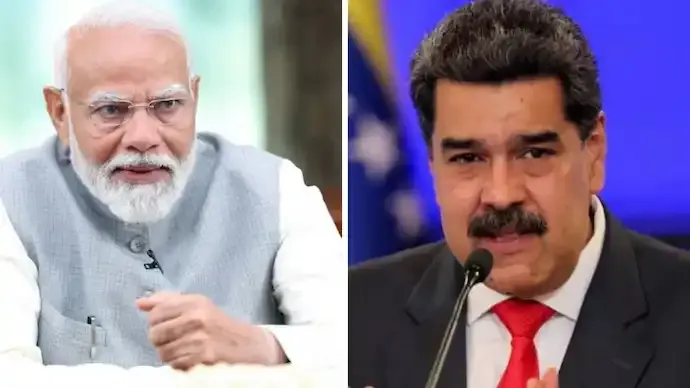
The situation unfolded after US forces carried out strikes in Venezuela and captured President Nicolás Maduro, flying him to the United States. The operation was authorised under the leadership of US President Donald Trump, who accused the Venezuelan leadership of serious criminal activities.

Venezuela has condemned the operation, calling it a violation of international law and accusing the United States of attempting to control its natural resources.

The Indian community in Caracas remains small but connected. Malhotra said the Indian Embassy has set up emergency communication channels and is advising Indian nationals on safety measures.

As Venezuela remains without clear leadership and essential services struggle to recover, residents face an uncertain future amid heightened geopolitical tensions between the United States and Venezuela.

Prev Article
India Expresses Deep Concern Over US Strikes on Venezuela, Calls for Dialogue
Next Article
US Media Knew About Trump’s Venezuela Raid in Advance, Withheld Story: Report

Related to this topic: